


7 Powerful Silent Rituals for Grieving a Spouse When Words Aren't Enough
When words fail during the painful journey of grieving a spouse, silent rituals become powerful expressions of love and remembrance. The overwhelming emotions that accompany the loss of a life partner often render traditional expressions inadequate. Many find themselves searching for grieving a spouse techniques that honor their connection without requiring verbal expression. These silent practices create a sacred space where complex feelings can unfold naturally, allowing for deeper emotional processing and healing.
Research shows that non-verbal grief practices activate different brain pathways than verbal expression, often reaching emotional centers more directly. This neurological response explains why many find silent rituals particularly comforting when grieving a spouse. These practices bridge the gap between your internal experience and external reality, creating meaningful ways to honor your relationship's continuing bond.
The following seven silent rituals offer a compassionate framework for honoring your spouse without words. Each provides a unique avenue for expression while respecting your individual grief journey. These approaches acknowledge that grieving a spouse happens on your own timeline, in your own way.
Personal Memory Objects: Tangible Ways of Grieving a Spouse
Creating tangible connections through meaningful objects provides powerful anchors during the turbulent experience of grieving a spouse. A memory box containing items that represent significant moments in your relationship—ticket stubs, photos, or handwritten notes—creates a physical space where memories live on. This collection becomes a touchstone you can revisit whenever you need to feel close to your spouse.
Carrying a symbolic item—perhaps your spouse's watch, a piece of jewelry, or even a smooth stone from a place you both loved—offers a private yet constant connection. Some find comfort in repurposing belongings into new forms, like transforming clothing into memory quilts or pillows. These objects create sensory bridges to your spouse, offering comfort when words fall short.
Research confirms that physical objects activate memory centers in our brains more effectively than abstract thoughts, making them particularly valuable in grieving a spouse. These tangible connections help maintain your bond while acknowledging its transformed nature.
Private Ceremonies for Grieving a Spouse in Your Own Way
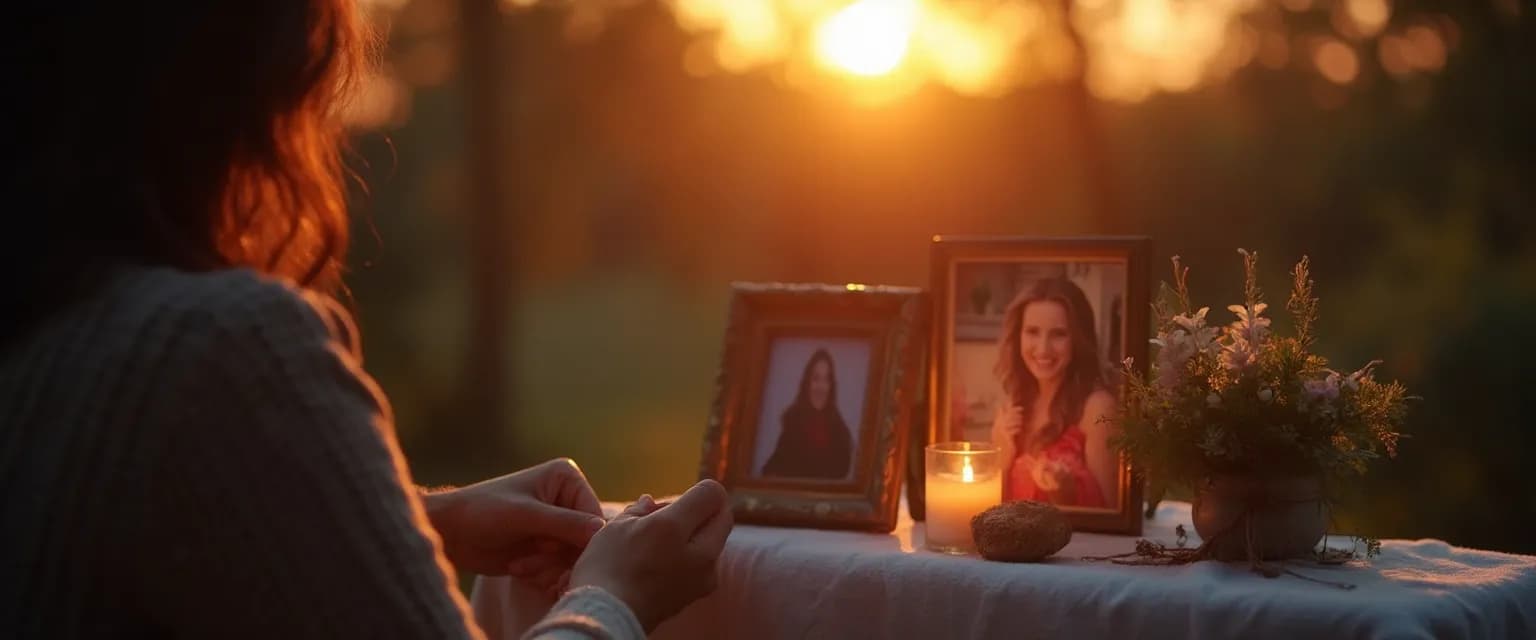
Establishing personal rituals creates meaningful structure during the disorienting process of grieving a spouse. These private ceremonies might include lighting a candle on significant dates, visiting meaningful locations, or creating a dedicated space in your home for reflection. The key is consistency—these rituals provide reliable touchpoints amid grief's unpredictability.
Simple daily acknowledgments can be equally powerful. Some find comfort in setting a place at the table, maintaining morning coffee routines as if sharing them still, or saving the last word of a crossword puzzle for their spouse. These small ceremonies honor your relationship's continuing presence in your life.
Private rituals also provide space for emotional expression without judgment or explanation. They acknowledge that grieving a spouse involves countless private moments that others may never witness but that remain essential to your healing journey.
Sensory Practices That Support Grieving a Spouse
Our senses create powerful emotional pathways, making sensory practices particularly effective when grieving a spouse. Scent offers one of the strongest connections—keeping a bottle of your spouse's cologne or perfume, cooking their signature dishes, or using their favorite soap can momentarily bridge the physical absence.
Music creates another sensory connection. Creating playlists of songs that tell your relationship's story, listening to their favorite artists, or even sitting in silence in places where you once shared music together can provide profound emotional release. The familiarity of these sounds often reaches emotional centers that words cannot access.
Visiting places that hold shared memories—a favorite park bench, restaurant, or vacation spot—activates multiple senses simultaneously. These environments create immersive experiences that honor your connection while providing space for grief's evolution.
Finding Your Path Forward While Grieving a Spouse
As your grief journey evolves, these silent rituals typically transform alongside you. What provides comfort in early grief might change as you begin creating a new life that honors both your past and future. This evolution represents healthy integration rather than "moving on" or "getting over" your loss.
Finding balance becomes essential when grieving a spouse—honoring your spouse's memory while gradually building new meanings and connections. Silent rituals provide this balance by creating space for remembrance without restricting your growth.
Remember that each person's experience of grieving a spouse follows its own timeline and pattern. These silent practices offer frameworks for honoring your unique relationship, allowing your grief expression to be as individual as the love you shared.



