


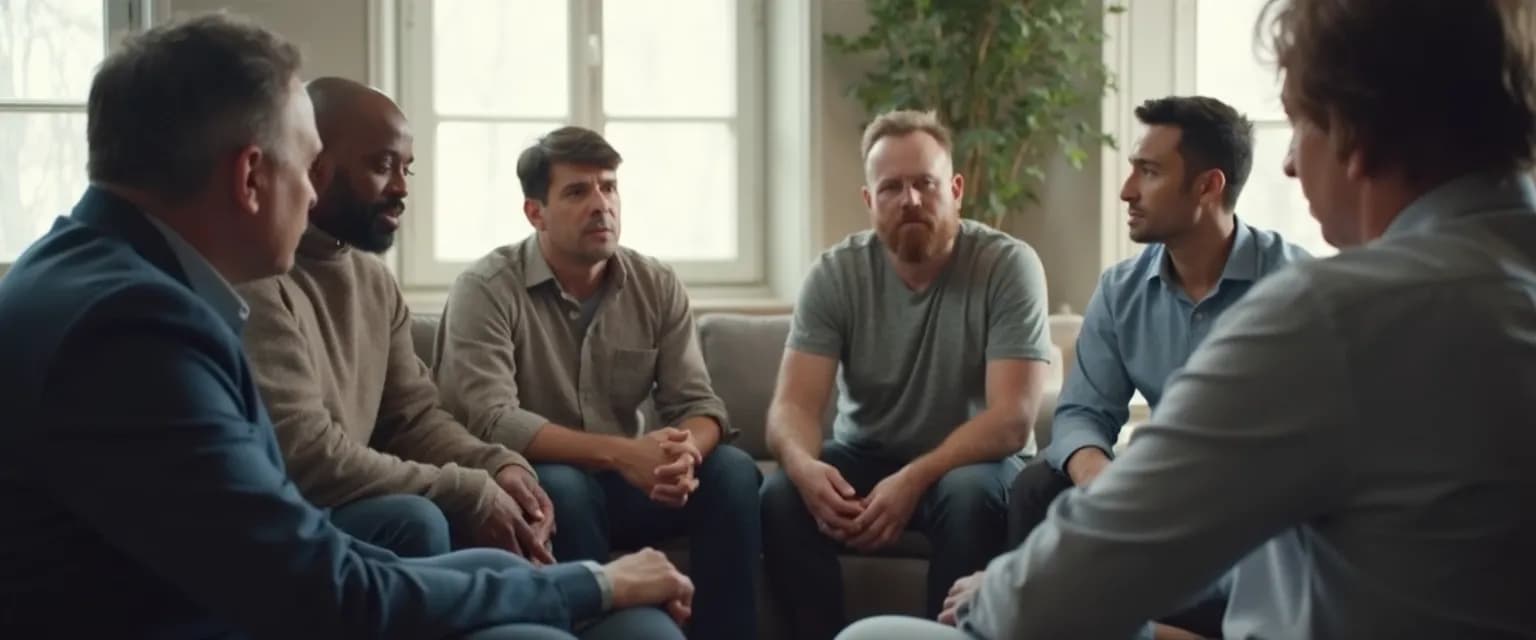
Creating Effective Grief Groups for Men: Breaking Emotional Barriers
When it comes to grief, men often face unique challenges. Society's expectations frequently dictate that men should "stay strong" or "keep it together," leaving many struggling to process loss effectively. Creating specialized grief groups for men addresses this critical need, providing spaces where male participants can work through their emotions without judgment. Research consistently shows that men benefit tremendously from grief support when the approach acknowledges and works with, rather than against, typical male communication patterns and emotional expression styles.
Men's grief often manifests differently than women's—sometimes appearing as anger, withdrawal, or immersion in activities rather than openly expressing sadness. Effective grief groups recognize these differences without reinforcing harmful stereotypes. The key lies in creating environments where men feel psychologically safe enough to engage with their grief in authentic ways, whether that follows traditional patterns or not.
Understanding the science behind managing uncertainty becomes particularly valuable when designing these specialized grief groups. When men feel understood rather than pressured to conform to expectations, healing becomes possible.
Designing Grief Groups That Resonate With Men
The physical environment plays a crucial role in men's grief groups. Consider arranging chairs in a semi-circle rather than a tight circle, allowing for personal space while maintaining connection. Some successful grief groups for men even incorporate movement-friendly spaces where participants can stand or shift positions during difficult emotional moments.
Activity-based approaches often work exceptionally well in male grief support settings. Rather than beginning with direct emotional sharing, consider:
- Building or creating something together as a group
- Incorporating physical activities that create natural opportunities for conversation
- Using metaphor-based exercises that allow indirect expression of feelings
These approaches make emotional processing more accessible by providing concrete tasks that parallel the internal work of grief. Men who might resist direct questions about feelings often open up naturally when engaged in purposeful activities.
Clear communication guidelines specific to men's grief groups help establish expectations and reduce anxiety. Explicitly state that there's no "right way" to grieve and that participation can take many forms. Some facilitators find success by incorporating vulnerability-building exercises that gradually increase comfort with emotional expression.
Physical Environment Setup
The most effective grief groups for men often take place in spaces that feel neutral and comfortable—community centers, outdoor settings, or rooms with natural light rather than clinical environments. Some facilitators report success with "shoulder-to-shoulder" seating arrangements rather than face-to-face configurations, which can reduce the intensity of direct eye contact during vulnerable moments.
Communication Techniques for Men's Grief Groups
Indirect communication methods often work remarkably well in men's grief groups. These might include using objects as talking pieces, writing exercises shared anonymously, or structured activities that naturally elicit emotional responses without putting participants on the spot. These approaches honor men's need for processing space while still facilitating meaningful connection.
Incorporating movement alongside verbal expression helps engage the whole person in the grief process. Simple walking meetings, standing check-ins, or brief stretching moments can release tension and create natural openings for deeper sharing. This approach recognizes that emotions live in the body as much as the mind.
Successful grief groups consistently normalize all emotional responses. When facilitators explicitly acknowledge that anger, numbness, relief, and confusion are all natural parts of grief, men often feel permission to acknowledge their full experience. Learning techniques for managing high-stakes emotional moments becomes an invaluable skill for both facilitators and participants.
Measuring Success in Men's Grief Groups
Recognizing healing in grief groups often requires looking beyond traditional metrics. Success might appear as increased participation over time, the development of supportive relationships between members, or subtle shifts in how men reference their loss. Facilitators report that non-verbal indicators—more relaxed body language, appropriate humor, or offering support to others—often signal profound progress.
Creating sustainable support networks that extend beyond formal grief groups represents another important measure of success. When participants begin connecting outside scheduled sessions or develop ongoing relationships, the healing impact multiplies. The most effective grief groups ultimately create communities where men continue supporting each other through the ongoing journey of grief.
For those looking to implement or improve grief groups for men, start with understanding your specific population's needs, create physically and emotionally safe environments, and incorporate activities that make emotional expression accessible rather than overwhelming. When designed thoughtfully, grief groups become powerful spaces where men can find their way forward through loss while honoring their authentic selves.



