


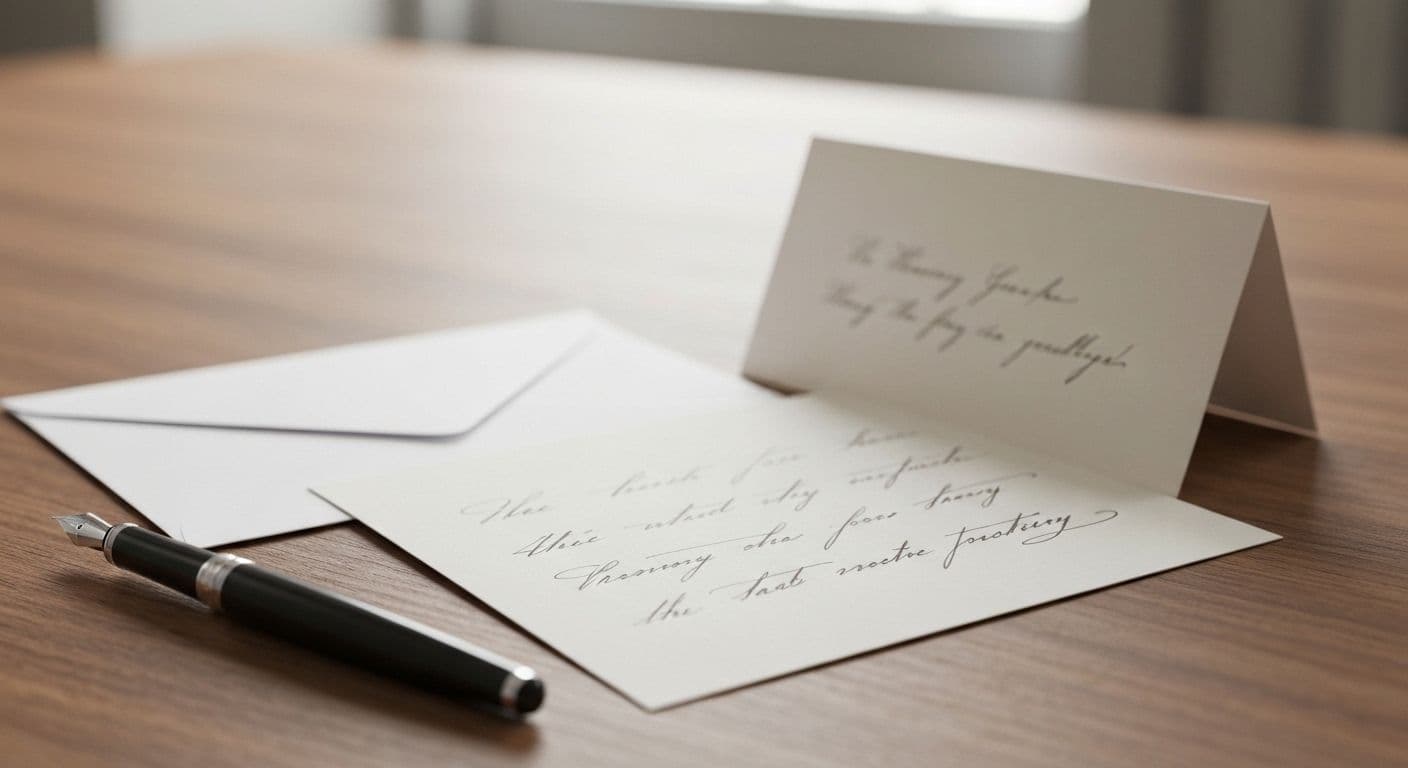
Friend Simple Sympathy Card Messages: Why Handwritten Notes Matter
When a friend experiences loss, finding the right words feels overwhelming. You stare at your phone, typing and deleting messages, wondering if a quick text truly captures what you want to say. Here's what research tells us: friend simple sympathy card messages delivered through handwritten notes create deeper emotional connections than digital alternatives. The physical act of writing, the tangible card, the time invested—these elements communicate care in ways pixels simply cannot replicate. Understanding when to choose pen over keyboard transforms how you support grieving friends during their most vulnerable moments.
The struggle isn't about lacking compassion; it's about navigating modern communication norms while honoring traditional expressions of support. Digital messages offer speed and convenience, yet something essential gets lost in translation. Handwritten sympathy notes engage both sender and receiver in emotional processing that texts bypass entirely. This isn't nostalgia talking—it's neuroscience. The tactile experience of holding a card, seeing imperfect handwriting, and knowing someone paused their busy life creates healing connections that outlast any notification.
The Science Behind Friend Simple Sympathy Card Messages That Heal
Writing by hand activates different neural pathways than typing. When you craft friend simple sympathy card messages with pen and paper, your brain engages in deeper emotional processing. This cognitive engagement translates into more authentic, heartfelt expressions. Your friend receives not just words, but evidence of your emotional investment—the slight variations in handwriting, the crossed-out word you couldn't quite erase, the careful selection of a meaningful card.
Physical cards offer something digital messages never can: a tangible object to hold during grief's darkest moments. Grieving friends often keep handwritten sympathy notes for years, revisiting them when they need comfort. The weight of quality cardstock, the texture of paper, even the scent of ink—these sensory details create memory anchors. Research in grief psychology shows that physical objects provide comfort by making abstract support feel concrete and real.
Time as a Love Language in Grief
The time required to write, address, stamp, and mail a card signals something profound: you paused your life to be present with their pain. In our instant-everything culture, this temporal investment speaks volumes. Your friend recognizes that crafting friend simple sympathy card messages took effort, thought, and intention. You couldn't dash off a handwritten note between meetings or while waiting in line. This deliberate slowness becomes its own message of care.
Handwriting's imperfections convey authenticity that polished digital text cannot replicate. Your slightly uneven letters, the way you form certain words, even minor mistakes—these human elements communicate genuine emotion. Typed messages, no matter how heartfelt, lack this personal signature. The neuroscience of touch reveals another layer: physically handling a card activates emotional processing centers in ways that scrolling through messages doesn't. This tactile engagement helps grieving individuals process loss more effectively, making handwritten notes therapeutic tools beyond simple communication.
When to Choose Handwritten Friend Simple Sympathy Card Messages Over Digital
Certain situations clearly call for handwritten notes. Significant losses—death of a parent, spouse, or child—deserve the gravity that physical cards convey. Close friendships warrant the extra effort; your best friend needs more than a text when facing profound grief. Traditional recipients, particularly older generations, often expect and appreciate handwritten condolences as proper etiquette. When relationships run deep or losses cut profoundly, choose pen and paper.
That said, digital messages have their place. An immediate text acknowledging you heard the news provides swift comfort before your card arrives. Distance makes handwritten notes logistically slower, so a thoughtful email bridges the gap. Following up after sending a card with periodic check-in texts shows ongoing support. The most effective approach combines both: send a quick message acknowledging the loss, then follow with a handwritten card that arrives within the week.
Here's the secret: handwritten formats actually reduce overthinking pressure. Without the immediacy of hitting "send," you have space to draft, revise, and refine your friend simple sympathy card messages on scratch paper first. This process feels less fraught than staring at a blinking cursor. Embrace the "both/and" philosophy rather than either/or thinking. Your grieving friend needs multiple touchpoints of support, and combining digital immediacy with handwritten depth creates layered comfort. Developing authentic decision-making skills helps you trust your instinct about which approach fits each situation.
Crafting Friend Simple Sympathy Card Messages Without Overthinking
Use this simple formula: acknowledge the loss + share a specific memory or quality + offer concrete support. Start with phrases like "I'm heartbroken to hear about..." or "My heart goes out to you during..." These natural openers ease you into writing. Share one genuine memory: "I'll always remember how your mom made everyone feel welcome" or "Your dad's laugh was contagious." Then offer specific help: "I'm bringing dinner Thursday" rather than vague "let me know if you need anything."
Simple beats elaborate every time. Your presence matters infinitely more than perfect words. Write multiple drafts on scratch paper until you find phrasing that feels authentic. Cross out, revise, and refine without judgment. This process isn't wasted effort—it's how you discover what truly wants to be said. Building positive self-talk habits helps silence the inner critic during this vulnerable writing process.
Trust your instinct about what feels right for this specific friend and this particular loss. The most powerful friend simple sympathy card messages come from genuine connection, not rehearsed eloquence. Ready to strengthen your emotional intelligence for life's difficult conversations? Showing up with handwritten compassion builds skills that deepen every relationship you cherish.



