


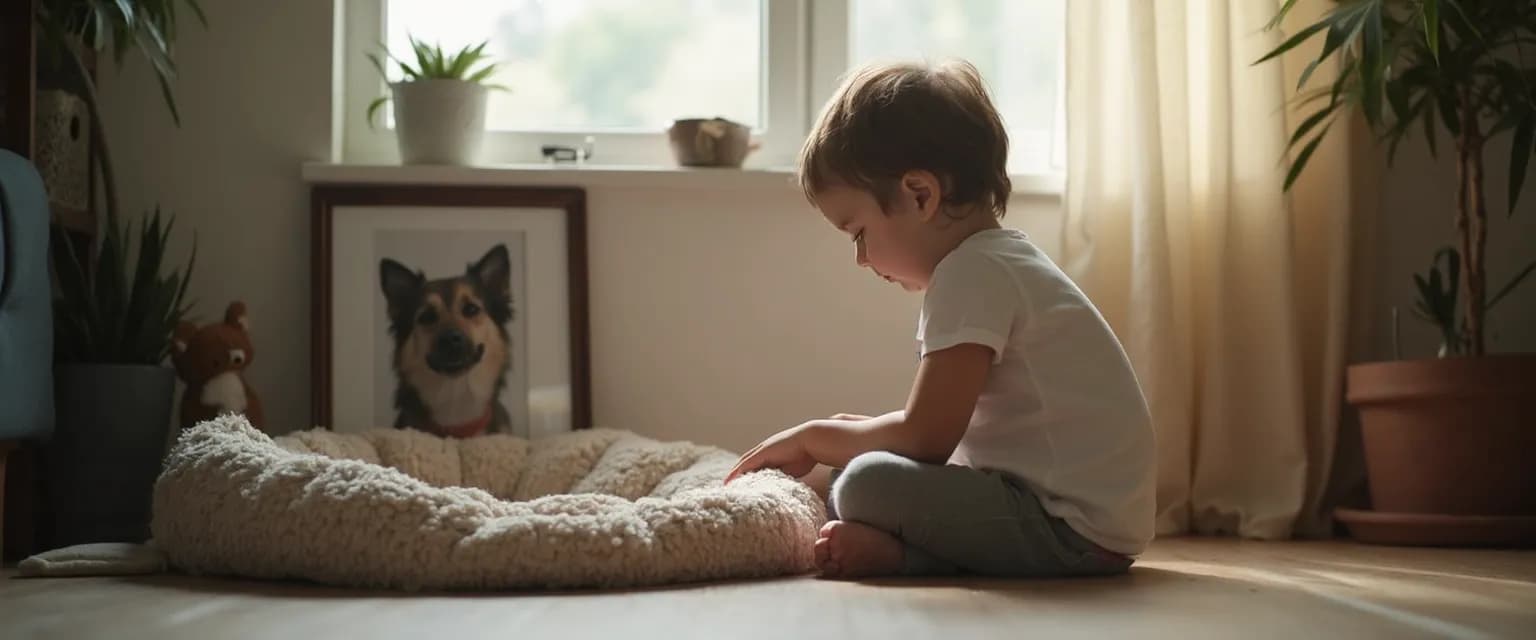
How Pet Grief Shapes Children's Emotional Development and Resilience
When a beloved pet dies, children experience a profound sense of loss that shapes their emotional landscape in ways parents might not fully anticipate. Pet grief offers children one of their first meaningful encounters with loss, creating a pivotal moment in their emotional development. Unlike other childhood challenges, pet grief combines deep attachment, unconditional love, and the concrete reality of death into a powerful learning experience that builds essential emotional skills.
Research shows that how children process pet grief significantly impacts their ability to develop healthy coping mechanisms for future losses. When supported through pet grief, children gain valuable emotional tools that serve them throughout life. According to developmental psychologists, the brain's neural pathways for emotional intelligence are particularly receptive during childhood, making pet loss experiences formative moments for emotional growth.
Parents play a crucial role in transforming pet grief from a purely painful experience into a foundation for emotional resilience. By acknowledging the legitimacy of a child's pet grief rather than minimizing it, adults validate important feelings and teach children that processing emotions—even difficult ones—is healthy and necessary.
How Pet Grief Builds Essential Emotional Skills in Children
Pet grief serves as a powerful catalyst for developing empathy—perhaps the most fundamental emotional skill children need. When children love and eventually lose a pet, they experience the full emotional spectrum that accompanies deep connection. This firsthand experience with pet grief creates neural pathways for understanding others' pain in ways abstract lessons cannot achieve.
Children who process pet grief with supportive guidance learn that feelings can be intense yet manageable. This lesson in emotional regulation becomes a cornerstone of resilience. Studies show that children who receive validation during pet grief develop stronger confidence in handling difficult emotions later in life.
The contrast between supported and unsupported pet grief experiences is striking. Children whose feelings are dismissed with statements like "it was just a fish" or "we'll get another one" learn to suppress emotions rather than process them. Conversely, children whose pet grief is acknowledged develop healthier emotional processing patterns that serve them through adolescence and beyond.
Pet grief also teaches children about impermanence in a tangible way. Unlike abstract concepts, the loss of a pet provides a concrete experience with life's impermanent nature. This understanding, when developed through supportive pet grief processing, becomes a foundation for adaptability—a crucial skill in our rapidly changing world.
Age-Appropriate Pet Grief Conversations That Support Growth
Effective pet grief conversations must align with a child's developmental stage. For preschoolers, simple, concrete explanations work best: "Fluffy's body stopped working, and she won't be coming back." School-age children benefit from more detailed discussions about the pet's life cycle and natural emotional responses to loss.
When initiating pet grief conversations, open-ended questions create space for authentic expression: "How are you feeling about Hammy being gone?" or "What do you miss most about Spot?" These prompts validate the importance of pet grief while giving children permission to express their unique emotional responses.
Watch for signs that a child is struggling with pet grief beyond the normal adjustment period. These may include sleep disturbances, withdrawal from activities, or preoccupation with death. In these cases, additional emotional support might be needed.
Creating meaningful remembrance rituals helps children process pet grief in tangible ways. Consider these age-appropriate activities:
- Creating a memorial stone for the garden
- Compiling a photo album of favorite memories
- Planting a tree or flower in the pet's honor
These rituals acknowledge the pet's importance while providing a concrete way to express feelings and celebrate the relationship.
Transforming Pet Grief Into Lasting Emotional Strength
The long-term benefits of healthy pet grief processing extend far beyond childhood. Children who learn to navigate pet grief with support develop emotional vocabulary and coping strategies that serve them in future relationships and challenges. These early experiences create a blueprint for handling more complex losses later in life.
Parents can continue supporting emotional development by normalizing conversations about feelings, modeling healthy emotional expression, and creating family cultures where all emotions—including sadness and grief—are accepted. These practices transform pet grief from a singular sad event into a foundation for lifelong emotional intelligence.
The skills developed through pet grief—empathy, emotional regulation, adaptability, and healthy attachment—become part of a child's emotional toolkit for life. By approaching pet grief as an opportunity for growth rather than just a painful experience to get through, parents help children build the emotional resilience they'll need throughout their lives.



