


How To Host Your First Grief Share Meeting: Room-By-Room Guide | Grief
Hosting your first grief share meeting brings a unique emotional weight—you're creating space for people experiencing profound loss. The physical environment you prepare matters more than you might think. When someone walks into a grief share gathering carrying the heaviness of loss, the room itself can either amplify their anxiety or help them feel safe enough to open up. The good news? Creating a supportive grief share space doesn't require professional expertise, just thoughtful preparation.
Your setup choices directly impact whether participants feel comfortable sharing their experiences. Research shows that environmental factors like seating arrangement and lighting significantly influence emotional openness in support settings. A well-prepared grief share meeting space reduces anxiety for everyone—hosts included. This guide walks you through practical, room-by-room preparation that transforms any venue into a welcoming environment for grief support.
The difference between a clinical-feeling space and a genuinely supportive one often comes down to small, intentional details. Think of your grief share setup as creating a living room atmosphere where vulnerability feels natural, not forced. Whether you're hosting in your home, a community center, or a workplace conference room, the principles remain consistent: comfort, accessibility, and emotional safety first.
Setting Up Your Grief Share Meeting Room: The Essentials
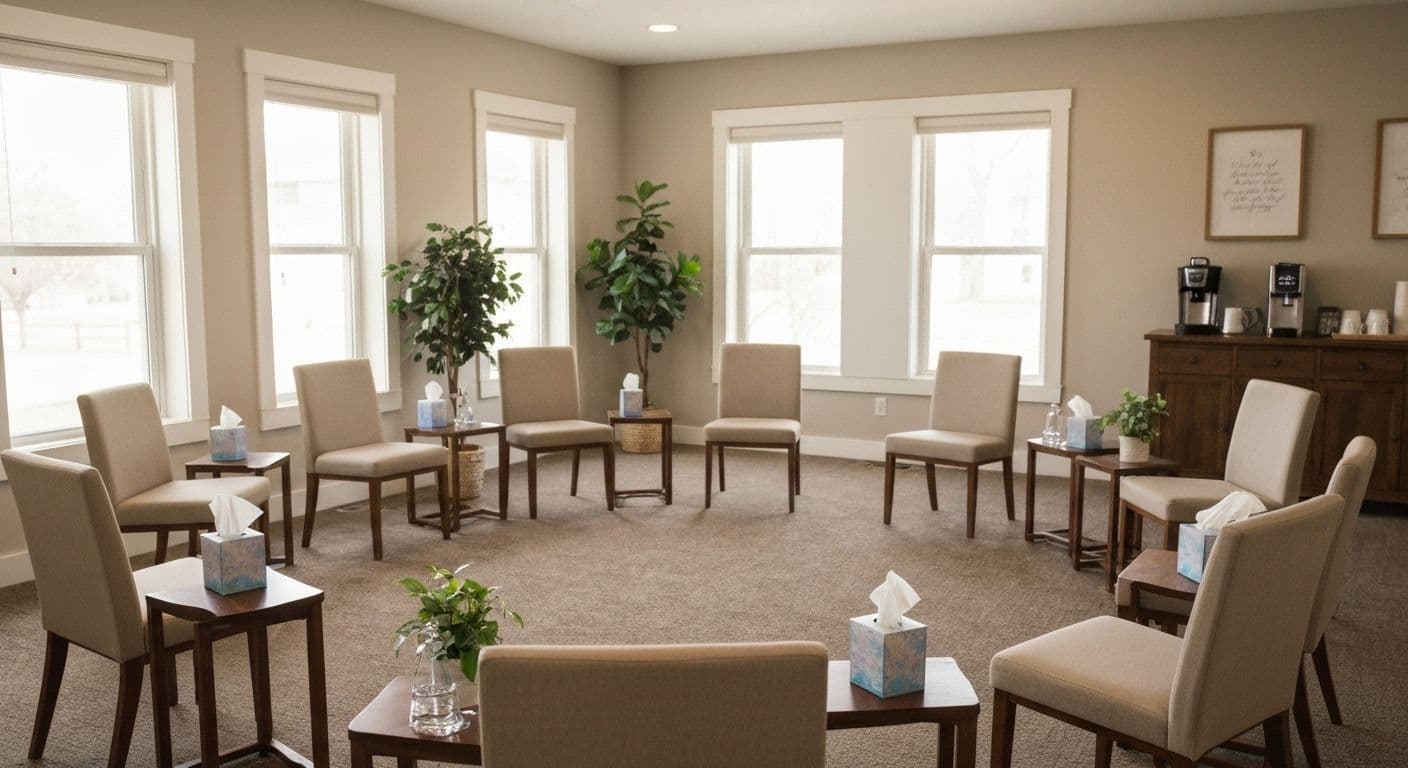
Seating arrangements set the tone for your entire grief share gathering. A circle formation works best—it creates equality and connection while allowing everyone to see each other. Avoid theater-style rows, which feel impersonal and create barriers to authentic sharing. Space chairs about three feet apart, close enough for intimacy but far enough that participants don't feel their personal space is invaded.
Lighting transforms the emotional atmosphere of your grief share meeting. Harsh fluorescent lights create an institutional feel that works against emotional openness. Instead, use warm, soft lighting—table lamps or dimmable overhead lights work beautifully. Natural light is wonderful during daytime meetings, but have curtains or blinds ready to adjust brightness as needed. The goal is creating a cozy, safe-feeling environment that reduces anxiety rather than amplifying it.
Strategic placement of comfort essentials shows thoughtfulness without being obvious. Position tissue boxes within easy reach of every seat—not just one in the center. Have bottled water available, and consider soft blankets or throws draped over chairs. These small touches communicate care. Temperature control matters more than most hosts realize; rooms that are too cold make people physically tense, while overly warm spaces create drowsiness. Aim for comfortable room temperature, typically around 68-72°F.
Create clear pathways to exits so participants never feel trapped. Grief share meetings can bring unexpected emotional waves, and knowing they can step out quietly without disrupting others provides crucial psychological safety. Position your seating arrangement so at least two people have easy access to the door without climbing over others.
Grief Share Meeting Checklists for Different Venues
Home Venue Checklist
Hosting a grief share at home offers intimacy but requires boundary-setting. Clear personal items from the meeting space to create neutral territory. Silence phones and doorbells. Have your family or roommates aware of the meeting time. Ensure bathroom access is clear and stocked with essentials. The advantage of home-based grief share meetings is the naturally warm atmosphere; just balance comfort with appropriate boundaries.
Community Space Checklist
Community centers or churches offer dedicated space but often feel impersonal. Arrive 30 minutes early to arrange furniture and adjust lighting. Bring personal touches like a tablecloth, candles (battery-operated for safety), or a small plant. Test the sound environment—echoing spaces make people self-conscious about sharing. If you're dealing with social comfort techniques, remember that acoustic warmth matters as much as visual warmth.
Workplace Venue Checklist
Workplace grief share gatherings require extra attention to privacy and psychological safety. Book a private conference room, not a glass-walled space. Post a "Meeting in Progress" sign to prevent interruptions. Remove work-related materials that might distract from the grief share focus. Consider white noise machines if walls are thin. The challenge here is creating emotional safety within a professional environment—it's doable with intentional preparation.
Universal items for any grief share venue include: tissues, water, comfortable seating, soft lighting, clear exits, and a clock visible to you as host for gentle time management.
Making Your Grief Share Space Feel Welcoming and Safe
Small touches communicate safety without overwhelming grieving participants. A simple welcome sign, soft background music playing as people arrive, and your calm presence set the tone. Avoid overly clinical setups with whiteboards or presentation equipment—this isn't a seminar. Similarly, be mindful about religious symbols in secular grief share spaces; they can alienate those with different beliefs.
Test your space before anyone arrives. Sit in different chairs to check sightlines and comfort. Notice what catches your eye—remove anything potentially triggering or distracting. Walk through the entrance as a first-time attendee would. Does the space feel inviting? Can you easily find tissues and water?
Your thoughtful preparation creates the foundation for meaningful connection. When participants enter a well-prepared grief share environment, they can focus on their healing journey rather than physical discomfort or environmental distractions. This groundwork matters deeply—it honors their courage in showing up.
Ready to deepen your skills in supporting others through emotional challenges? Creating a welcoming grief share meeting space is just the beginning of facilitating meaningful healing connections.



