


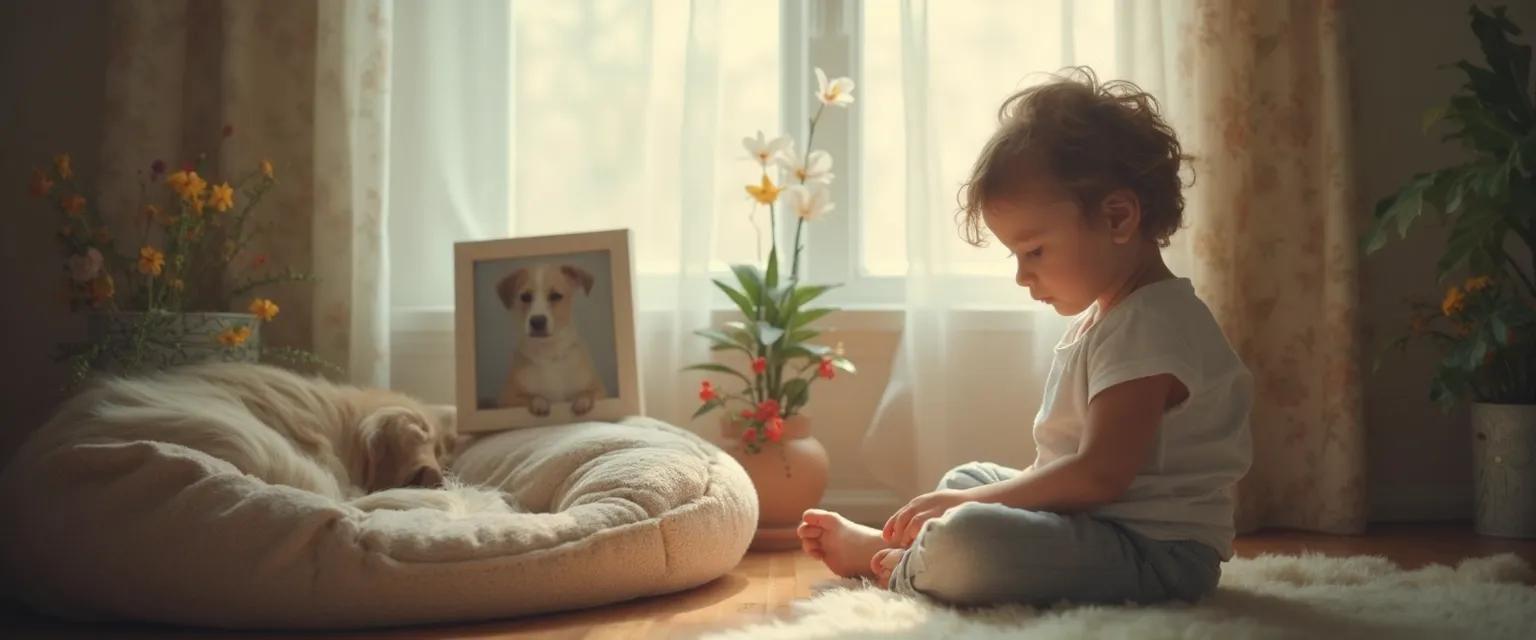
Supporting Children Through Pet Grief: Honoring Their Feelings and Process
When a beloved pet passes away, the entire family feels the weight of pet grief, but children often experience it in particularly profound ways. For many kids, losing a pet represents their first significant encounter with death, making it a crucial learning moment for emotional development. Pet grief in children deserves special attention because the bond between children and animals creates unique attachments—pets offer unconditional love, constant companionship, and often serve as confidants for children's deepest thoughts and feelings.
Parents sometimes mistakenly try to rush children through pet grief, hoping to spare them pain or quickly return to normalcy. However, this approach can backfire, potentially teaching children to suppress emotions rather than process them healthily. When we create space for children to experience pet grief at their own pace, we help them develop emotional intelligence skills that will serve them throughout life.
Supporting a child through pet grief means acknowledging that their feelings are valid, no matter how intense or long-lasting. Their sadness isn't "just about an animal"—it's about losing a family member who held a special place in their heart.
Understanding Children's Pet Grief at Different Ages
Pet grief manifests differently across developmental stages. Toddlers and preschoolers may not fully grasp the permanence of death but will notice the pet's absence. They might ask repeatedly when the pet is coming back or seem temporarily sad before returning to play. This doesn't mean they've "moved on"—rather, they process pet grief in shorter bursts appropriate to their cognitive development.
Elementary-aged children typically understand death's permanence but may have many questions about what happened to their pet. Their pet grief might include worrying about whether their pet felt pain or fear, or wondering where pets go after they die. These questions represent healthy processing, not morbid fascination.
Teenagers experiencing pet grief often show reactions similar to adults—profound sadness, anger, or even temporary withdrawal. However, they may be less likely to openly express these feelings, instead processing their pet grief privately or with peers rather than parents.
Watch for signs that indicate a child is struggling with pet grief: significant changes in sleep patterns, loss of interest in previously enjoyed activities, declining school performance, or expressing thoughts that life isn't worth living without their pet. These signals suggest your child might need additional anxiety management support during this difficult time.
Supportive Strategies for Children Experiencing Pet Grief
Creating meaningful memorials offers powerful pet grief support for children. Consider these age-appropriate options:
- Planting a tree or flowers in the pet's honor
- Creating a photo album or memory box of favorite toys and mementos
- Holding a small memorial ceremony where family members share favorite memories
- Making artwork that celebrates the pet's life
When discussing pet loss, use clear, age-appropriate language. Avoid euphemisms like "put to sleep" which can create confusion or fear. Instead, explain gently that the pet's body stopped working and they died. Emphasize that the pet isn't in pain anymore if they were suffering.
Balance validation with gentle forward movement by acknowledging feelings while gradually reestablishing routines. Statements like "I see how much you miss Fluffy. It's okay to feel sad when we lose someone we love" validate their experience without suggesting they should "get over it."
Most children move through pet grief naturally with support, but be attentive if grief symptoms intensify over time rather than gradually improving. This could indicate they need additional emotional support techniques to process their feelings.
Moving Through Pet Grief Together: Family Healing Approaches
Parents play a crucial role in modeling healthy pet grief processing. Don't hide your own sadness—show children that emotions are normal and can be expressed appropriately. Statements like "I'm feeling sad about Max today too. Would you like to look at some pictures together?" demonstrate that grief comes in waves and can be shared.
Family rituals help provide structure during pet grief. Consider establishing a special day each year to remember your pet, looking at photos together, or sharing stories about funny things your pet did. These activities acknowledge the continuing bonds we maintain with those we've lost.
Children's books about pet loss can provide valuable frameworks for understanding pet grief. Titles like "The Tenth Good Thing About Barney" or "When a Pet Dies" offer accessible ways to discuss difficult emotions and normalize the grieving process.
Remember that pet grief, when handled with compassion and patience, builds emotional resilience in children. By supporting them through this significant loss without rushing them to "move on," you're teaching valuable life skills about honoring feelings, processing loss, and carrying love forward even when relationships change.



