


Transforming Grief Share Programs Into Healing Circles: 5 Innovative Approaches
Grief share programs have evolved significantly over the years, moving beyond traditional support groups to become dynamic healing spaces that address the complex nature of loss. While conventional grief share programs often follow a structured discussion format, many facilitators are discovering that innovative approaches create more profound healing experiences. These reimagined grief share programs incorporate creative elements, nature, movement, and communal activities to help participants process their emotions in more holistic ways. By transforming standard grief share programs into healing circles, facilitators create environments where grief processing techniques become more accessible and effective for diverse participants.
Today, we'll explore five innovative approaches that are revolutionizing grief share programs and creating more meaningful healing journeys. Each method offers unique benefits while maintaining the supportive community aspect that makes grief share programs so valuable.
Creative Expression in Grief Share Programs: Art Therapy and Storytelling Circles
Art therapy grief share programs provide powerful alternatives for those who struggle to verbalize their emotions. When words fail, creative expression opens new pathways for processing grief. In these specialized grief share programs, participants use painting, drawing, collage, or sculpture to externalize feelings that might otherwise remain locked inside.
Facilitators of art therapy grief share programs report that the creative process often bypasses intellectual defenses, allowing for raw emotional expression. One participant described the experience: "I couldn't talk about my loss, but painting my feelings gave them form and made them manageable." These grief share programs typically provide simple materials and gentle prompts rather than focusing on artistic skill.
Similarly, storytelling circles transform traditional grief share programs by focusing on narrative healing. These groups create space for participants to share their stories in structured ways that honor both the deceased and the griever's ongoing journey. Unlike conventional grief share programs where conversation might feel scattered, storytelling circles use specific prompts and emotional healing techniques to help participants craft meaningful narratives.
When implementing these creative grief share programs, facilitators should establish clear boundaries, provide varied materials or prompts, and emphasize that the process matters more than the product. The goal isn't artistic perfection but emotional expression and connection.
Nature-Based and Movement-Oriented Grief Share Programs
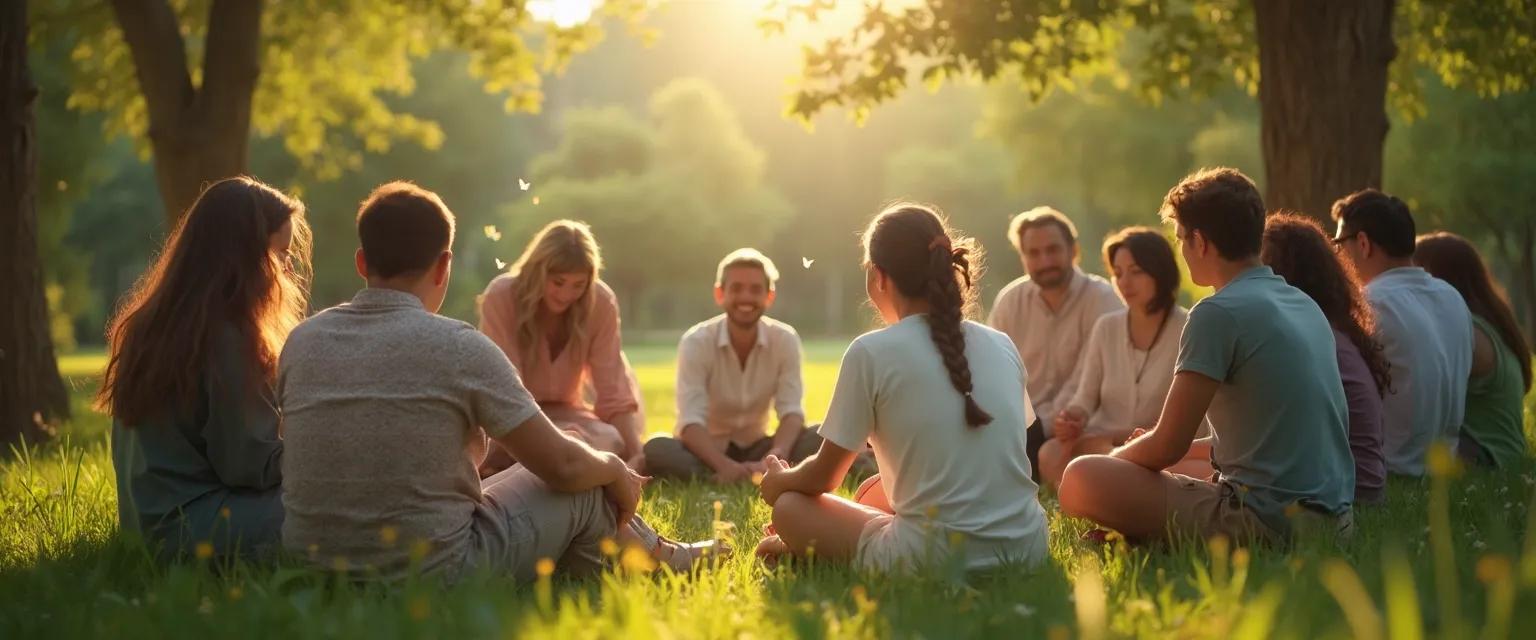
Nature-based grief share programs harness the healing power of outdoor environments. Research shows that natural settings reduce stress hormones and provide perspective that indoor grief share programs sometimes lack. These groups might meet in parks, gardens, or wilderness areas, using the natural world as both metaphor and medicine.
Walking grief share programs combine gentle movement with supportive conversation. Unlike seated grief share programs where physical tension can build, walking groups allow participants to regulate their emotional intensity through movement. As one facilitator noted, "Sometimes walking side-by-side makes difficult conversations easier than face-to-face interactions."
Movement therapy grief share programs go further by incorporating intentional physical expression. These might include gentle yoga, tai chi, or simple dance movements designed to release the physical manifestations of grief that traditional grief share programs might overlook. The body often holds grief long after the mind has processed it, making movement-oriented grief share programs particularly effective for long-term healing.
Cooking collectives offer another innovative approach to grief share programs. These groups gather to prepare meaningful recipes, often those connected to loved ones who have died. The sensory experience of cooking, combined with the nourishment of sharing a meal, creates unique healing opportunities that conventional grief share programs can't provide. As participants chop, stir, and taste together, they often find it easier to share memories and emotional processing strategies in this relaxed setting.
Enhancing Your Grief Share Programs: Implementation Strategies for Healing Circles
Transforming traditional grief share programs into healing circles requires thoughtful planning and flexibility. Start by assessing your current grief share programs to identify opportunities for innovation. Consider surveying participants about their interests and comfort levels with different approaches.
Most successful grief share programs now incorporate elements from multiple modalities. For example, a nature-based grief share program might begin with a walking meditation, include time for artistic expression, and conclude with a simple shared meal. This integrated approach addresses the cognitive, emotional, and physical aspects of grief more completely than single-modality grief share programs.
Resources for facilitators looking to enhance their grief share programs continue to expand. Online training, specialized guidebooks, and facilitator networks provide valuable support for those ready to transform conventional grief share programs into more dynamic healing circles. Remember that the most effective grief share programs create safe containers for authentic expression while offering multiple pathways for processing grief's complex emotions.



