


Why Breakups Hurt Worse Than Physical Pain: What Your Body Is Actually Experiencing
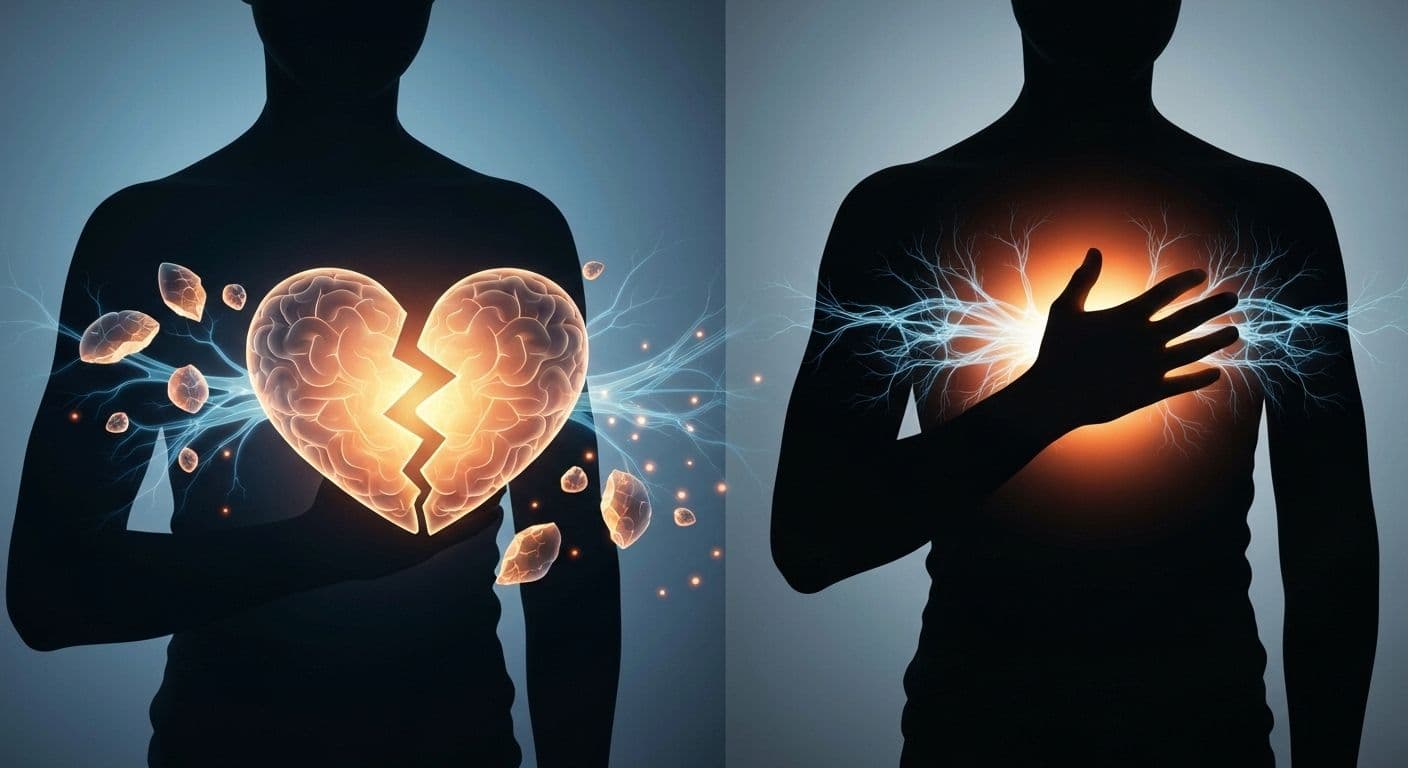
You know that crushing feeling after a breakup—the one that makes your chest physically ache? Turns out, there's a powerful scientific reason why breakups hurt so much. Your brain literally processes emotional pain the same way it handles physical injuries. That's not just a metaphor; it's neuroscience at work. When you're going through heartbreak, your body launches a full-scale stress response that rivals any physical trauma you might experience.
The fascinating truth is that breakups hurt so much because your brain treats the loss of an attachment figure as a survival threat. Your nervous system doesn't distinguish between a broken bone and a broken heart—both activate similar neural pathways. This explains why emotional pain feels so unbearably real and why you can't simply "think your way out" of heartbreak. Understanding what's actually happening in your body during this experience helps you navigate the pain with more compassion for yourself.
Why Breakups Hurt So Much: Your Brain's Pain Centers Light Up
Research using fMRI scans reveals something remarkable: when people look at photos of their ex-partners, the same brain regions activate as when they experience physical pain. The anterior cingulate cortex and the insula—areas responsible for processing physical discomfort—show intense activity during emotional rejection. This neurological overlap explains why breakups hurt so much on a visceral, body-deep level.
Your brain evolved this way for good reason. Millions of years ago, social rejection meant potential death—being cut off from your tribe was genuinely life-threatening. While we've built modern civilization, our ancient wiring remains unchanged. When you lose a romantic partner, your brain sounds the same alarm bells it would if you were physically injured and vulnerable to predators. That's some serious biological programming working against your emotional recovery.
This connection between emotional and physical pain also means that understanding your emotions becomes essential for managing heartbreak effectively.
The Stress Hormone Storm: What Breakups Do to Your Body
The physiological reasons breakups hurt so much extend far beyond your brain. Your body releases a flood of stress hormones—primarily cortisol and adrenaline—that create a cascade of physical symptoms. Your heart rate increases, your breathing becomes shallow, and your digestive system essentially shuts down. You might lose your appetite, struggle with sleep, or feel physically exhausted despite doing nothing strenuous.
This stress response isn't a one-time event. During the weeks following a breakup, your cortisol levels remain elevated, keeping your body in a constant state of high alert. This prolonged stress weakens your immune system, making you more susceptible to illness. Ever noticed how people often get sick after a major breakup? That's your compromised immune function at work.
The good news is that recognizing these patterns helps you respond more effectively. When you understand that your physical symptoms stem from stress hormones, you can implement stress reduction techniques that directly address the biological mechanisms driving your discomfort.
Effective Strategies for Managing Why Breakups Hurt So Much
Now that you understand the science, let's talk about practical techniques. Your body needs specific interventions to counteract the stress response and help your nervous system calm down. These aren't just feel-good suggestions—they're evidence-based approaches that work with your biology rather than against it.
Movement becomes particularly powerful because it metabolizes stress hormones. When cortisol floods your system, physical activity helps burn it off. Even a 10-minute walk signals to your brain that you've "escaped the threat," allowing your nervous system to begin settling. You don't need intense workouts; gentle, consistent movement does the job.
Breathing techniques offer another direct intervention. Deep, slow breathing activates your parasympathetic nervous system—your body's natural calming mechanism. Try this: breathe in for four counts, hold for four, exhale for six. This pattern tells your brain that you're safe, gradually reducing those stress hormones that make breakups hurt so much.
Building small daily victories also helps rewire your brain away from pain pathways and toward recovery. Each tiny accomplishment—making your bed, eating a proper meal, calling a friend—creates positive neural activity that counterbalances the pain circuits.
The Recovery Timeline: How Your Body Heals
Understanding why breakups hurt so much also means recognizing that healing follows predictable biological patterns. Your stress hormones typically begin normalizing after 2-3 weeks, though emotional processing takes longer. Your brain needs time to form new neural pathways that don't include your ex-partner in your daily life.
The physical symptoms—the chest tightness, the nausea, the exhaustion—usually improve before the emotional pain subsides. That's actually encouraging: it means your body is already working on recovery even when your mind still feels stuck. Trust the process. Your nervous system is remarkably resilient and knows how to heal itself when given proper support.
Remember, breakups hurt so much because you're wired for connection. That same capacity for deep attachment that makes heartbreak painful also enables you to form meaningful relationships in the future. Your brain will heal, your stress hormones will balance, and you'll emerge stronger from this experience.



