


Why Your Breakup Journal Needs A 30-Day Expiration Date | Heartbreak
Picture this: You've been pouring your heart into your breakup journal for three months straight, filling pages with raw emotions, analyzing every text message, replaying every conversation. Yet somehow, you feel just as stuck as the day your relationship ended. Here's the plot twist that might surprise you—unlimited breakup journaling after a relationship ends can actually trap you in emotional quicksand rather than help you heal. The science behind emotional processing reveals a counterintuitive truth: your breakup journal needs an expiration date. Specifically, a 30-day window gives you enough time to process your emotions effectively without sliding into the rumination trap that keeps you mentally rehearsing pain. Ready to discover how time-limited journaling transforms your breakup recovery from an endless emotional loop into a focused healing sprint?
The Science Behind Why Your Breakup Journal Can Keep You Stuck
There's a crucial difference between reflection and rumination, and your breakup journal sits right at this crossroads. Reflection helps you process emotions and extract meaningful lessons from your experiences. Rumination, however, is the mental equivalent of playing the same sad song on repeat—it reinforces neural pathways associated with pain rather than healing them. When you journal about your breakup without boundaries, your brain doesn't distinguish between productive processing and harmful dwelling.
Neuroscience research shows that repeatedly writing about negative emotions without a structured endpoint creates what psychologists call the "rehearsal effect." Each time you document the same painful memories in your breakup journal, you're essentially practicing those feelings, making the neural connections stronger and more automatic. Think of it like this: your brain treats repeated emotional experiences as important information worth remembering. The more you revisit the pain through unlimited journaling after your breakup, the more your brain assumes this emotional state is where you should stay.
This explains why some people find their breakup journal becomes a comfort zone that paradoxically prevents forward movement. The act of writing feels productive, giving the illusion of healing work while actually keeping you anchored to what you're trying to move beyond. Your inner voice patterns become increasingly focused on loss rather than growth, creating an emotional feedback loop that's difficult to escape.
How the 30-Day Breakup Journal Window Accelerates Healing
The magic of a 30-day timeframe lies in its psychological sweet spot—long enough to genuinely process complex emotions, yet short enough to prevent rumination from taking root. Research on emotional processing suggests that most acute breakup emotions naturally begin shifting within four weeks when given focused attention. By setting this clear boundary for your breakup journal practice, you create urgency that transforms vague emotional venting into purposeful insight extraction.
Time constraints work wonders for focus. When you know your breakup journal has an expiration date, each entry becomes more intentional. Instead of endless "why did this happen" entries, you naturally gravitate toward "what am I learning" reflections. This shift is profound—it moves you from passive victim to active participant in your healing journey. The 30-day window forces you to treat your breakup journal as a temporary processing tool rather than a permanent emotional residence.
Perhaps most importantly, having a defined endpoint provides psychological closure that open-ended journaling never delivers. Knowing that Day 30 represents your official transition point gives your brain permission to start reorganizing around forward momentum rather than backward analysis. Small daily victories become easier to recognize when you're not constantly pulling yourself back into past relationship dynamics through unlimited journaling sessions.
Practical Breakup Journal Strategies for Your 30-Day Window
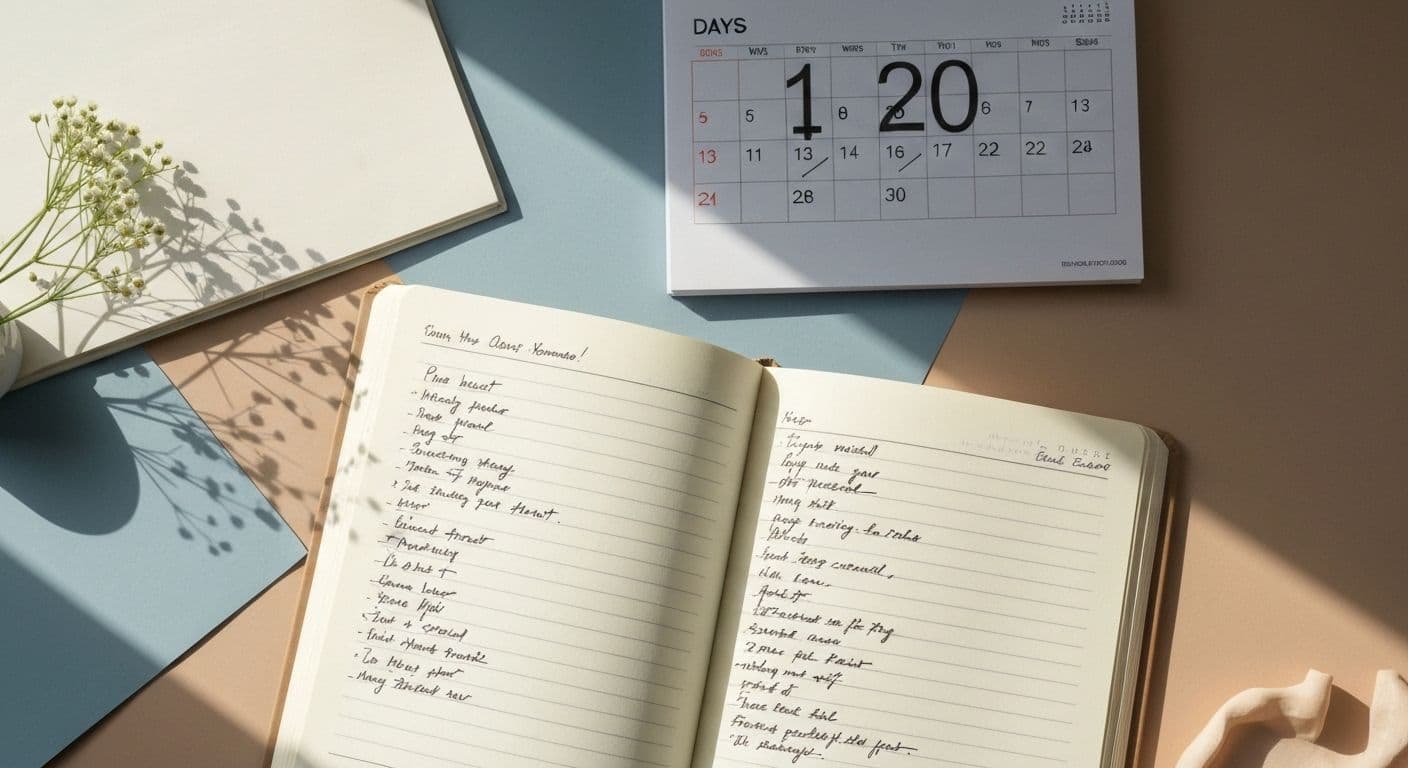
Let's make this actionable. Start your time-limited breakup journal by marking Day 1 and Day 30 in your calendar—make these dates visible and non-negotiable. Structure your entries to evolve across the month: Week 1 focuses on raw emotional processing ("What am I feeling right now?"), Week 2 shifts to pattern recognition ("What patterns do I notice?"), Week 3 emphasizes lesson extraction ("What am I learning about myself?"), and Week 4 directs attention toward future intentions ("What do I want moving forward?").
This progression naturally guides you from pain processing to growth orientation without forcing premature positivity. Your breakup journal becomes a bridge rather than a dwelling place. On Day 30, create a closing ritual that honors your processing journey—read through your entries one final time, write a letter to your future self summarizing key insights, then physically close the journal and place it somewhere out of daily sight.
After your 30-day breakup journal window closes, transition to forward-focused reflection that doesn't rehash relationship details. This is where managing transition anxiety becomes essential—you're moving from processing mode to building mode. Tools like Ahead offer science-driven emotional intelligence techniques that help you continue growing without the rumination risks that come with unlimited breakup journaling. The app provides structured, bite-sized exercises that keep you moving forward rather than circling backward through painful memories.



