


5 Effective Mindfulness Meditation for Anxiety Techniques During Your Daily Commute
Transform your daily commute from a stress-inducing experience to a peaceful interlude with mindfulness meditation for anxiety. Whether you're packed into a crowded subway car or walking briskly to catch your bus, those precious minutes represent an untapped opportunity to calm your mind and reduce anxiety. Mindfulness meditation for anxiety is particularly effective during commutes because it leverages an otherwise mundane part of your day for mental wellness.
The science is clear: regular mindfulness meditation for anxiety reduces stress hormones like cortisol while increasing feel-good neurotransmitters such as serotonin. This powerful combination helps create a buffer against the typical commuting stressors – delays, crowds, and unpredictability. The beauty of commute-based meditation lies in its accessibility – no special equipment needed, just your attention and breath. Even five minutes of focused breathing techniques can significantly lower anxiety levels before you reach your destination.
Remember, perfection isn't the goal with mindfulness meditation for anxiety during commutes. The practice is about creating small islands of calm amid the chaos – and every moment of awareness counts toward building your anxiety-management toolkit.
Simple Mindfulness Meditation for Anxiety Techniques for Public Transportation
The enclosed, often crowded nature of public transportation creates a unique environment for mindfulness meditation for anxiety practice. Let's explore techniques specifically designed for these spaces:
The Transit-Adapted 4-7-8 Breathing Technique
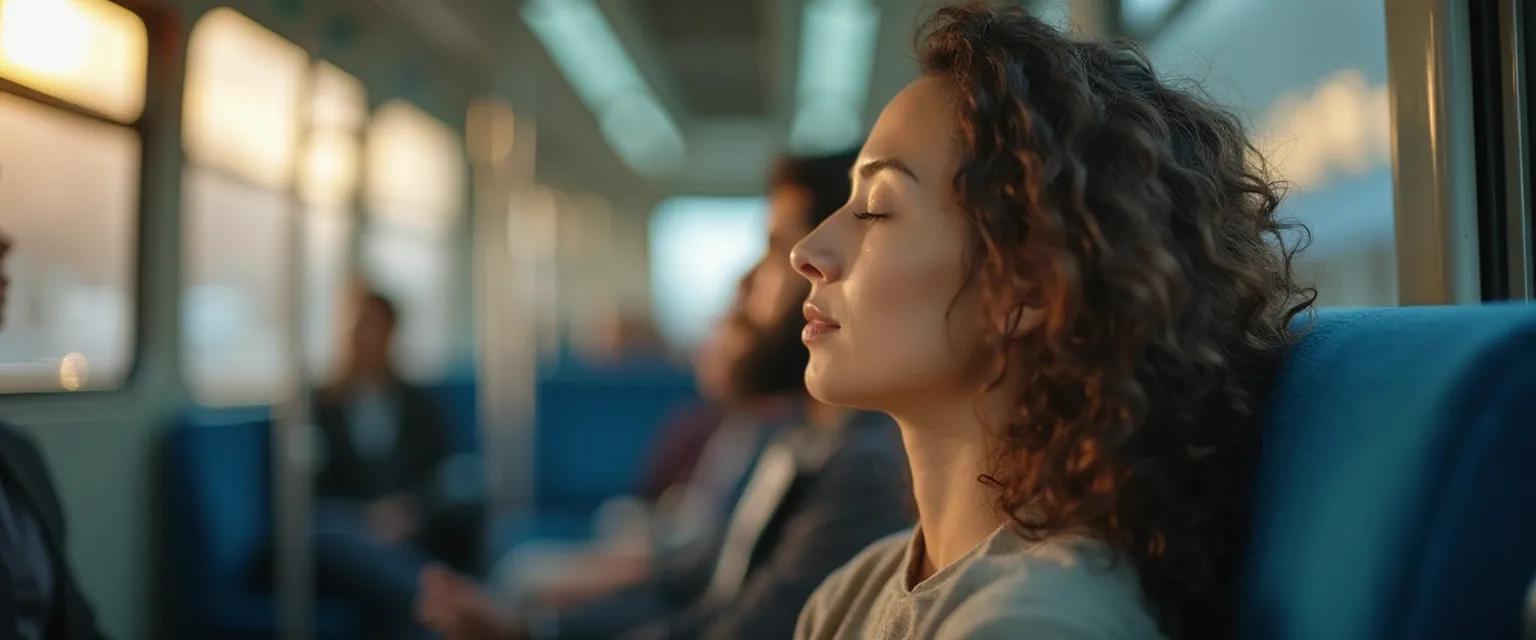
This powerful mindfulness meditation for anxiety exercise works even in noisy environments. Close your eyes if comfortable (or soften your gaze) and breathe in quietly through your nose for 4 counts, hold for 7 counts, then exhale completely through slightly pursed lips for 8 counts. The beauty of this technique is that the counting creates a mental focus point that helps drown out surrounding chaos.
Seated Body Scan
While seated on public transportation, this mindfulness meditation for anxiety practice helps ground you physically. Begin by noticing where your body makes contact with the seat. Then systematically bring awareness to each body part, starting with your feet and moving upward. Notice any tension without judgment, allowing it to release naturally with each breath. This stress reduction technique works wonders even when you only have minutes to spare.
Environmental Anchor Points
When distractions abound, this mindfulness meditation for anxiety approach uses your environment as part of the practice. Choose one sensory input – perhaps the rhythm of the train, the temperature of the window against your hand, or even the predictable announcement sounds – and use it as your meditation anchor. Each time your mind wanders (which it naturally will), gently return to your chosen anchor. This technique transforms potential distractions into aids for your practice.
Walking Mindfulness Meditation for Anxiety Relief
Walking portions of your commute offer excellent opportunities for mindfulness meditation for anxiety practice in motion. The rhythmic nature of walking creates a natural foundation for meditation.
Step-Breath Synchronization
This fundamental mindfulness meditation for anxiety technique involves matching your breathing pattern to your footsteps. Try inhaling for four steps, then exhaling for four steps. The physical movement provides a tangible rhythm that helps anchor your awareness while simultaneously calming your nervous system – a powerful combination for anxiety reduction.
Urban Sensory Awareness
City environments offer rich sensory experiences that can serve as mindfulness meditation for anxiety focal points. Challenge yourself to notice five things you can see, four things you can hear, three things you can feel, two things you can smell, and one thing you can taste (perhaps your morning coffee). This anxiety management practice grounds you in the present moment, disrupting anxious thought patterns.
Transition Moments
The spaces between different modes of transportation (walking to the subway, exiting the bus) make perfect mindfulness meditation for anxiety opportunities. Use these transition points as mindful pauses – take three conscious breaths before continuing to your next mode of transportation. These micro-practices build your capacity for presence throughout the day.
Integrating Mindfulness Meditation for Anxiety into Your Daily Routine
The true power of commute-based mindfulness meditation for anxiety comes from consistency and integration into your broader routine. Start by committing to just one technique during each commute for a week. Notice how your relationship with travel anxiety begins to shift. Use your phone's arrival at certain stations or landmarks as meditation reminders.
As your practice develops, you'll find that these mindfulness meditation for anxiety skills naturally extend beyond your commute. The calm centeredness you cultivate while traveling becomes accessible during work presentations, family gatherings, or any situation where anxiety typically appears.
Remember that mindfulness meditation for anxiety is a skill that strengthens with practice. Each commute offers a fresh opportunity to build your mental muscles – transforming what was once "wasted time" into a powerful anxiety-management resource that travels with you wherever you go.



