


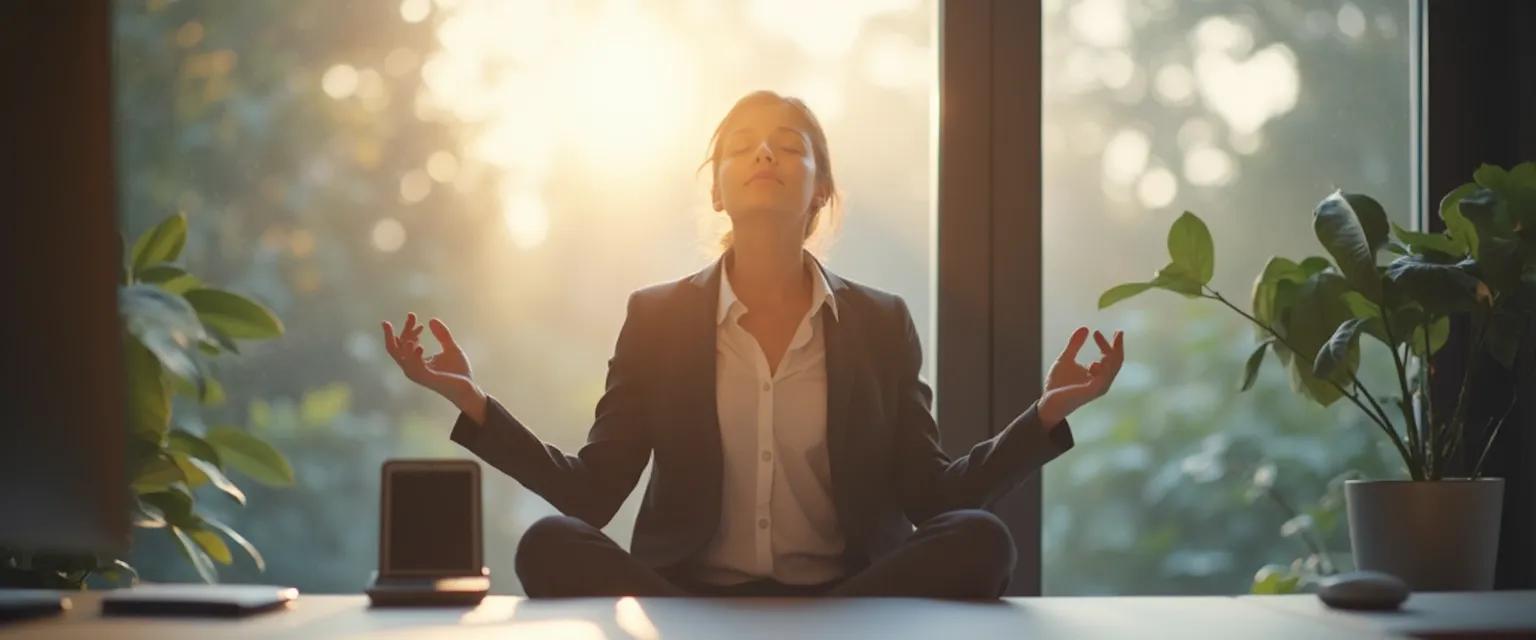
5-Minute Desk Meditation for Peace of Mind: Calm Between Business Calls
In today's fast-paced work environment, finding a moment of calm between business calls can seem impossible. Yet, incorporating meditation for peace of mind during your workday isn't just a luxury—it's essential for maintaining focus, creativity, and emotional balance. The beauty of desk meditation is that it doesn't require special equipment, a dedicated space, or even much time. Just five minutes between meetings can transform your mental state and productivity. Studies show that brief meditation sessions significantly reduce cortisol (the stress hormone) while improving executive function—exactly what you need to navigate a demanding workday.
The science behind meditation for peace of mind is compelling. Research from neuroscientists shows that even micro-meditation sessions activate the parasympathetic nervous system, shifting you from "fight-or-flight" to "rest-and-digest" mode. This biological shift happens remarkably quickly, making stress reduction techniques accessible even in the busiest schedules. When practiced consistently, these five-minute intervals create cumulative benefits, effectively rewiring neural pathways toward greater resilience and emotional regulation.
Ready to discover how to incorporate meditation for peace of mind without disrupting your workday? Let's explore practical techniques that fit seamlessly between your business calls.
Simple Breathing Techniques for Meditation for Peace of Mind at Your Desk
Breathing exercises form the foundation of effective meditation for peace of mind practice, especially in office settings. They're invisible to colleagues yet powerful for your internal state. The 4-7-8 breathing technique is particularly effective during high-stress moments. Here's how to practice it: inhale quietly through your nose for 4 seconds, hold your breath for 7 seconds, then exhale completely through your mouth for 8 seconds. This pattern activates your parasympathetic nervous system, creating an immediate calming effect.
Box breathing offers another powerful meditation for peace of mind strategy between calls. Visualize tracing a square as you breathe in for four counts, hold for four, exhale for four, and hold again for four. This technique is favored by high-performance professionals, including military special forces, for its ability to quickly restore calm under pressure.
For a more subtle approach, try "stealth breathing"—a technique where you place one hand on your desk and focus on the sensation of your breath moving through your body while maintaining a professional posture. This mindfulness technique creates a meditative state without closing your eyes or changing your external appearance, making it perfect for open office environments.
The key to these techniques is intention. Rather than just breathing differently, approach each breath as a deliberate meditation for peace of mind practice, focusing your awareness on the physical sensations and the present moment.
Body Awareness Meditation for Peace of Mind Without Leaving Your Chair
A seated body scan offers a powerful desk meditation for peace of mind practice that releases accumulated tension. Start at the top of your head and mentally scan downward, noticing areas of tightness or discomfort. As you identify tension spots, breathe into them, visualizing the area softening with each exhale. This technique takes just minutes but can dramatically shift your physical and mental state.
Incorporate subtle stretches that double as meditation anchors. Try gentle neck rolls, shoulder raises, or seated spinal twists while maintaining complete awareness of the sensations. These micro-movements become meditation for peace of mind opportunities when paired with mindful attention.
Another effective technique is "grounding through sensation"—deliberately feeling the weight of your body in your chair, your feet on the floor, and your hands on your desk. This sensory awareness creates an immediate return to the present moment, interrupting anxiety loops that often develop during busy workdays. The physical sensations become anchors for your meditation for peace of mind practice, helping manage emotions that arise during challenging work situations.
Integrating Desk Meditation for Peace of Mind Into Your Daily Schedule
Creating consistent triggers helps establish a sustainable meditation for peace of mind practice. Try the "after-call ritual"—using the moments after hanging up as a cue to take three mindful breaths before moving to the next task. Similarly, use the minutes before a meeting to center yourself rather than cramming in extra work.
Start with just one five-minute session daily, then gradually build to multiple brief meditation for peace of mind moments throughout your workday. Track your progress using simple metrics like focus duration or stress levels before and after practice.
Remember that effective meditation for peace of mind doesn't require perfect conditions—just your willingness to pause and connect with the present moment. These desk techniques serve as gateways to deeper mindfulness practices while providing immediate benefits right where you need them most: in the midst of your busy workday.



