


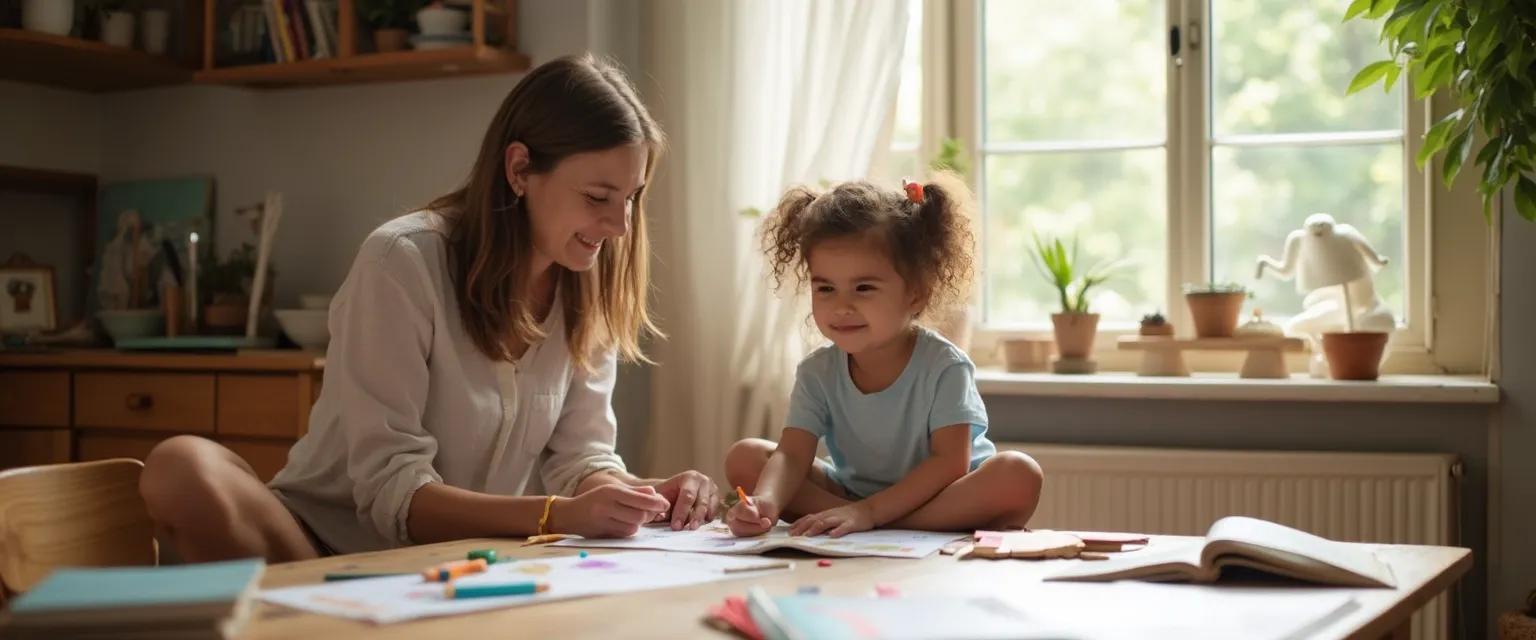
7 Mindful Learning Techniques for Busy Parents: Bond While Building Skills
Ever felt like you're juggling a million tasks while still wanting to be present for your child's development? You're not alone. As parents, we often put our own learning on hold while focusing on our children's growth. But what if there was a way to combine the two? Enter mindful learning – a powerful approach that allows busy parents to develop new skills alongside their children, creating meaningful connections in the process.
Mindful learning isn't just about acquiring knowledge; it's about being fully present during the learning process. When parents and children learn together, they create a unique bond that enhances both the relationship and the skill acquisition. Research shows that shared learning experiences activate reward centers in both parent and child brains, making the experience more memorable and enjoyable.
The beauty of mindful learning is that it doesn't require hours of dedicated time – perfect for busy families juggling work, school, and household responsibilities. Even 15 minutes of focused, present learning creates meaningful connections while building valuable skills for both generations.
Mindful Learning Techniques That Strengthen Parent-Child Bonds
The "curiosity pause" is a cornerstone of effective mindful learning with your child. When learning something new together, take moments to pause and genuinely wonder about what you're experiencing. This technique models an essential learning mindset for your child while deepening your connection.
Creating 15-minute skill-building rituals fits perfectly into busy family schedules. Perhaps it's learning a new language during breakfast, practicing an instrument after dinner, or exploring science concepts before bedtime. The consistency matters more than the duration, making this technique for productivity ideal for time-strapped parents.
The "beginner's mind" approach is particularly powerful in mindful learning with children. By genuinely embracing your role as a co-learner rather than the all-knowing parent, you create space for authentic discovery. When your child sees you struggle, persist, and eventually succeed at something new, they internalize these valuable learning behaviors.
Celebrating Small Wins Together
Make recognition of progress a central part of your mindful learning practice. Research shows that acknowledging small achievements activates the brain's reward system, motivating continued effort. Create a simple family ritual to celebrate learning milestones – whether it's mastering a difficult piano piece or finally understanding a challenging math concept.
Practical Mindful Learning Activities for Everyday Family Life
The kitchen offers endless opportunities for mindful learning. Cooking together incorporates math (measuring), chemistry (mixing ingredients), physics (heat transfer), and cultural studies (exploring cuisines). By approaching cooking as a mindful learning activity rather than a chore, you transform ordinary moments into extraordinary connections.
Outdoor exploration provides rich mindful learning possibilities. Create a "wonder walk" where you and your child observe and question natural phenomena. This mindfulness technique develops scientific thinking while strengthening your bond through shared discovery.
Even digital tools can support mindful learning when approached intentionally. Select apps and platforms designed for collaborative learning – where parents and children solve problems together rather than independently. This transforms screen time from a solitary activity into a connecting experience.
Daily errands become mindful learning opportunities with the right perspective. Grocery shopping can involve budgeting, nutrition science, and decision-making skills. The key is maintaining present awareness during these activities rather than rushing through them on autopilot.
Integrating Mindful Learning into Your Family's Future
Creating a sustainable family learning plan means adjusting your mindful learning approach as your children grow. Start with simple, sensory-rich activities for younger children, then gradually incorporate more complex challenges that match their developing abilities – always maintaining the core principle of learning alongside them.
The mindful learning techniques you establish now build resilience that serves both you and your children long-term. When families learn to approach challenges with curiosity rather than frustration, they develop adaptability that transfers to all areas of life.
Ready to begin your mindful learning journey? Start small – choose one activity this week where you'll learn something new alongside your child. Remember, the goal of mindful learning isn't perfection but presence. By showing up with genuine curiosity and a willingness to learn together, you're creating connections that will last far beyond the skills you develop.



