


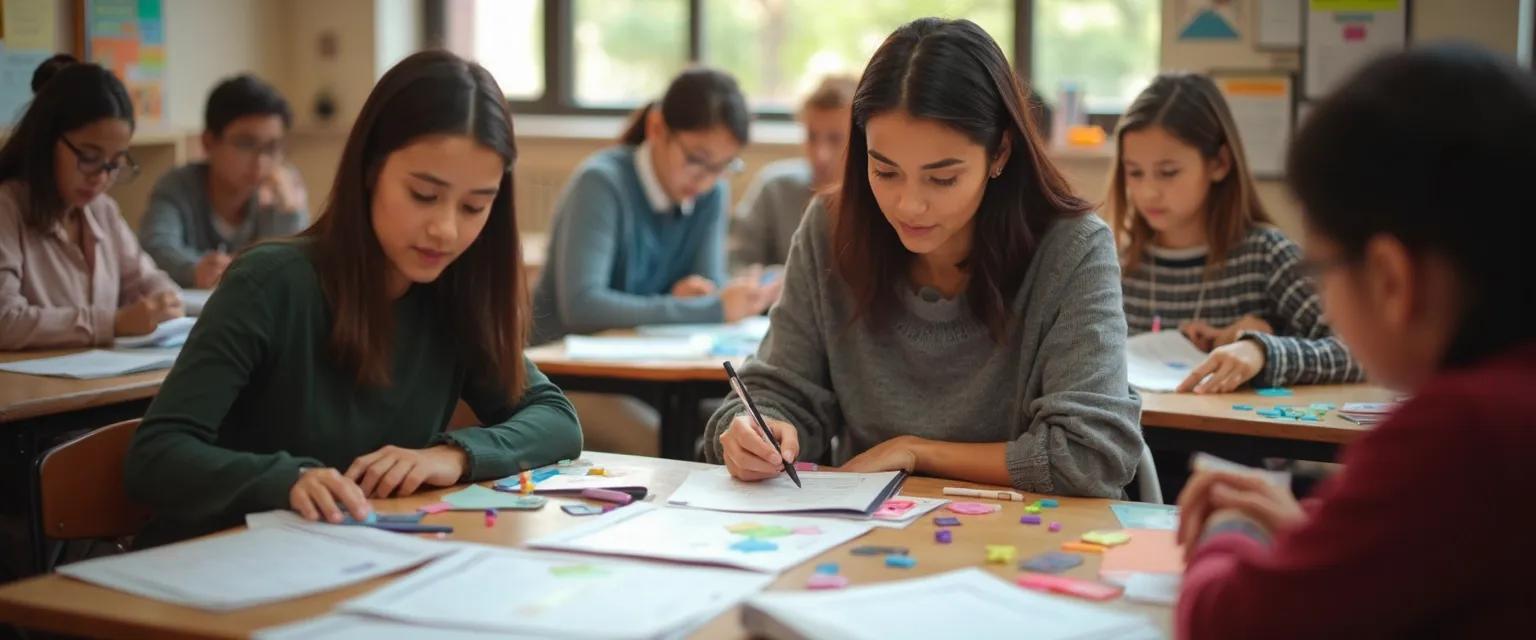
Creating Effective Self Awareness Assessment for Students of All Learning Styles
Creating an effective self awareness assessment for students requires understanding the diverse ways young minds process information and reflect on their experiences. As educators, we're uniquely positioned to help students develop this crucial life skill, but the traditional one-size-fits-all approach often falls short. Developing custom self awareness assessment for students tools that accommodate different learning styles isn't just helpful—it's essential for inclusive education that reaches every student in your classroom.
When designed thoughtfully, a self awareness assessment for students can transform how young people understand their strengths, challenges, and growth areas. These assessments help students develop emotional intelligence skills that will serve them throughout their lives. The key is creating assessment options that work for visual, auditory, and kinesthetic learners while respecting cultural differences and cognitive diversity.
Research shows that students who regularly engage with appropriate self-awareness tools demonstrate improved academic performance, better relationship skills, and enhanced decision-making abilities. Let's explore how to create assessments that work for every student in your classroom.
Designing Inclusive Self Awareness Assessment for Students with Different Learning Styles
The best self awareness assessment for students acknowledges that children process information differently. Visual learners might benefit from graphic organizers and mind maps, while auditory learners connect with discussion-based reflection. Kinesthetic learners often need movement-based activities to process their thoughts effectively.
Start by offering multi-format options for the same assessment content. For example:
- Visual learners: Emotion wheels, strength/challenge charts, or personal growth timelines
- Auditory learners: Guided reflection prompts, peer interviews, or recorded self-reflections
- Kinesthetic learners: Role-play scenarios, movement-based emotion expressions, or tactile sorting activities
Cultural responsiveness is equally important when developing your self awareness assessment for students. Consider how different cultural backgrounds influence self-expression and internal self-talk. Some cultures emphasize collective identity over individual reflection, which might require adjustments to your assessment approach.
Adaptable Templates for Diverse Learners
Create flexible templates that allow for personalization while maintaining assessment consistency. A simple "Know/Wonder/Learn" template works across learning styles when offered in multiple formats:
- As a written reflection
- As a visual diagram
- As a guided discussion prompt
- As a physical sorting activity
The effective self awareness assessment for students techniques focus on accessibility without sacrificing depth. When students can engage with content in their preferred learning style, their self-reflection becomes more authentic and meaningful.
Implementing and Evaluating Your Self Awareness Assessment for Students
Successful implementation of your self awareness assessment for students follows a clear process:
- Introduce self-awareness concepts using multiple modalities
- Model self-reflection openly for your students
- Offer choice in assessment formats
- Provide supportive feedback that honors diverse expression styles
- Create regular opportunities for students to track their growth
Digital tools can significantly enhance your self awareness assessment for students strategies. Apps that allow for audio recording, visual mapping, or interactive reflections can make starting the reflection process more engaging for tech-savvy students.
Measure effectiveness by looking beyond completion rates. Instead, observe changes in students' ability to articulate their emotions, identify their strengths and challenges, set meaningful goals, and demonstrate growth mindset language. These indicators show that your self awareness assessment for students is creating genuine development.
Refining Your Approach
The most successful educators continuously improve their self awareness assessment for students based on feedback and results. Schedule regular review periods to evaluate which formats are working best for different learners, and be willing to adapt your approach.
Remember that effective self-awareness development isn't a one-time activity but an ongoing process. Building consistent check-ins throughout the school year helps students internalize reflection as a natural part of their learning journey.
Creating custom self awareness assessment for students that honors diverse learning styles transforms this critical skill development from a chore into an engaging, personalized experience. When students can reflect in ways that match their natural learning preferences, they develop deeper self-understanding and the emotional intelligence tools they'll need for lifelong success. Start with these flexible assessment strategies, and watch as your students develop the self-awareness that will serve them in school and beyond.



