


Evening Routines That Calm the Mind Better Than Meditation
You've tried meditation apps, downloaded the guided sessions, and maybe even carved out those precious morning minutes to sit cross-legged and breathe. Yet your mind still races at night, replaying conversations and rehearsing tomorrow's worries. Here's the truth that might surprise you: the 90 minutes before you sleep holds more power to calm the mind than any isolated meditation practice. Your brain doesn't operate on command—it responds to patterns, and your evening routine creates the neurological conditions that either invite tranquility or guarantee mental chaos.
The science is clear: your body's circadian rhythms orchestrate a natural wind-down process each evening, and when you work with this biological symphony rather than against it, you create genuine mental calm without forcing it. While meditation asks you to override your current state through willpower, a structured evening routine builds the foundation that makes calm inevitable. This isn't about dismissing meditation—it's about recognizing that what you do in the hours before sleep determines whether your mind can actually settle.
Understanding how to calm the mind effectively starts with recognizing that your brain is already programmed for evening tranquility. The question is whether you're supporting or sabotaging this natural process. Let's explore why your evening activities matter more than you think, and how simple adjustments to this critical window can transform your mental state without adding another "should" to your day.
The Neuroscience Behind Evening Routines That Calm The Mind
Your brain doesn't randomly decide when to feel calm—it follows precise biochemical patterns governed by your circadian rhythms. As evening approaches, your body naturally begins lowering cortisol (your stress hormone) while increasing melatonin production. This 90-minute transition window before sleep represents your brain's most receptive state for winding down, but only if you don't interfere with the process.
Here's where most people unknowingly sabotage themselves: your core body temperature drops as part of this natural wind-down cycle, signaling your brain that it's time to shift into rest mode. This temperature decline triggers a cascade of neurological changes that prepare you for sleep and mental calm. When you work with this process through intentional routine changes, you're not forcing calm—you're removing obstacles to what your body already wants to do.
The Blue Light Problem
Screen time during this critical window disrupts everything. Blue light from devices suppresses melatonin production by up to 50%, essentially telling your brain it's still midday. This creates a biochemical battle: your circadian rhythms try to calm the mind naturally, while your phone insists it's time to stay alert. Unlike meditation, which tries to override this agitated state, adjusting your evening environment works with your neurobiology instead of fighting it.
Temperature and Mental Tranquility
Your brain associates temperature drops with safety and rest—a evolutionary programming that still governs your nervous system today. When you actively cool your environment in the evening, you accelerate this natural calming process. Research shows that optimal sleep temperature (around 65-68°F) doesn't just improve sleep quality—it helps calm the mind during the wind-down period by signaling your nervous system that conditions are right for rest.
Practical Evening Activities To Calm The Mind Naturally
Ready to build an evening routine that actually works with your brain? Start with these evidence-based calm the mind strategies that require minimal effort but deliver maximum neurological support.
Digital Boundaries That Work
Implement a 90-minute digital sunset. This doesn't mean sitting in silence staring at walls—it means choosing activities that don't involve screens. Your brain needs this buffer to transition from daytime alertness to evening calm. If complete disconnection feels impossible, use blue light filters and dim your screens to minimum brightness. Better yet, explore anxiety-free space design that naturally reduces your reliance on evening screen time.
Environmental Controls for Natural Calm
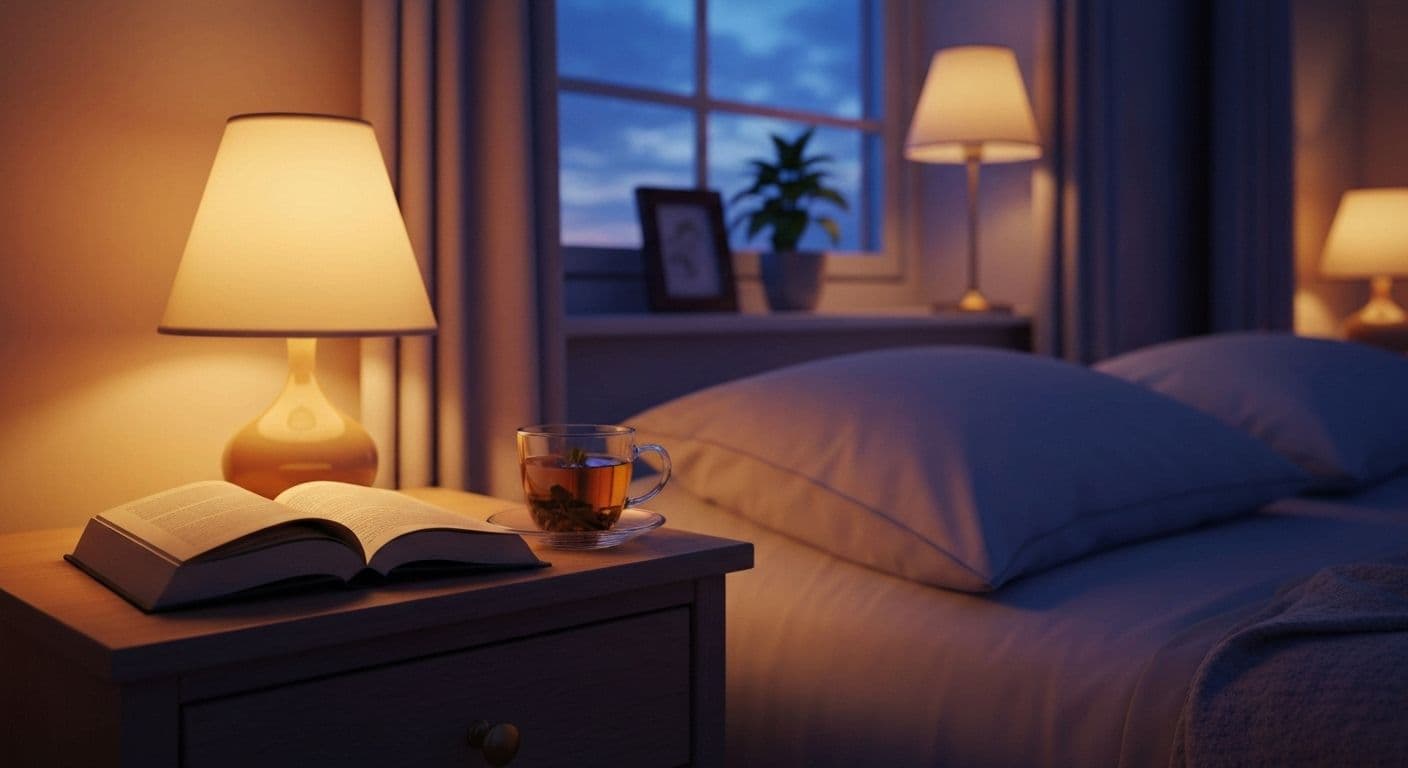
Lighting adjustments matter more than you realize. Bright overhead lights signal midday to your brain. Switch to warm, dim lighting 90 minutes before bed—think table lamps, not ceiling fixtures. Lower your thermostat to support your body's natural temperature decline. These environmental cues work together to calm the mind without any conscious effort on your part.
Physical Wind-Down Rituals
Gentle movement helps release physical tension that otherwise keeps your mind activated. This isn't about intense exercise—try slow stretching, easy walking, or simple yoga poses. The key is matching your activity level to your declining energy. Your body wants to slow down in the evening; give it permission through movement that supports rather than fights this natural rhythm. Understanding sleep timing science helps you optimize when and how you wind down.
Building Your Personal Evening Routine To Calm The Mind
Forget perfectionism—start with one or two changes that feel doable. Maybe that's setting a phone alarm for your digital sunset, or adjusting your bedroom temperature. The most effective calm the mind techniques are the ones you'll actually use consistently. Sequence your activities to match your natural energy decline: more engaging activities earlier in the 90-minute window, quieter ones as you approach bedtime.
Consistency matters more than intensity. Your circadian rhythms strengthen with repetition, making each evening routine more effective over time. Experiment to discover what genuinely helps calm the mind for you—everyone's neurological sweet spot differs slightly. Ready to try the 90-minute window approach tonight? Choose one environmental adjustment and one activity change. Your brain's natural wisdom will handle the rest, proving that sometimes the best way to calm the mind is simply to stop interfering with what it already knows how to do.



