


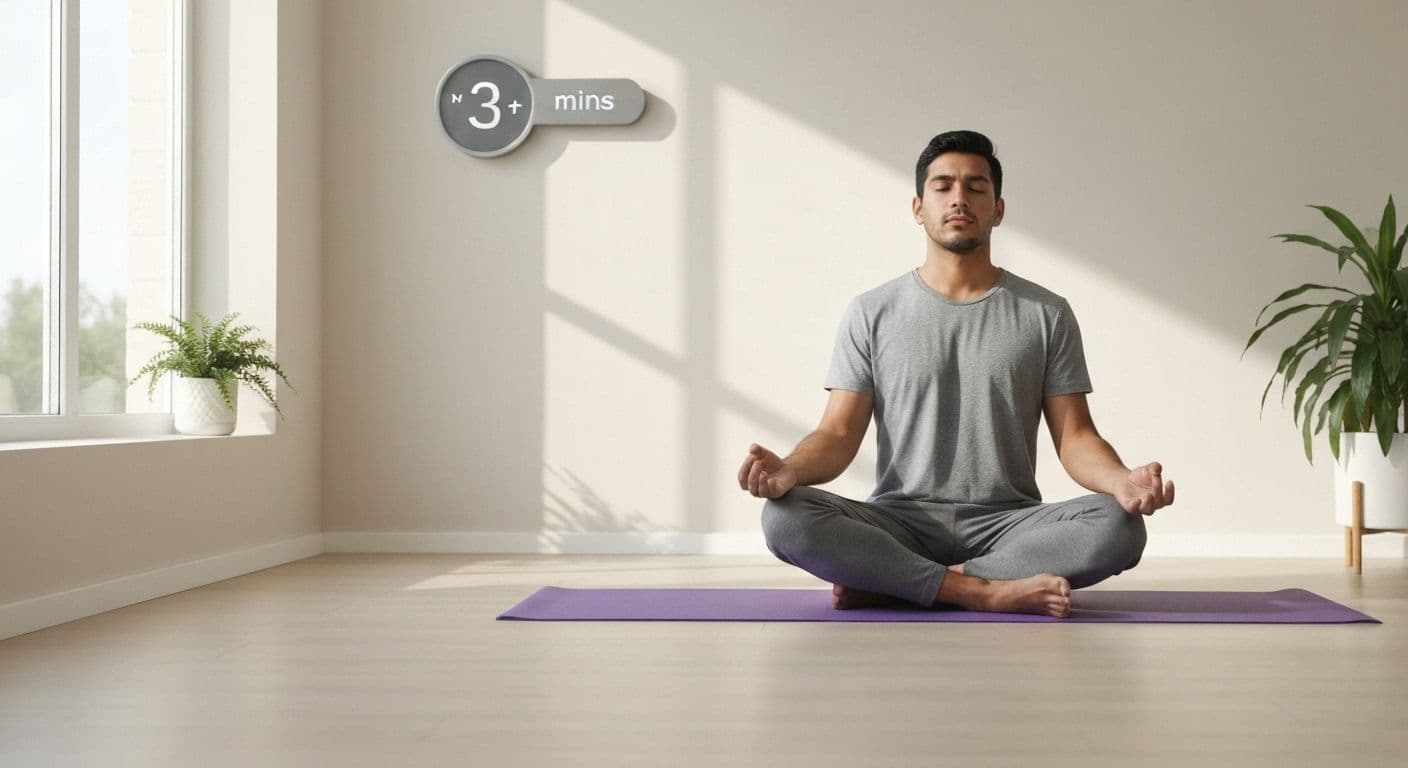
How to Build a 3 Minute Mindfulness Habit That Actually Sticks
Most mindfulness practices crash and burn within the first week. Not because people lack commitment, but because they're built on an unrealistic foundation. Twenty-minute meditation sessions? Daily hour-long retreats? That's a setup for disappointment. Here's the truth: 3 minute mindfulness is your secret weapon for building a practice that actually sticks. This bite-sized approach isn't about settling for less—it's about choosing sustainability over ambition. Three minutes hits the sweet spot where commitment meets capability, creating a foundation strong enough to support lasting change. Ready to discover the practical strategies that make 3 minute mindfulness work where other approaches fall flat?
The power of 3 minute mindfulness lies in its accessibility. Your brain doesn't resist three minutes the way it fights against longer commitments. This short duration bypasses the mental friction that typically derails new habits. Research shows that breaking free from perfectionism starts with embracing small, achievable actions. By choosing a 3 minute mindfulness practice, you're giving yourself permission to start small and build gradually. This isn't about doing the minimum—it's about doing what actually works. When you complete your three minutes consistently, you're rewiring your brain to associate mindfulness with success rather than struggle.
The Habit Stacking Method for 3 Minute Mindfulness Practice
Habit stacking transforms your 3 minute mindfulness routine from a standalone task into an automatic behavior. This technique works by anchoring your new practice to something you already do consistently. The science is straightforward: your existing habits have carved neural pathways in your brain. When you attach your 3 minute mindfulness practice to these established behaviors, you're piggybacking on pathways that already exist. This dramatically reduces the mental effort required to remember and execute your new routine.
Let's get specific with ready-to-use formulas. After I pour my morning coffee, I'll practice 3 minute mindfulness at the kitchen counter. Before I open my laptop for work, I'll complete my 3 minute mindfulness session. After I brush my teeth before bed, I'll do my evening 3 minute mindfulness practice. Notice the pattern? Each formula follows the structure: "After I [existing habit], I'll [3 minute mindfulness]." This creates an if-then relationship that your brain processes automatically.
Morning 3 Minute Mindfulness Stacks
Morning stacks work exceptionally well because your willpower is strongest early in the day. Pair your daily mindfulness habit with your shower routine, breakfast preparation, or that first sip of coffee. The key is choosing an anchor that happens at roughly the same time each day. Understanding your brain's natural rhythm helps you identify the perfect morning window for your practice.
Workday Mindfulness Integration
Midday offers unique opportunities for 3 minute mindfulness integration. Stack it with lunch, your afternoon coffee break, or the moment you close your laptop after a meeting. These workplace anchors help you reset during the day's most stressful hours. The beauty of the 3 minute mindfulness approach is that it fits seamlessly into existing break times without requiring schedule adjustments.
Finding Your Perfect 3 Minute Mindfulness Window
Timing isn't just about convenience—it's about aligning your 3 minute mindfulness practice with your natural energy patterns. Morning sessions prime your nervous system for the day ahead, creating a calm baseline before stress accumulates. Midday practices serve as circuit breakers, interrupting the momentum of mounting tension. Evening sessions help you transition from work mode to rest mode, signaling your body that it's time to wind down.
Testing different windows reveals what works for your unique rhythm. Try each time slot for at least five days before making judgments. Notice how you feel during the practice and for the hour afterward. Does morning mindfulness leave you centered or sleepy? Does evening practice relax you or energize you? Your body provides the answers. Many people discover that audio-based mindfulness techniques enhance their practice regardless of timing.
Protecting your 3 minute mindfulness time requires minimal but strategic preparation. Silence your phone. Close unnecessary browser tabs. Tell family members you need three uninterrupted minutes. These small boundaries make the difference between consistent practice and constant interruption. Your environment doesn't need to be perfect—just free from immediate distractions for 180 seconds.
Troubleshooting Your First 30 Days of 3 Minute Mindfulness
The first month reveals predictable obstacles. Forgetting tops the list. Combat this with environmental cues: place a sticky note on your coffee maker, set phone reminders, or put your meditation cushion where you'll trip over it. Visual triggers activate your intention before your conscious mind even registers the cue.
The "I don't have time" story crumbles under scrutiny. You have three minutes. What you're really saying is "I haven't prioritized this yet." Reframe it: "I'm choosing to invest three minutes in my emotional well-being." This shift from scarcity to choice changes everything. When you miss a day, skip the guilt spiral. Simply notice what happened and return to your practice the next day. One missed session doesn't erase your progress—it's just data about what got in the way.
Building a sustainable 3 minute mindfulness habit isn't about perfection. It's about consistency over time, with room for the occasional setback. By using habit stacking, finding your optimal timing, and troubleshooting obstacles as they arise, you're creating a foundation that actually sticks. Your 3 minute mindfulness practice might start small, but its impact compounds daily. Ready to begin? Your next three minutes could be the start of something transformative.



