


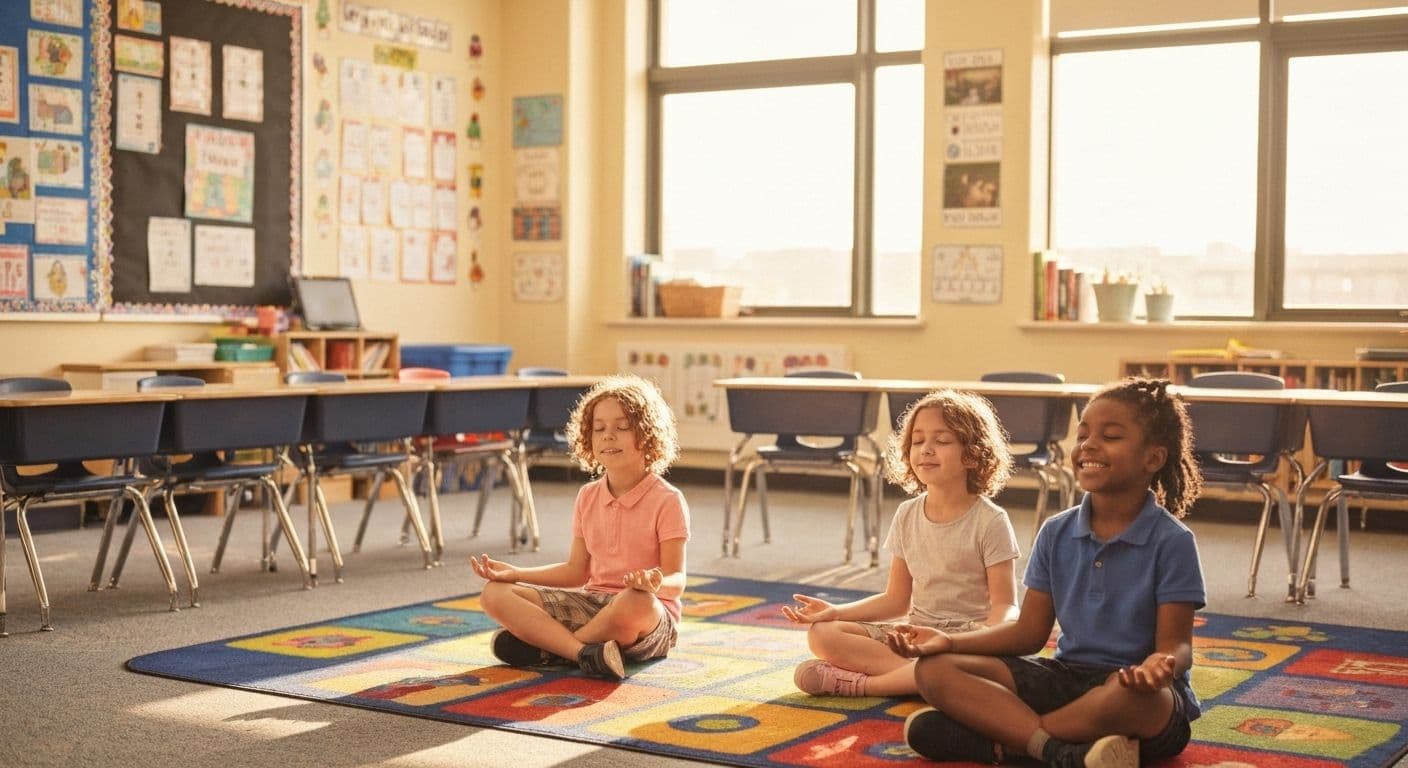
Mindfulness in the Classroom: Why Elementary Students Need Breaks Between Subjects
Picture this: A classroom full of third-graders just finished a challenging math lesson on multiplication. Their brains are buzzing with numbers and logic puzzles. Now it's time to switch gears and dive into reading comprehension. But watch closely—you'll notice fidgeting, distracted stares, and frustrated sighs. Their minds haven't fully let go of math mode yet. This cognitive traffic jam is exactly where mindfulness in the classroom becomes a game-changer for young learners.
Elementary students' brains work differently than adults. Their attention spans are shorter, and their emotional regulation systems are still developing. When young minds jump directly from one demanding subject to another without a reset, they're essentially asking their brains to shift gears without a clutch. Research shows that brief mindfulness breaks between subjects help children reset their attention, release built-up frustration, and actually retain more of what they've learned. The best part? These mindfulness techniques take just 2-3 minutes and require zero special equipment.
Understanding how mindfulness in the classroom works starts with recognizing that these transitions aren't "time off"—they're strategic investments in learning efficiency. When students practice simple breathing exercises or body awareness between subjects, they're giving their brains permission to consolidate what they just learned before loading new information. This isn't about adding more to an already packed curriculum; it's about making the existing curriculum work better.
How Mindfulness in the Classroom Resets Young Attention Spans
Elementary-aged children (7-11 years old) have attention spans that naturally wane after 15-20 minutes of focused work. Add to this the cognitive challenge of switching between math's logical processing and reading's linguistic demands, and you've got a recipe for mental exhaustion. This phenomenon, called cognitive switching costs, means young brains need extra time and support when transitioning between different types of thinking.
Here's where classroom mindfulness techniques shine. A simple 1-minute breathing exercise helps children's nervous systems shift from the alert, problem-solving state required for math to the more receptive, imaginative state that benefits reading comprehension. Think of it as rebooting a computer between tasks—everything runs smoother afterward.
Age-Appropriate Breathing Techniques
Try this practical transition routine: After math wraps up, guide students through "balloon breathing." They imagine inflating a balloon in their belly for four counts, holding for two, then slowly releasing for six. Follow this with a quick body scan where they notice tension in their shoulders or jaw and consciously relax those areas. Finally, use mindful listening—ask students to close their eyes and count how many different sounds they hear for 30 seconds. This entire sequence takes just 2-3 minutes but dramatically improves focus for the reading block ahead. Teachers consistently report that these brief pauses actually save time because students settle into the next subject faster and with better concentration.
Using Mindfulness in the Classroom to Reduce Academic Frustration
Frustration doesn't magically disappear when the subject changes. When a student struggles with word problems in math, that emotional residue follows them into reading time unless they have a way to acknowledge and release it. This emotional carryover effect undermines learning in both subjects. Mindfulness for elementary students provides exactly the reset button young learners need.
Quick Reset Techniques
Consider these three practical classroom frustration management strategies. First, the "shake-it-out" movement break: Students literally shake their hands, roll their shoulders, and physically release tension for 30 seconds. This helps discharge stress hormones that build during challenging work. Second, a gratitude moment: Ask students to think of one thing that went well in the previous lesson, even if it's as simple as "I tried my best." This shifts their emotional state from frustration to appreciation. Third, sensory awareness activities: Have students notice five things they can see, four they can hear, three they can touch, two they can smell, and one they can taste. These techniques help children acknowledge their feelings without getting stuck in them.
The beauty of these emotional regulation strategies is their simplicity. Teachers need no special training or materials—just a willingness to build in brief pauses that honor the emotional reality of young learners. When students feel their frustrations are recognized and given space, they're far more ready to engage with new material.
Implementing Mindfulness in the Classroom for Better Information Retention
Memory consolidation—the process where short-term learning becomes long-term knowledge—needs time and space to happen. When elementary students rush from one subject to the next without pause, their brains don't get the processing time required to store information effectively. Brief mindfulness breaks create exactly this consolidation window.
Here's a simple three-step framework for mindful learning transitions. First, close the previous subject with intention—have students take a deep breath and mentally put their math work "on the shelf." Second, reset with a brief mindfulness practice like visualization (imagine a peaceful place) or mindful stretching (reach high, then touch toes). Third, open the next subject with fresh awareness—ask students what they're curious about in today's reading. This structured approach helps information stick while preparing minds for new learning.
Ready to start incorporating classroom mindfulness strategies into your teaching? Begin with just one mindfulness transition per day—perhaps between your two most demanding subjects. Notice how students respond and adjust accordingly. For teachers wanting to deepen their own mindfulness practice, tools like the Ahead app offer bite-sized techniques that help you master these approaches before bringing them to your classroom. When you experience the benefits personally, you'll teach mindfulness in the classroom with genuine confidence and enthusiasm that students naturally mirror.



