


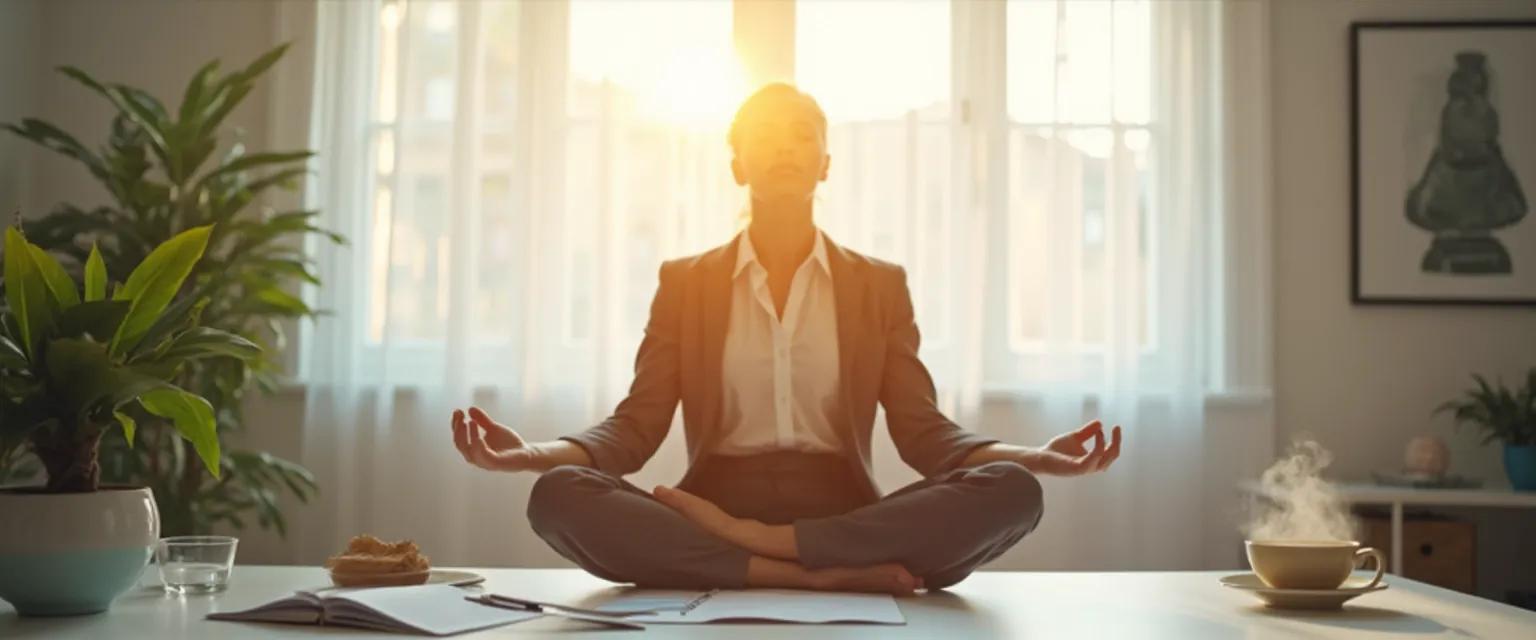
Quick Meditation and Self-Awareness Breaks to Transform Your Workday
Ever noticed how your workday can feel like a chaotic whirlwind, leaving you mentally scattered and emotionally drained? In today's always-on work culture, finding moments of calm seems nearly impossible. But what if you could transform your workday by integrating meditation and self awareness into your existing routine—without adding extra time to your schedule? These micro-moments of mindfulness can be game-changers for your professional life and mental wellbeing.
Meditation and self awareness don't require hour-long sessions or a meditation retreat. Science shows that even brief meditation moments (1-3 minutes) can significantly reduce stress hormones and improve cognitive function. A study from the Journal of Occupational Health Psychology found that brief mindfulness exercises during work transitions helped professionals experience 34% less emotional exhaustion and 22% greater job satisfaction. The key is consistency rather than duration—small doses throughout your day compound into powerful emotional regulation skills over time.
The beauty of workplace meditation lies in its simplicity. You don't need special equipment or extensive training—just the willingness to pause briefly during natural transitions in your day. These mini-meditations create space between stimulus and response, allowing you to respond thoughtfully rather than react automatically to workplace challenges.
Essential Meditation And Self Awareness Techniques For Work Transitions
The most effective meditation and self awareness practices fit seamlessly into your existing workflow. Let's explore some practical techniques that take advantage of natural transition points throughout your workday:
The 60-Second Breath Reset
Between tasks or meetings, try this simple one-minute practice: Sit upright at your desk, place both feet on the floor, and close your eyes. Take five deep breaths, inhaling for four counts and exhaling for six. This quick reset activates your parasympathetic nervous system, reducing stress hormones almost immediately. This technique is especially powerful before high-stakes meetings or after challenging interactions with colleagues.
The 3-Minute Body Scan
When you feel tension building, this brief meditation and self awareness practice works wonders. Sitting at your desk, close your eyes and systematically scan your body from head to toe, noticing areas of tension. For each tense area, take a breath and imagine releasing that tension on the exhale. This practice reduces anxiety while building bodily awareness—a key component of emotional intelligence.
Walking Meditation Between Meetings
Transform your walk to the next meeting into a mindfulness opportunity. As you walk, notice the sensation of your feet touching the ground, the rhythm of your breathing, and the movements of your body. This practice grounds you in the present moment while physically transitioning between work environments, creating mental separation between different tasks.
Elevator Meditation Moment
Use elevator rides as meditation triggers. As the doors close, take three conscious breaths while silently noting "breathing in, breathing out." This micro-practice helps you arrive at your destination more centered and present, ready to engage fully with whatever comes next.
Integrating Meditation And Self Awareness Into Your Daily Work Routine
For these practices to become habitual, they need environmental triggers and consistent implementation. Here's how to make meditation and self awareness a natural part of your workday:
Create Environmental Meditation Triggers
Link meditation moments to existing habits or environmental cues. For example, practice one minute of mindful breathing every time you refill your water bottle, or do a quick body scan whenever you send an important email. These associations help meditation become automatic rather than something you have to remember to do.
Overcome Common Workplace Meditation Barriers
Many professionals worry about looking strange meditating at work. The beauty of these micro-practices is their subtlety—most can be done with eyes open and without anyone noticing. For open office environments, try focused attention techniques like mindfully holding a small object or feeling the sensation of your feet on the floor—practices that appear externally as simple moments of concentration.
Build Progressive Momentum
Start with just one meditation and self awareness practice that resonates with you. Once that becomes habitual (typically after about two weeks), add another. This progressive approach prevents overwhelm while building a sustainable practice. The cumulative effect of these brief moments creates a foundation of greater self-awareness throughout your entire workday.
Remember that consistency trumps perfection with meditation and self awareness practices. Some days will flow better than others, and that's completely normal. The goal isn't perfect meditation—it's developing greater awareness of your thoughts, emotions, and reactions in the workplace. Over time, these mini-meditation moments transform not just how you work, but how you experience your work—bringing greater clarity, calm, and purpose to even the busiest days.



