


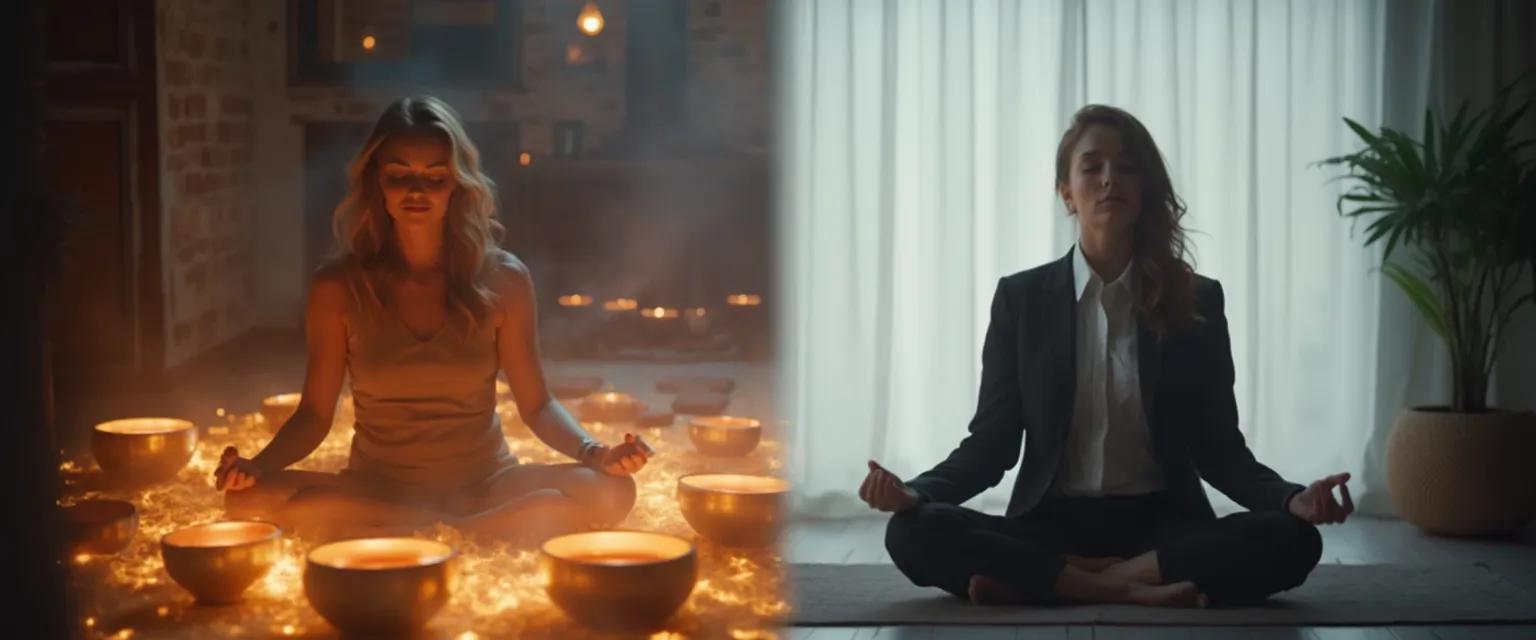
Quick Ways to Relax Your Mind: Sound Bathing vs. Progressive Relaxation
Finding a moment to relax my mind feels like searching for a unicorn when you're juggling deadlines, meetings, and endless email notifications. Your brain is constantly firing on all cylinders, leaving little room for that mental breather you desperately need. For busy professionals, the challenge isn't just knowing how to relax my mind—it's finding techniques that deliver maximum calm with minimum time investment. Sound bathing and progressive relaxation have emerged as two science-backed contenders in the quest for quick mental relief. But which one gives you the most bang for your precious minutes?
The science is clear: taking strategic breaks to relax my mind doesn't just feel good—it improves cognitive performance and decision-making. Both sound bathing and progressive relaxation offer distinct pathways to mental calm, each with their own unique benefits for the overwhelmed professional. The trick is matching the right technique to your specific needs and work environment.
Whether you're seeking a quick reset between meetings or a deeper unwinding after a high-stress day, understanding these two powerful approaches gives you versatile tools to relax your mind exactly when and how you need it most.
How Sound Bathing Helps Relax Your Mind During Busy Workdays
Sound bathing immerses you in resonant, harmonic sounds that guide your brain from high-alert beta waves to relaxed alpha and theta states—perfect when you need to quickly relax my mind between demanding tasks. Unlike techniques requiring intense concentration, sound bathing works passively, making it ideal for mental fatigue moments.
The beauty of this approach lies in its accessibility. You don't need Tibetan singing bowls or a meditation room—quality headphones and the right audio track work wonders. A 5-10 minute sound bath can significantly reduce cortisol levels and activate your parasympathetic nervous system, creating an "oasis effect" in your workday.
Research published in the Journal of Evidence-Based Integrative Medicine found that sound meditation participants experienced reduced tension and anxiety in sessions as brief as 12 minutes. For professionals seeking to relax my mind without disrupting workflow, sound bathing offers a powerful mindfulness technique that requires minimal effort.
Try incorporating sound bathing during natural transitions in your workday—before important meetings, after completing major tasks, or during lunch breaks. Many professionals report enhanced creativity and clearer thinking after even brief sound sessions, making this a valuable tool for mental refreshment.
Progressive Relaxation: A Structured Approach to Relax Your Mind
Progressive muscle relaxation offers a more active, systematic approach to relax my mind through deliberately tensing and releasing muscle groups. This technique creates a powerful mind-body connection that interrupts stress cycles and quiets mental chatter.
The process is beautifully straightforward: starting with your feet and working upward, you tense each muscle group for 5-7 seconds, then release and notice the sensation of relaxation for 20-30 seconds before moving to the next area. This methodical approach helps identify where you physically hold stress—often in places you weren't even aware of.
What makes progressive relaxation particularly valuable for professionals is its anxiety-reducing effects that last beyond the practice itself. A study in the Journal of Behavioral Medicine found that regular practitioners experienced lower baseline anxiety levels throughout their day.
The technique adapts well to office settings—you can perform abbreviated versions right at your desk focusing just on shoulders, jaw, and hands (where professionals typically accumulate tension). With practice, you'll develop the ability to relax my mind on command by quickly releasing tension from key areas, creating an instant reset button for stressful moments.
Which Mind-Relaxing Technique Works Better? Make Your Choice to Relax Your Mind
When comparing these powerful ways to relax my mind, consider your specific work environment and personality. Sound bathing excels for those who need passive relaxation—when you're mentally exhausted and need restoration without effort. It's ideal for open office environments where you can simply put on headphones without drawing attention.
Progressive relaxation works better when you need to actively engage with stress reduction or when you feel physically tense. This technique gives you greater agency in the relaxation process and builds a skill that becomes more efficient with practice.
Many professionals find that combining both techniques creates a comprehensive strategy to relax my mind throughout different workday scenarios. Sound bathing during quick breaks, progressive relaxation during longer ones or at day's end.
The best technique to relax my mind is ultimately the one you'll actually use consistently. Start with a 5-minute experiment of each method tomorrow and notice which feels most natural and effective for your unique needs. Remember that mental relaxation isn't a luxury for busy professionals—it's essential maintenance for your most valuable asset: your mind.



