


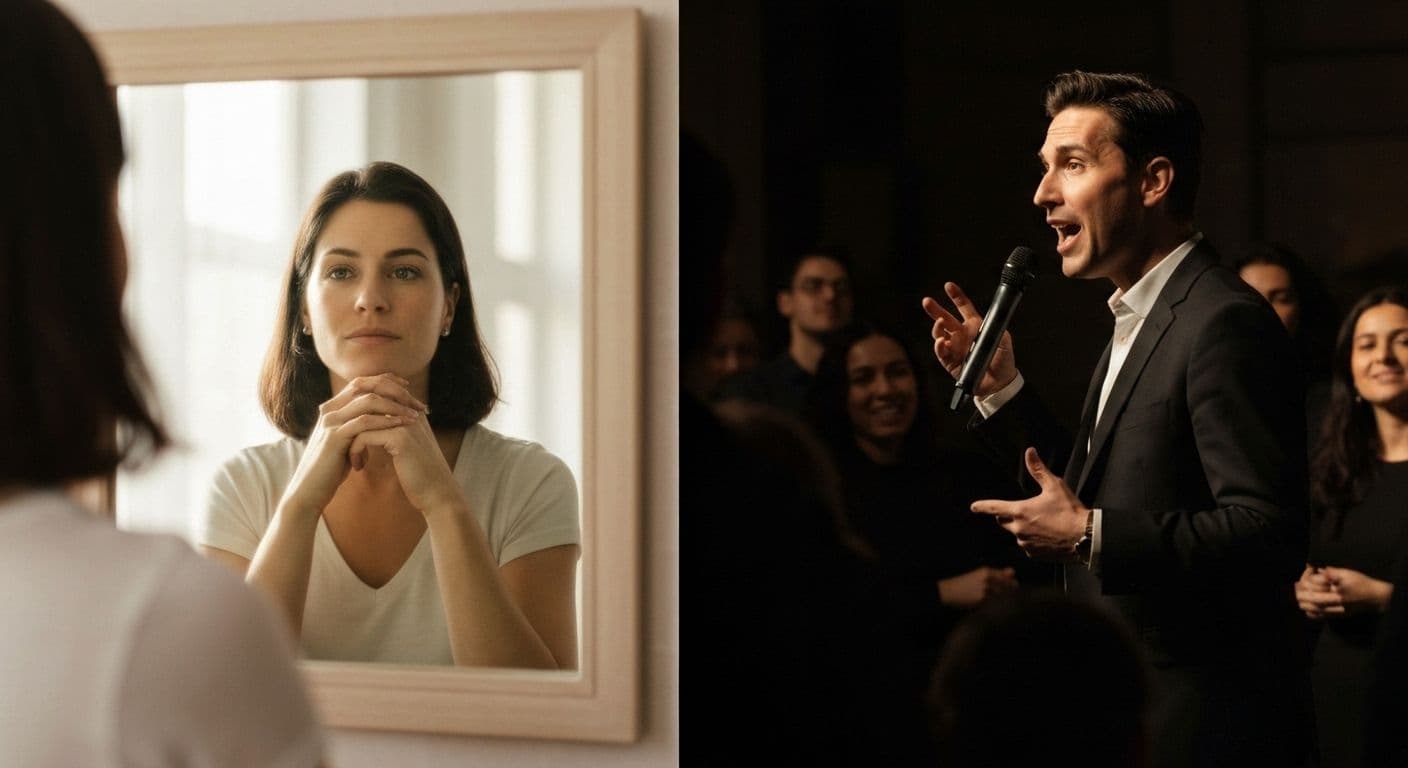
Self Awareness and Confidence: Why It Beats Natural Charisma
You've met them before—the person who lights up every room, effortlessly charming everyone they encounter. They seem to radiate confidence, yet privately admit to feeling like a fraud. Here's the paradox: outward charm doesn't equal inner assurance. While natural charisma might win first impressions, it's self awareness and confidence working together that creates the kind of deep, unshakeable self-assurance that lasts. The difference between authentic confidence and performative confidence lies in understanding who you truly are, not just how well you can project an appealing image.
Science backs this up: people who develop self awareness and confidence through genuine self-knowledge navigate challenges more effectively than those relying solely on personality traits. When you understand your authentic strengths, limitations, and emotional patterns, you build a foundation that doesn't crumble under pressure. This isn't about dimming your natural charm—it's about anchoring it in something real.
The journey from surface-level charisma to lasting self-assurance starts with looking inward rather than outward for validation. Ready to discover why knowing yourself beats performing for others every single time?
How Self Awareness and Confidence Create Unshakeable Self-Assurance
When you genuinely understand your strengths, you anchor yourself in reality rather than perception. This creates a powerful shift: instead of wondering if you're good enough, you know where you excel. That's the foundation of building confidence through self awareness—it's based on evidence you've gathered about yourself, not others' reactions.
Understanding your limitations sounds counterintuitive, but it actually prevents the anxiety that comes from overcompensation. When you accept what you're still learning, you stop pretending to be something you're not. This eliminates the exhausting mental gymnastics of maintaining a facade. People with strong self awareness and confidence don't spiral when facing their growth edges—they simply acknowledge them and move forward.
The Role of Emotional Intelligence
Recognizing what triggers emotions helps you stay grounded when pressure builds. This emotional intelligence and confidence connection means you're not caught off-guard by your own reactions. You notice the pattern, understand the signal, and respond thoughtfully rather than reactively.
Internal vs External Validation
Self-aware people don't need constant external validation because they've developed an internal compass. They know their value independent of others' opinions. Contrast this with charismatic individuals who rely heavily on others' reactions—when the applause stops, their confidence wavers. One approach creates sustainability; the other creates dependency.
Why Natural Charisma Without Self Awareness and Confidence Crumbles
Charisma is essentially a performance, and performances exhaust you when there's no authentic foundation beneath them. Without self-knowledge, that sparkling personality becomes a costume you wear, not an expression of who you are. The energy required to maintain this persona drains you over time.
People with high charisma but low self-awareness frequently experience imposter syndrome. They receive praise and recognition, yet internally feel disconnected from those accolades. Why? Because they haven't done the work to understand what makes them genuinely valuable beyond their ability to charm. When someone criticizes them or they face a setback, their confidence collapses like a house of cards.
The Performance Trap
External charm works brilliantly short-term but crumbles when tested by real challenges. Think about the charismatic colleague who dominates meetings but falls apart when their ideas face scrutiny. Without sustainable confidence rooted in self-awareness, they interpret pushback as personal rejection rather than professional dialogue.
Imposter Syndrome in Charismatic People
The exhaustion cycle looks like this: you present a polished version of yourself, receive positive feedback, feel temporarily confident, then immediately worry about maintaining that image. Compare this to authentic self-assurance, where you simply show up as yourself. One path leads to burnout; the other leads to genuine social success that compounds over time.
Building Self Awareness and Confidence That Lasts Beyond First Impressions
Let's get practical. Developing self awareness starts with noticing patterns in your reactions. When do you feel most confident? What situations make you doubt yourself? These observations reveal your authentic operating system—the real you beneath the performance.
Understanding your authentic self eliminates the exhausting need for performance. When you know who you are, you stop expending energy trying to be someone else. This frees up mental resources for actually engaging with life rather than managing others' perceptions of you.
Actionable Self-Awareness Techniques
Simple daily practices strengthen both self awareness and confidence simultaneously. Notice when you feel energized versus drained—these signals reveal alignment with your authentic self. Pay attention to the small moments of clarity when you recognize a pattern in your behavior.
Long-Term Confidence Building
This approach creates confidence that deepens over time rather than fading. While charisma might peak early and plateau, self awareness and confidence compound. Each insight builds on the previous one, creating an increasingly solid foundation. You become more yourself, not less—and that authenticity naturally attracts genuine connection.
Ready to build unshakeable confidence from the inside out? Start noticing one pattern in your reactions today. That single observation begins your journey from performing confidence to embodying it.



