


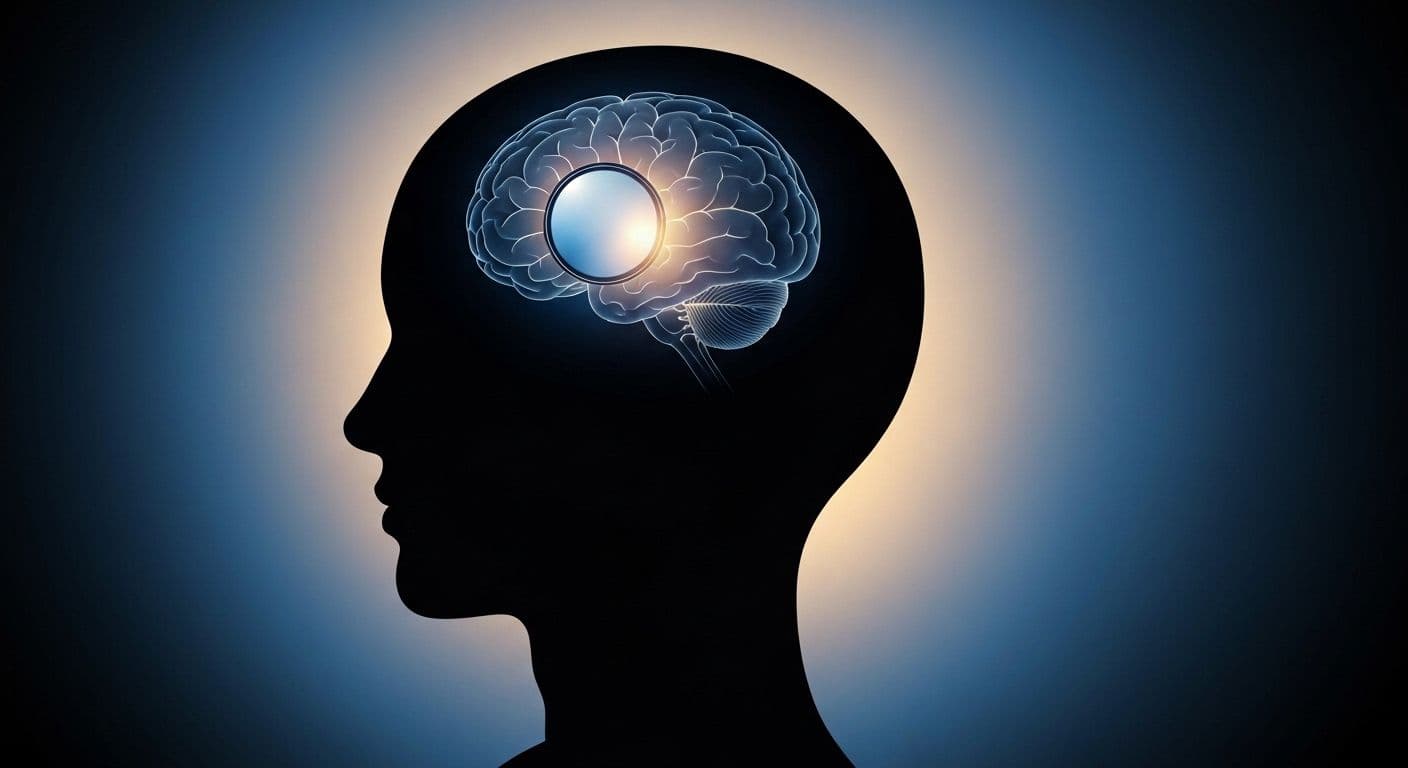
Self Awareness and Intelligence: Why It Makes You Smarter Than IQ
You've probably met someone with a sky-high IQ who can solve complex equations in seconds but struggles to navigate a simple workplace conflict. Meanwhile, your emotionally aware colleague with average test scores seems to consistently make better decisions and solve problems more effectively. This isn't coincidence—it's the powerful connection between self awareness and intelligence that traditional metrics completely miss.
For decades, we've treated IQ as the gold standard for measuring smarts. But here's what the research actually shows: your ability to understand your own emotional landscape and mental patterns amplifies your cognitive abilities in ways that standardized tests never capture. Self awareness and intelligence work together as a multiplier effect, enhancing how you think, learn, and navigate real-world challenges.
Ready to discover how emotional self-knowledge transforms your cognitive abilities? Let's explore the science-backed ways that understanding yourself makes you functionally smarter than your IQ number suggests.
How Self Awareness and Intelligence Enhance Your Problem-Solving Power
Think about the last time you tried solving a problem while frustrated or anxious. Your brain was likely stuck in loops, fixated on the same unhelpful solutions. This is where self awareness and intelligence create their first major advantage: recognizing your emotional state prevents cognitive biases from hijacking your judgment.
Metacognition—essentially thinking about your thinking—is the secret weapon here. When you notice that you're approaching a problem with anxiety-driven urgency or frustration-fueled tunnel vision, you gain the power to pause and recalibrate. Research shows that individuals who practice this awareness consistently outperform higher-IQ peers in complex problem-solving scenarios.
Here's a concrete example: Someone with high IQ but low self-awareness might bulldoze through a project using the same analytical approach, even when it's clearly not working. A self-aware problem-solver recognizes when their current mental state or strategy isn't serving them. They ask: "Am I pushing harder because this approach is right, or because I'm too frustrated to consider alternatives?"
Understanding your mental patterns helps you choose better strategies for different challenges. Some problems need your fresh morning brain, while others benefit from the relaxed creativity of evening thinking. This is emotional regulation in decision-making at its finest.
Try this before your next major decision: Take thirty seconds for an emotional check-in. Label what you're feeling without judgment. "I'm feeling pressured to decide quickly" or "I'm excited but also worried about being wrong." This simple practice activates your metacognitive awareness and clears cognitive clutter.
Self Awareness and Intelligence in Real-World Decision-Making
Ever made a "logical" decision that was actually driven entirely by emotion? We all have. Self-awareness helps you spot when feelings are steering the ship while your rational brain provides convenient justifications. This distinction is crucial for effective self awareness and intelligence in action.
Psychologists call precise emotion identification "emotional granularity." Instead of vaguely feeling "bad," you recognize "I'm disappointed that my idea wasn't chosen, which is making me defensive about feedback." This specificity transforms decision-making because you can address the actual emotion rather than letting it operate in the shadows.
Self-aware individuals also understand their energy patterns and mental states, optimizing when they tackle different types of tasks. That budget analysis requiring intense focus? Schedule it during your peak cognitive hours, not when you're running on fumes. Getting into flow states becomes easier when you work with your natural rhythms instead of against them.
For high-stakes decisions, try the pause-and-label technique: Before committing, pause for three deep breaths. Label your current emotional state and any physical sensations. Ask yourself: "What emotion might be influencing this choice?" This creates space between feeling and action, where smarter decisions live.
Workplace research backs this up. Studies show that employees with strong self-awareness outperform colleagues with higher IQs in leadership roles, team collaboration, and strategic thinking. Why? Because stress-free decision-making requires understanding how your internal state shapes your external choices.
Amplifying Your Intelligence Through Self Awareness Practice
Here's the exciting part: self awareness and intelligence create a multiplier effect that extends far beyond what IQ alone provides. Your emotional self-knowledge acts as a cognitive enhancer, making your existing intelligence work smarter and more efficiently.
Building this awareness doesn't require hours of intensive practice. Three quick, science-driven micro-practices make a measurable difference:
- Emotion labeling: Throughout your day, name what you're feeling in one or two words. "Frustrated." "Energized." "Uncertain." This strengthens your emotional granularity muscle.
- Pattern recognition: Notice when certain emotions consistently appear. Do you feel anxious every time you start a new project? Recognizing patterns helps you prepare better responses.
- Mental state awareness: Check in with your cognitive energy levels before important tasks. Am I sharp or foggy? Rushed or calm? This guides smarter task scheduling.
These aren't time-intensive exercises—they're brief moments of awareness woven into your existing routine. Think of them as upgrading your brain's operating system to run more efficiently.
The bottom line? Your IQ is just one ingredient in your cognitive toolkit. Self awareness and intelligence together create something more powerful: the ability to consistently apply your smarts in ways that actually matter. You're not just solving abstract problems—you're navigating real life with clarity, making better choices, and learning from experience more effectively.
Ready to build this cognitive advantage? Personalized tools designed around your unique patterns make developing self-awareness simpler and more effective than ever. Your smartest self is waiting—and it has less to do with test scores than you might think.



