


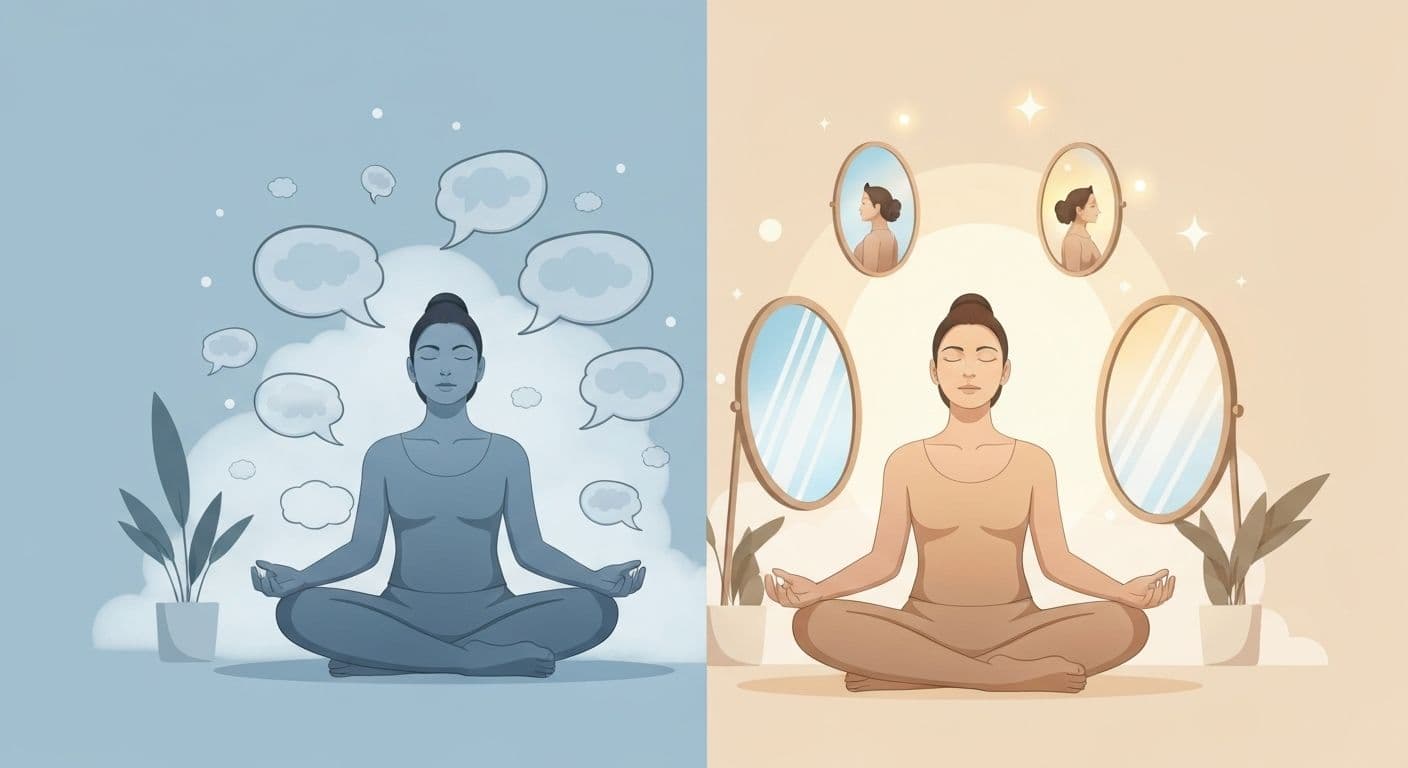
Self Awareness and Meditation: Why Mindfulness Alone Keeps You Stuck
You've been meditating every morning for weeks now. Ten minutes of silence, breathing deeply, trying to clear your mind. Yet when your coworker makes that same passive-aggressive comment, you still snap. When traffic backs up, you still feel that familiar rage bubbling up. What's going on? The truth is, meditation alone isn't enough. Without genuine self awareness and meditation working together, you're essentially just sitting quietly while your emotional patterns stay exactly the same. The missing ingredient isn't more time on the cushion—it's active awareness of what's actually happening in your mind and body during those moments.
Most people treat meditation as a relaxation technique, a mental spa day. But here's the thing: zoning out isn't the same as tuning in. Real emotional intelligence growth happens when self awareness and meditation combine to help you recognize your patterns, understand your reactions, and create space between stimulus and response. Think of it this way—you wouldn't expect to build muscle by just lying on a gym mat. Similarly, passive sitting won't rewire the neural pathways that drive your anger and frustration.
Why Self Awareness and Meditation Need Each Other
Self-awareness in meditation means actively noticing your thoughts, emotions, and bodily sensations as they arise—not just creating a temporary blank slate. It's the difference between escaping your feelings and actually understanding them. Without this awareness component, meditation becomes just another avoidance technique, a brief vacation from your emotions rather than a tool for managing them.
Here's what the science tells us: self awareness and meditation together create new neural pathways that support emotional regulation. When you notice a thought pattern during meditation—say, recognizing that you always catastrophize about work emails—you're literally strengthening the brain circuits that allow you to catch that pattern in real life. Research in neuroscience shows that this combination activates the prefrontal cortex, the part of your brain responsible for thoughtful responses rather than knee-jerk reactions.
Let's look at a real-world example. Imagine you're meditating and notice tension in your jaw. Someone without awareness training might think, "I'm tense, I need to relax more." Someone practicing self awareness and meditation thinks, "My jaw is tight. When else does this happen? Oh, right before I get angry at my partner." That's the difference—one is just noting a symptom, the other is building emotional intelligence through pattern recognition.
The Missing Link: Active Self Awareness and Meditation Techniques
Ready to transform your meditation practice from passive to powerful? These targeted awareness exercises turn sitting time into emotional intelligence training sessions.
Emotion Labeling Technique
During your meditation, when an emotion surfaces, name it specifically. Not just "I feel bad," but "I'm feeling resentful" or "I'm experiencing anxiety about tomorrow's meeting." This simple act of labeling activates your thinking brain and reduces the intensity of the emotional brain. Studies show that emotion labeling decreases activity in the amygdala, your brain's alarm system, by up to 30%.
Body Scan with Emotional Check-Ins
Instead of a traditional body scan focused solely on physical sensations, pair each body part with an emotional question. As you scan your shoulders, ask: "What emotion am I holding here?" Tight chest? "What worry lives in this space?" This technique helps you connect physical sensations with emotional states, making it easier to recognize anger triggers before they escalate in daily life.
Post-Meditation Reflection Questions
After each session, ask yourself three quick questions: What emotion showed up most? What thought pattern kept repeating? Where did I feel it in my body? These questions take 30 seconds but dramatically increase the self awareness and meditation connection. You're not journaling for hours—you're simply noting patterns that help you recognize them when they matter most.
These active techniques transform meditation from a pleasant break into genuine emotional training. You're not just relaxing—you're building the awareness muscle that helps you respond differently when stress and anxiety surface in real situations.
Building Your Self Awareness and Meditation Practice That Creates Real Change
Let's make this concrete. Start with just five minutes daily, using one of the techniques above. Choose the emotion labeling method if you struggle to identify what you're actually feeling. Pick the body scan approach if you tend to disconnect from physical sensations. Try the reflection questions if you want to track patterns over time.
How do you know it's working? Watch for these quick wins: You catch yourself before snapping at someone. You notice your jaw tightening and take a breath before the anger fully arrives. You recognize a thought pattern you've had a thousand times and suddenly see it for what it is—just a thought, not a fact.
The path from passive meditation to powerful self awareness and meditation practice isn't complicated—it just requires intention. You're already dedicating the time. Now you're making it count. Ready to accelerate this journey? Ahead provides science-driven tools for emotional intelligence that turn insights into lasting change, giving you bite-sized exercises that build genuine awareness every single day.



