


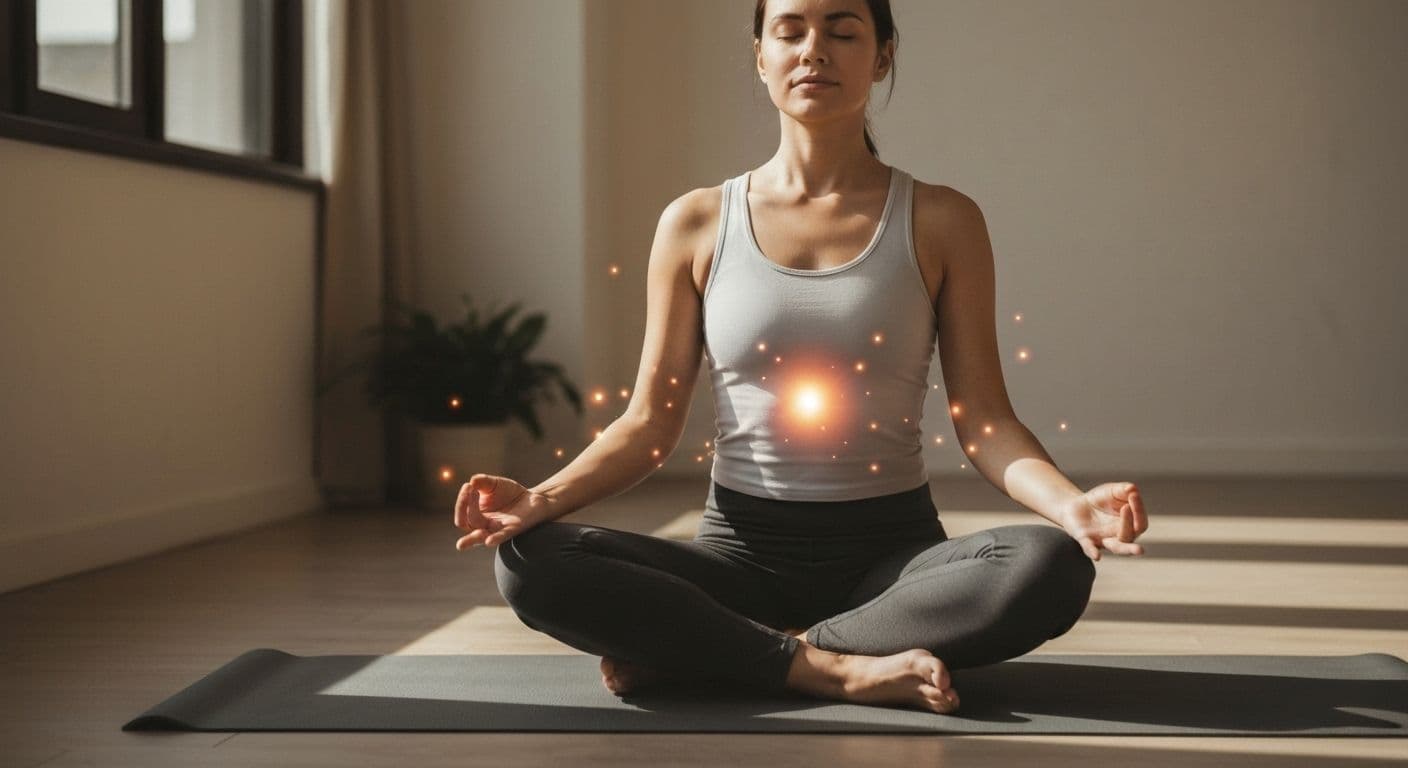
Why Self-Awareness Yoga Matters for Emotional Intelligence Growth
Ever notice how a simple yoga pose can suddenly make you aware of tension you didn't know you were holding? That's self awareness yoga at work—and it's not just about your body. When you step onto your mat, you're creating a unique laboratory for understanding your emotional landscape. Self awareness yoga bridges the gap between physical sensation and emotional intelligence, giving you real-time feedback about how your mind and body respond to stress, challenge, and calm. This isn't just stretching with a side of breathing; it's a science-backed pathway to recognizing and managing your emotions more effectively.
The connection between yoga practice and emotional intelligence might seem surprising at first, but think about it: where else do you deliberately put yourself in uncomfortable positions while staying calm and observant? This practice of holding challenging poses while maintaining steady breathing trains your brain to stay present with difficult emotions instead of reacting automatically. The result? You develop the emotional awareness that transforms how you navigate relationships, make decisions, and handle life's curveballs. Ready to explore how moving your body on a mat translates to mastering your emotions off it?
How Self-Awareness Yoga Rewires Your Emotional Brain
Here's what happens in your brain during self awareness yoga: as you focus on your breath and body sensations, you activate your prefrontal cortex—the part responsible for emotional regulation and thoughtful responses. Meanwhile, you're calming your amygdala, the alarm system that triggers those knee-jerk emotional reactions. This neurological shift creates what neuroscientists call "response flexibility"—the space between feeling an emotion and acting on it.
When you hold a challenging warrior pose and notice your frustration rising, you're essentially practicing for real-life emotional situations. Your racing thoughts, tight shoulders, and urge to quit the pose mirror how you feel when your colleague criticizes your work or traffic makes you late. The difference? On your mat, you're learning to observe these sensations without immediately reacting. This is where emotional awareness techniques become practical skills rather than abstract concepts.
Body scanning during yoga poses enhances what researchers call interoceptive awareness—your ability to recognize internal physical states. When you notice your jaw clenching in downward dog or your breath becoming shallow in a balance pose, you're building the same skill that helps you recognize early signs of anger or anxiety in daily life. This heightened awareness means you catch emotions earlier, giving you more options for how to respond rather than getting swept away by emotional intensity.
Essential Self-Awareness Yoga Practices for Emotional Intelligence
Let's get specific about which self awareness yoga techniques actually build emotional intelligence. Child's pose, for instance, isn't just a rest position—it's a practice in vulnerability and self-compassion. When you fold forward and turn inward, you're learning to comfort yourself during moments of overwhelm, a skill that directly translates to emotional self-regulation off the mat.
Breath Awareness Practices
Your breath is the most powerful tool for emotional intelligence that you carry everywhere. Practicing ujjayi breathing or simple breath counting during yoga teaches you to use breath as an anchor when emotions run high. The beauty of these breathing techniques for stress reduction is their portability—you can use them in a tense meeting or difficult conversation just as easily as on your mat.
Body-Based Emotional Recognition
Warrior poses teach you about strength and boundaries. As you hold these powerful stances, you learn what healthy assertion feels like in your body—information that helps you communicate more effectively in relationships. Seated forward folds, on the other hand, invite introspection and patience with yourself, countering the harsh self-criticism that damages emotional well-being.
Pose-Holding for Emotional Resilience
Here's where self awareness yoga gets really practical: holding challenging poses teaches you to sit with uncomfortable emotions without collapsing or fighting. That burning sensation in your thighs during chair pose? It's training for staying present with frustration or disappointment in your personal life. You learn that discomfort isn't an emergency requiring immediate action—it's just information you can observe and work with skillfully.
Building Your Self-Awareness Yoga Practice for Lasting Emotional Growth
Starting a self awareness yoga routine doesn't require hour-long sessions or perfect poses. Even ten minutes daily creates measurable emotional intelligence gains. The key is consistency over intensity. Begin by choosing three poses that challenge you differently—perhaps one grounding pose, one strength-building pose, and one that requires balance. Notice your emotional responses to each.
As you develop your practice, pay attention to patterns. Do you avoid certain poses? That avoidance often mirrors how you handle specific emotions in life. Do you push too hard in others? That might reflect your tendency to power through difficult feelings rather than acknowledging them. This awareness, cultivated through consistent practice habits, becomes your roadmap for emotional growth.
Your emotional intelligence journey through self awareness yoga is uniquely yours. Each time you step onto your mat, you're investing in a more emotionally aware, resilient version of yourself—one breath, one pose, one moment of awareness at a time.



