


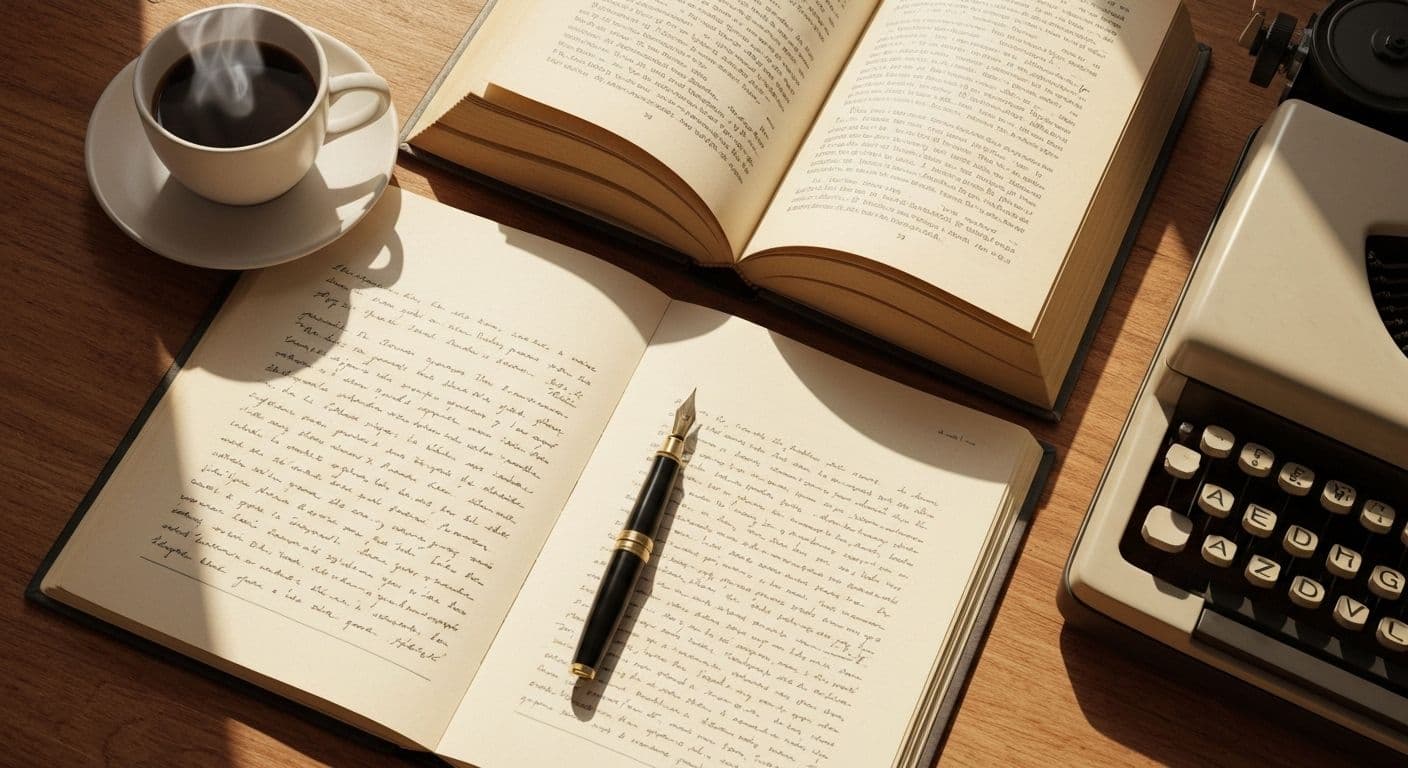
Why Your Modern Mind Craves Analog Experiences: The Science Behind It
You've just closed your laptop after another marathon screen session, and your eyes feel like sandpaper. Without thinking, you reach for that notebook gathering dust on your shelf—the one with the smooth pages and the satisfying weight. As your pen touches paper, something shifts. Your modern mind, constantly buzzing with notifications and browser tabs, suddenly... exhales. This isn't nostalgia talking—it's neuroscience. Your brain is literally craving what screens can't deliver: the sensory richness of analog experiences. And you're not alone in feeling this pull back toward physical connection.
Here's the paradox: the most tech-savvy among us are returning to paper books, handwritten notes, and face-to-face conversations with surprising intensity. This isn't a rejection of technology—it's your modern mind recognizing what it's been missing. The cognitive needs that drove human evolution for millennia don't vanish just because we've moved our lives onto glowing rectangles. Your brain is wired for tactile feedback, spatial memory, and the complex sensory dance of physical interaction. When these needs go unmet, something feels off, even if you can't quite name it.
What Your Modern Mind Loses in the Digital World
Every time you swipe, tap, or scroll, your modern mind engages fewer sensory pathways than when you turn a page or write by hand. This sensory reduction matters more than you might think. Neuroscience research reveals that tactile feedback—the resistance of pen on paper, the texture of book pages—creates stronger memory formation and deeper emotional processing than smooth glass surfaces ever could.
When you read on paper versus screens, your modern mind processes information through entirely different neural pathways. Physical books provide spatial landmarks—you remember that insightful quote was on the left page, about two-thirds through—that digital text simply can't replicate. This spatial memory acts as a cognitive scaffold, helping you retain and recall information more effectively.
Screen-based activities also demand constant micro-decisions: Should I click this link? Check that notification? Switch to another tab? This cognitive load exhausts your mental resources in ways that single-tasking with analog tools doesn't. When you write in a notebook, there are no hyperlinks to tempt you, no pop-ups demanding attention. Your modern mind gets to rest in focused attention rather than fractured multitasking.
The emotional satisfaction you feel from analog activities isn't imaginary—it's your brain responding to richer sensory input and reduced decision fatigue. Physical experiences engage multiple senses simultaneously, creating a fuller, more grounding cognitive experience that digital interactions struggle to match.
How Analog Practices Rewire Your Modern Mind
Handwriting activates brain regions that typing simply doesn't touch. When you form letters by hand, you engage motor memory, visual processing, and conceptual understanding simultaneously. This multi-pathway activation enhances learning, sparks creativity, and brings emotional clarity that keyboard shortcuts bypass entirely. Your modern mind literally thinks differently when you write by hand.
Reading physical books offers your brain something precious: genuine rest. Unlike screens that emit blue light and trigger alertness responses, paper books signal to your modern mind that it's safe to slow down. Studies show improved comprehension and retention from physical reading, partly because you're not fighting the subtle anxiety that screen time generates.
Face-to-face conversations activate mirror neurons—specialized brain cells that help you understand and empathize with others—in ways video calls can't replicate. The three-dimensional presence of another person, their micro-expressions, the subtle dance of body language, all feed your modern mind's deep need for authentic human connection.
These analog practices create mental space and reduce anxiety by offering your brain a break from constant digital stimulation. The dopamine hits from handwriting completion or finishing a physical book chapter feel different—more satisfying, more lasting—than the shallow rewards of notifications and likes.
Practical Ways to Feed Your Modern Mind's Analog Appetite
Ready to give your modern mind what it's craving? Start with micro-habits that fit seamlessly into your existing routine. Keep a small notebook beside your bed and spend three minutes each morning writing three thoughts by hand—not goals, not to-dos, just whatever surfaces. This simple practice activates your brain differently than reaching for your phone first thing.
Choose strategic moments for paper books over screens. Your modern mind benefits most from physical reading during wind-down hours—that pre-bed window when blue light would normally sabotage your sleep. Even fifteen minutes with a physical book signals to your brain that it's time to transition from alert to restful.
For face-to-face interactions, implement one "analog social moment" weekly. This could be a coffee meeting instead of a Zoom call, a walk-and-talk instead of a phone conversation. The key is prioritizing physical presence when possible, letting your modern mind soak up the sensory richness that builds deeper connections.
Blending analog and digital creates optimal modern mind performance. Use digital tools for efficiency and information access, but switch to analog for deep thinking, emotional processing, and meaningful connection. Your modern mind doesn't need an all-or-nothing approach—it needs the right tool for the right cognitive task.
Let's experiment: choose one analog practice this week. Notice how your modern mind responds when you give it the sensory richness it's been quietly craving all along.



