


Why Your Morning Commute Is Perfect for Daily Mindfulness Practice
You spend roughly 200 hours a year commuting. That's 200 hours of checking your phone, zoning out, or mentally rehearsing work stress before you even arrive. But what if those same hours could become your most consistent daily mindfulness practice? Your morning commute isn't just dead time—it's actually the perfect opportunity to build a sustainable mindfulness routine that sticks.
Unlike finding time for meditation at home, your commute happens automatically. You're already doing it. The sensory-rich environment, predictable timing, and natural transition space make it ideal for daily mindfulness. Plus, starting your day with awareness sets a calmer tone for everything that follows. Ready to transform those wasted minutes into your most powerful self-care tool?
The best part? Commute-based daily mindfulness requires zero extra time in your schedule. You're simply changing how you experience the time you're already spending. Let's explore why this works so well and exactly how to make it happen.
Why Your Commute Creates the Perfect Daily Mindfulness Routine
Your brain loves consistency, and your commute delivers it automatically. Every weekday, you're traveling at roughly the same time, following the same route. This predictability removes the biggest obstacle to building a sustainable mindfulness habit—deciding when to practice.
Research on habit formation shows that attaching new behaviors to existing routines dramatically increases success rates. Your commute is already locked into your daily schedule, making it a natural anchor for daily mindfulness practice. You don't need to remember to meditate; you just need to commute differently.
The sensory environment of your commute also works in your favor. Whether you're surrounded by traffic sounds, train announcements, or sidewalk scenery, these stimuli provide natural focal points for awareness. Unlike trying to meditate in a quiet room where your mind wanders freely, your commute offers constant anchors to return your attention to the present moment.
Perhaps most importantly, commutes create built-in time boundaries. A 20-minute train ride gives you exactly 20 minutes—no more, no less. This limitation makes daily mindfulness feel achievable rather than overwhelming. You're not committing to an open-ended practice; you're simply being present for the duration of your existing journey.
The transition time between home and work also serves a psychological purpose. Using your commute for daily mindfulness techniques creates a mental buffer zone, helping you shift from personal mode to professional mode with greater ease and less stress.
Simple Daily Mindfulness Techniques for Every Type of Commute
The beauty of commute-based daily mindfulness is its adaptability. Here are specific techniques matched to your travel method, each requiring less than two minutes to begin.
Driving Mindfulness Practices
At every red light, take three conscious breaths. Count "one" on the inhale, "two" on the exhale, "three" on the next inhale. This micro-practice happens naturally throughout your drive without requiring any special setup. You're already stopped—now you're just breathing with awareness.
Try a steering wheel body scan. Notice the sensation of your hands gripping the wheel, the pressure of your back against the seat, your feet on the pedals. This sensory awareness pulls you out of mental rehearsal and into your actual experience, which is what daily mindfulness is all about.
Public Transit Mindfulness Strategies
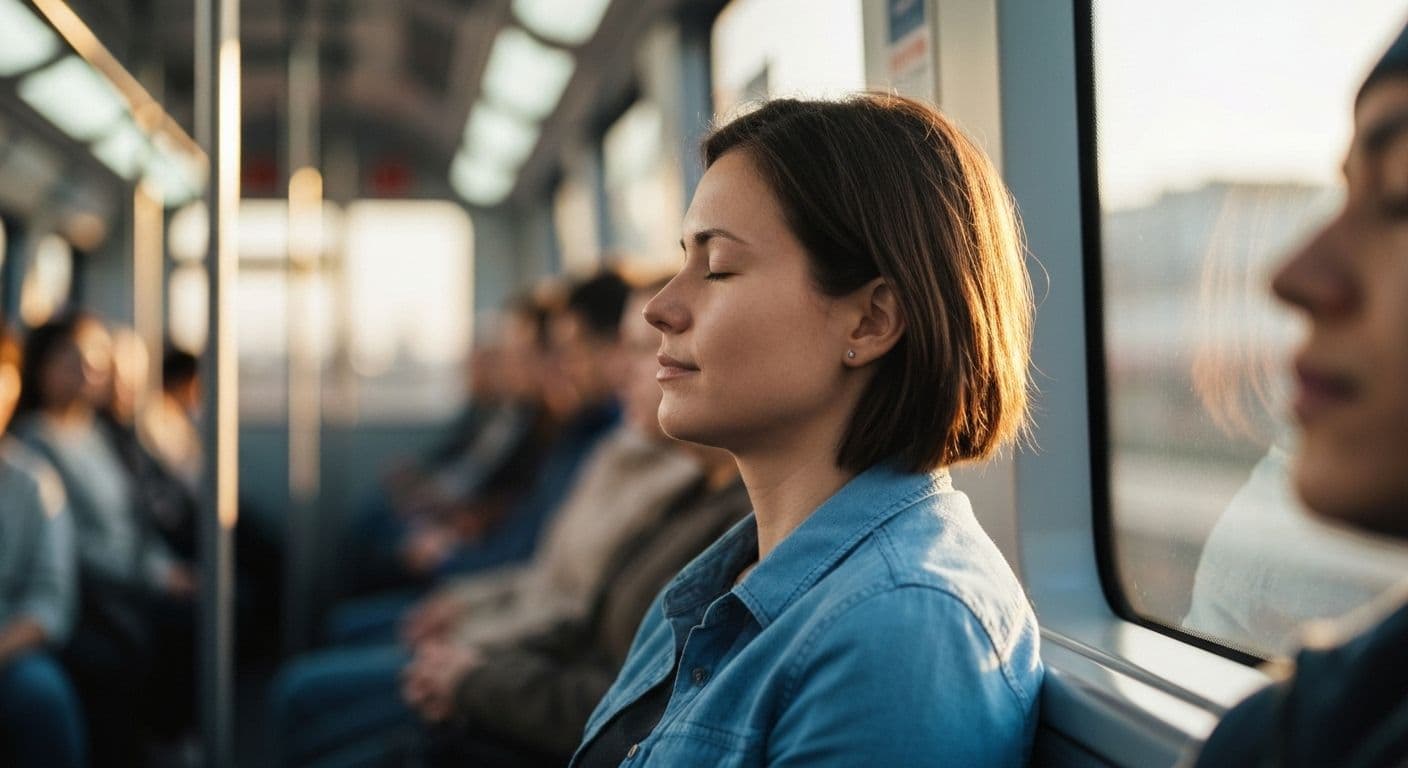
Close your eyes and practice sound awareness. Instead of tuning out the announcements, conversations, and engine noise, simply notice them without judgment. Label each sound mentally: "announcement," "conversation," "rumble." This awareness practice trains your attention without requiring any external tools.
People-watching becomes meditation when done mindfully. Observe fellow passengers with curiosity rather than judgment. Notice clothing colors, postures, expressions—all without creating stories about them. This builds both awareness and compassion simultaneously.
Walking Commute Techniques
Synchronize your breath with your steps. Inhale for four steps, exhale for four steps. This rhythm naturally regulates your nervous system while keeping you grounded in physical sensation. It's movement-based daily mindfulness that feels completely natural.
Engage all five senses systematically. Spend one block noticing only what you see, the next block on sounds, then smells, physical sensations, and even taste (morning coffee breath counts). This sensory rotation keeps your practice fresh and prevents mental drift.
Making Daily Mindfulness Stick During Your Commute
Start small. Choose just one technique and practice it only on your morning commute for one week. Don't try to be mindful both ways or use multiple methods simultaneously. This focused approach builds sustainable habits rather than temporary enthusiasm.
Use environmental cues as automatic reminders. If you drive, let the moment you buckle your seatbelt trigger your first conscious breath. If you take the train, let the closing door sound cue your awareness practice. These existing elements become built-in prompts that require zero extra effort.
Track your practice with simple mental check-ins, not complex systems. At the end of each commute, simply notice: "I practiced today" or "I forgot today." This lightweight awareness helps you build consistency without creating another task to manage.
Tomorrow morning, pick one technique from this guide and try it. Just once. That single mindful commute starts building the neural pathways that make daily mindfulness feel natural rather than forced. Over time, these small moments of awareness compound into genuine emotional resilience, better stress management, and a calmer relationship with your day.
Your commute is happening anyway. Now it's working for you instead of just passing by. That's the power of intentional daily mindfulness practice—transforming existing time into genuine growth.



