


Grief Share Books: How Parents Can Help Children Process Loss Together
When children face loss, finding the right words to help them process their grief can feel overwhelming. Grief share books offer parents a powerful tool to navigate these difficult conversations, creating safe spaces where children can explore complex emotions. These specially crafted stories provide a framework for understanding loss through characters and situations that resonate with young minds. The beauty of grief share books lies in their ability to express what both parents and children might struggle to articulate during times of emotional upheaval.
The science behind storytelling reveals why grief share books work so effectively. When children engage with stories about loss, their brains process difficult emotions in a more manageable way. Characters in these books become companions on the grief journey, showing children they're not alone in their feelings. Reading grief share books together creates moments of connection during a time when emotional regulation techniques are particularly important. These shared reading experiences build emotional vocabulary and provide children with permission to express their own grief.
Selecting Age-Appropriate Grief Share Books for Different Stages
Finding the right grief share books requires understanding your child's developmental stage and their grasp of loss concepts. For preschoolers (ages 3-5), look for grief share books with simple illustrations and straightforward language that use metaphors like changing seasons or butterflies to explain transformation. Books like "The Invisible String" or "The Goodbye Book" offer gentle introductions to loss through accessible concepts.
Elementary-aged children (6-9) benefit from grief share books that acknowledge more complex emotions while still providing reassurance. These readers can handle more direct discussions about death while needing stories that emphasize continuity of memories and love. "When Dinosaurs Die" and "The Memory Box" are excellent grief share books that balance honesty with hope.
Pre-teens (10-12) appreciate grief share books that respect their growing maturity while acknowledging their continued need for emotional support. Books like "Bridge to Terabithia" or "The Boy Who Sailed the Ocean in an Armchair" address loss through compelling narratives that validate the complexity of grief. When selecting grief share books for this age group, look for stories that avoid oversimplification and explore the nuanced emotional responses that older children experience.
You'll know you've found effective grief share books when your child requests repeated readings, references the story in conversations, or begins to use language from the book to describe their own feelings. These are signs that the narrative is resonating and providing emotional tools.
Reading Grief Share Books Together: Creating Space for Healing
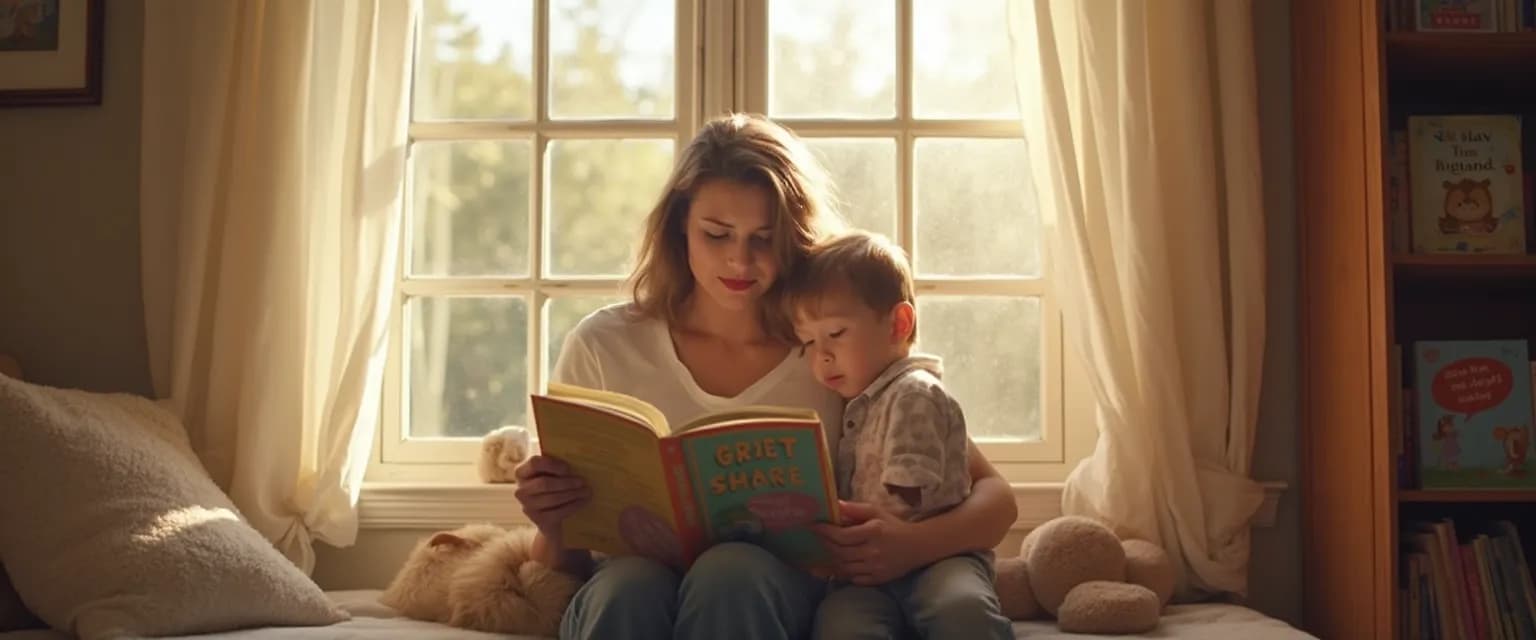
The way you read grief share books with your child matters as much as the books themselves. Create a comfortable, private space free from distractions where emotional vulnerability feels safe. Before beginning, briefly explain that the story talks about sad feelings and that it's okay to have questions or feelings while reading.
Use natural pause points in grief share books to check in with gentle questions: "How do you think the character feels here?" or "Does anything in this story remind you of your feelings?" Allow silence after questions, giving children time to process and respond. Remember that some children may not verbalize their reactions immediately but are still absorbing the message.
Consider establishing small rituals around reading grief share books, like holding a special stuffed animal or sitting in a particular chair. These consistent elements provide security when exploring difficult emotions. Pay attention to your child's signals – if they seem overwhelmed, it's perfectly fine to take a break and return to the grief share books later.
By modeling your own emotional responses to the story, you demonstrate that expressing feelings is healthy. Simple statements like "This part makes me feel sad too" normalize grief while maintaining parenting confidence during challenging conversations.
Beyond Reading: Extending the Healing Power of Grief Share Books
Grief share books can inspire activities that further emotional processing. After reading, offer simple art supplies for drawing favorite scenes or creating memory pictures. Some children might benefit from acting out parts of the story with toys, giving them agency in exploring difficult emotions through play.
Look for signs that grief share books are making a difference: increased communication about feelings, fewer behavioral issues, or more peaceful sleep patterns. These indicators suggest your child is developing healthy coping mechanisms. As children grow and their understanding evolves, returning to familiar grief share books can reveal new layers of meaning and continue supporting their emotional journey.
When used thoughtfully, grief share books become more than just stories—they're bridges to healing conversations, emotional literacy, and the reassurance children need most: that they're not alone in their grief and that, with support, they can move forward while honoring their feelings and memories.



