


Playful Ways to Deal with Grief in Children: Toys as Healing Tools
When children face loss, they often lack the vocabulary to express their feelings, making ways to deal with grief particularly challenging for them. Unlike adults who might talk through emotions or seek therapy, children process their grief differently—through play. Play serves as their natural language, allowing them to work through complex emotions in a safe, familiar environment. Finding effective ways to deal with grief becomes especially important for children who may not understand what they're experiencing or have the words to describe it.
Research consistently shows that play therapy ranks among the best ways to deal with grief for children. When a child loses a loved one, their world suddenly feels unsafe and unpredictable. Through play, they can regain a sense of control and rebuild emotional security at their own pace. Toys become powerful tools in this process, functioning as bridges between their inner emotional landscape and the external world. Play therapists and child psychologists recognize that these seemingly simple objects offer profound ways to deal with grief tips that honor a child's developmental stage.
The beauty of play-based grief processing is that it happens naturally. Children instinctively use toys to reenact situations, express feelings, and make sense of their changed reality. For parents and caregivers, understanding how to support this process provides effective ways to deal with grief techniques that respect the child's natural healing mechanisms.
Essential Toys as Ways to Deal with Grief in Children
When supporting a grieving child, certain toys become invaluable ways to deal with grief strategies. These tools allow children to express emotions they can't verbalize and process experiences at their own pace. The right toys create a bridge between their internal world and external reality.
Art Supplies for Emotional Expression
Art supplies rank among the most effective ways to deal with grief for children who struggle to put feelings into words. Drawing, painting, and clay modeling allow children to externalize their grief through colors, shapes, and images. A child might use dark colors to represent sadness or create images of their lost loved one. These creative expressions provide powerful anxiety management benefits while helping children process complex emotions.
Comfort Objects and Transitional Items
Stuffed animals, blankets, and other soft toys offer security during the turbulent grief journey. These items provide consistent comfort when emotions feel overwhelming. Many children assign special meaning to these objects, sometimes even viewing them as connections to the person they've lost. These comfort objects become practical ways to deal with grief guide elements, helping children feel safe as they navigate their emotions.
Role-Play Items for Processing
Puppets, dolls, and playhouses give children distance to explore difficult feelings. Through these toys, children can act out scenarios, have conversations they wish they could have had, or express anger in a safe context. A child might use puppets to "talk" to their deceased grandparent or work through feelings about hospital experiences. These role-play opportunities represent powerful ways to deal with grief techniques that honor the child's need for emotional distance while processing.
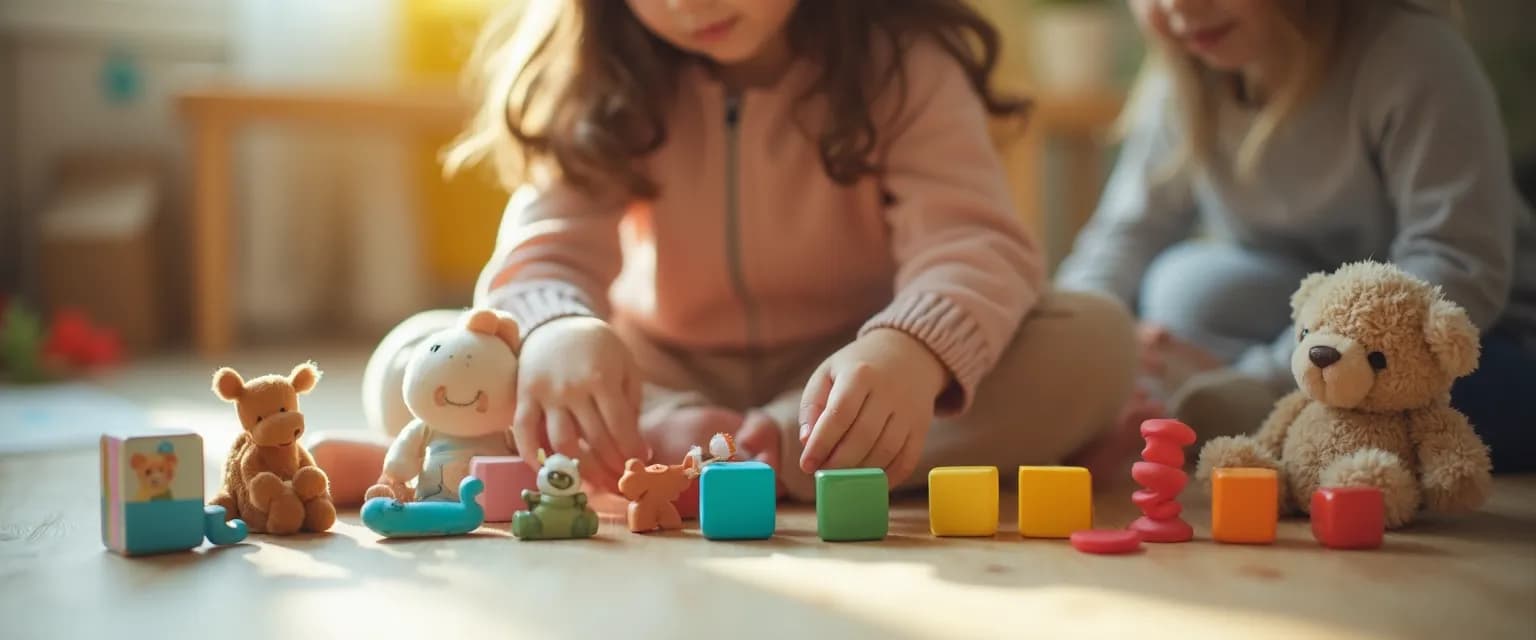
Building blocks and construction toys also serve important functions, allowing children to build and rebuild—mirroring the emotional reconstruction happening internally. The act of creating order from chaos parallels the grief journey itself.
Guiding Children Through Ways to Deal with Grief Using Play
Supporting a child's play-based grief processing requires understanding and patience. Creating a safe, judgment-free space ranks among the most important ways to deal with grief strategies for adults helping children. This means designating a consistent area where grief play can happen without interruption or criticism.
Recognizing healing moments in play without disrupting them requires attentiveness. When a child engages in grief play, they're doing important emotional work. Adults should resist the urge to direct or correct this play, even when it seems concerning. For example, a child repeatedly "burying" a doll isn't stuck in grief—they're processing it through repetition, one of the natural ways of managing anxiety and grief that children employ.
Knowing when to participate and when to observe represents another crucial element of supporting grief play. Sometimes children want adults to join their play world; other times, they need private space to process. Follow the child's lead rather than imposing your presence or absence.
Simple play activities can address specific grief emotions. For anger, provide clay or pillows for pounding. For confusion, offer sorting games that create order. For sadness, comfort toys and soft materials help children feel supported while experiencing difficult emotions.
Remember that play-based grief processing isn't about reaching a destination but supporting a journey. Each child finds their own ways to deal with grief through play, moving at their unique pace. By providing the right toys and supportive presence, you offer powerful ways to deal with grief that honor the child's natural healing wisdom while building resilience that will serve them throughout life.



