


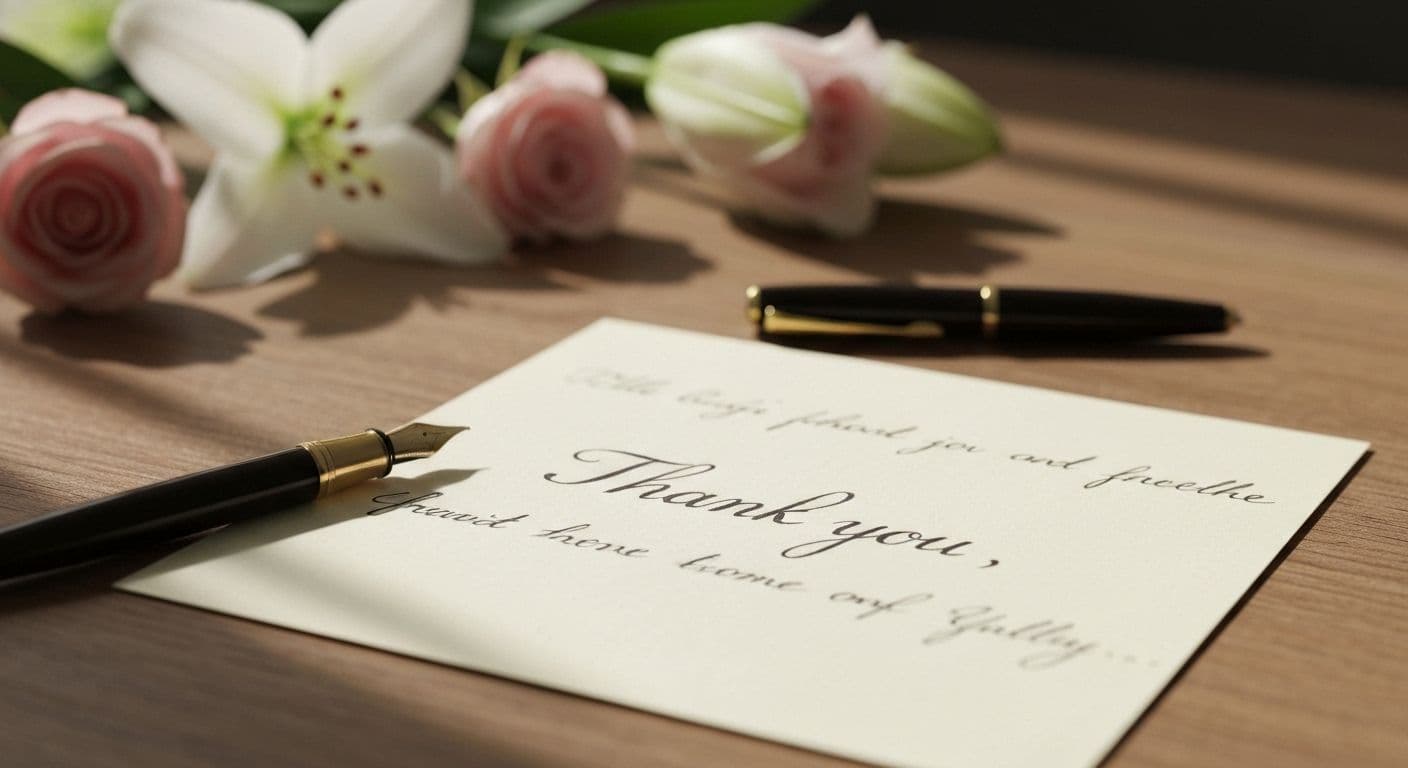
Sympathy Card Messages Thank You Notes: Why Handwritten Matters
When someone reaches out with sympathy during your loss, their gesture creates a moment of connection during one of life's most isolating experiences. You feel the pull to respond, to acknowledge their kindness, but then comes the question: should you text back, send an email, or reach for pen and paper? In our digital age, this choice feels more complicated than ever, especially when you're navigating grief. The truth is, your decision about building meaningful connections through sympathy card messages thank you notes matters more than you might realize for your emotional healing.
Research shows that the method you choose for expressing gratitude during grief impacts both you and the recipient in measurable ways. Handwritten sympathy card messages thank you notes engage different emotional pathways than digital messages, creating deeper impressions that last. This isn't about following outdated etiquette rules—it's about understanding how different forms of communication affect your healing process and the relationships that matter most during difficult times.
The modern dilemma isn't whether to respond at all, but rather which format honors both your emotional capacity and the relationship itself. While digital convenience tempts us with speed and ease, traditional handwritten thank you notes after loss offer something that pixels on a screen simply cannot replicate: a tangible reminder of human connection when you need it most.
The Emotional Science Behind Sympathy Card Messages Thank You Notes
Your brain processes handwriting differently than typing. When you write by hand, you activate the reticular activating system—a network that heightens your awareness and emotional engagement with what you're creating. This neurological difference means that crafting handwritten sympathy card messages thank you notes becomes an active part of processing your grief, not just a task to complete.
The physical act of forming letters by hand slows down your thoughts, creating space for genuine emotional reflection. This deliberate pace helps you connect with the gratitude you're expressing, making the experience more therapeutic for you while simultaneously creating something more meaningful for the recipient. Studies on handwriting and memory show that information processed through handwriting creates stronger neural pathways than typed text.
Recipients perceive handwritten sympathy card messages thank you notes as significantly more thoughtful than digital alternatives. The texture of paper, the unique qualities of someone's handwriting, and the knowledge that time and effort went into each word communicates depth that emojis and quick texts cannot match. These tangible notes become keepsakes—physical reminders of connection that people often save for years.
The time investment itself sends a powerful message. When you choose to write by hand during grief, you're telling someone that their support mattered enough to warrant this extra effort. This isn't about perfection or lengthy prose; it's about the authenticity that comes through when you slow down enough to connect with your feelings. Research on emotional regulation techniques confirms that deliberate, mindful actions help process difficult emotions more effectively than rushed responses.
When to Choose Handwritten vs Digital Sympathy Card Messages Thank You Notes
Not every condolence message requires a handwritten response, and that's perfectly okay. The key is matching your response method to the relationship and the type of support you received. For close family members, longtime friends, or anyone who provided substantial support—meals, childcare, attendance at services—handwritten sympathy card messages thank you notes honor the depth of their contribution.
Digital responses work beautifully for acquaintances, coworkers you don't know well, or people who sent brief social media condolences. A thoughtful text or email acknowledges their kindness without adding unnecessary pressure to your grief response workload. The goal isn't perfection; it's authentic connection within your current capacity.
Timing expectations differ between formats too. Digital sympathy card messages thank you notes can happen within days or a couple of weeks, while handwritten notes carry more flexibility—most people understand that grief makes everything take longer. You have weeks or even months to send handwritten responses without breaching etiquette. What matters most is that you eventually acknowledge the support that meant something to you.
Release any guilt about your response method. Grief already carries enough weight without adding shame about thank you note formats. Your emotional bandwidth during loss is limited, and directing it wisely means managing stress effectively rather than meeting impossible standards.
Making Sympathy Card Messages Thank You Notes Manageable During Grief
Simplifying the process makes handwritten sympathy card messages thank you notes achievable even when your emotional energy runs low. Keep pre-stamped cards and a pen in one accessible spot—this removes decision fatigue when you have a moment to write. A simple template approach helps too: acknowledge what they did, express how it helped, add one personal sentence.
You don't need lengthy messages. One genuine sentence carries more weight than three paragraphs of generic gratitude. "Your lasagna fed us for three days when cooking felt impossible" means more than elaborate prose. Focus on the specific impact rather than crafting perfect sympathy card messages thank you notes.
Pace yourself by writing just one or two notes when you have energy, rather than forcing marathon sessions. This sustainable approach prevents burnout and keeps the process meaningful instead of mechanical. Some days you'll write three notes; other days, none—and that's exactly how grief works.
These small acts of connection support your healing journey. Each note you write reinforces the network of support surrounding you, reminding you that you're not alone in your loss. Whether handwritten or digital, your sympathy card messages thank you notes acknowledge the kindness that helps carry you through difficult times.



