


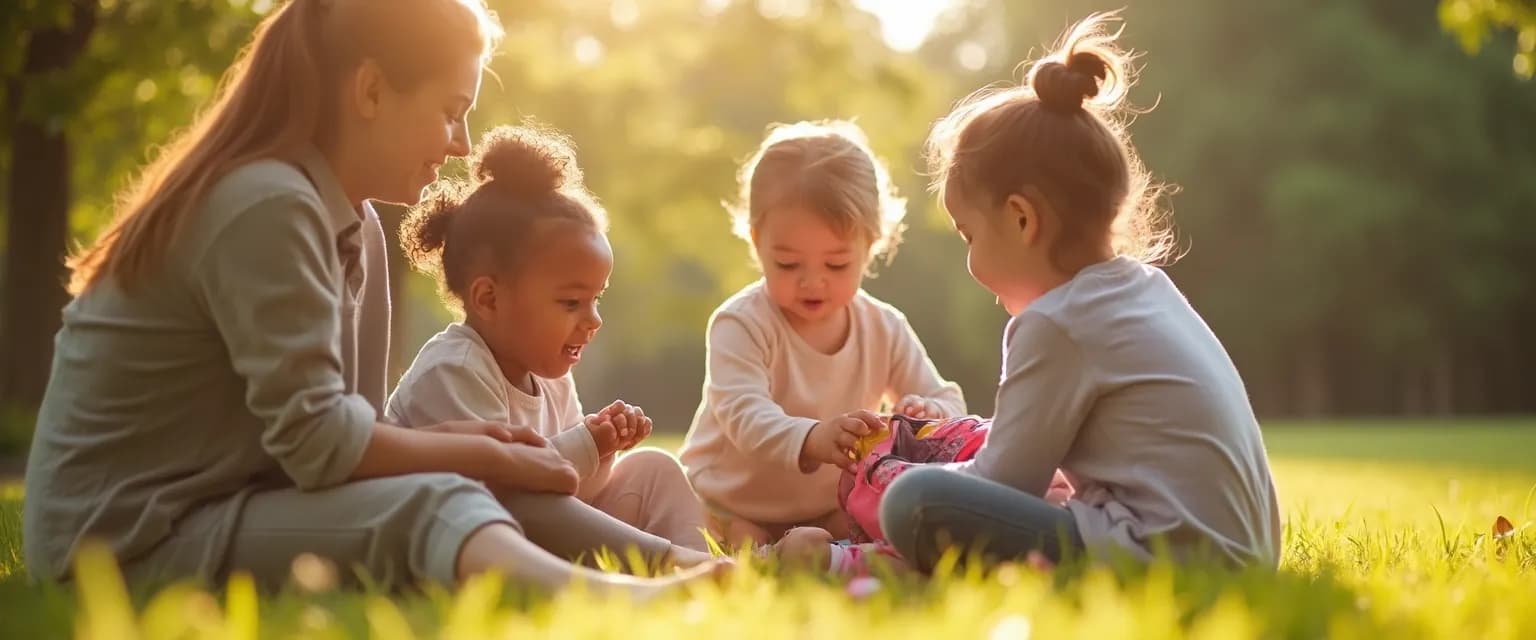
5 Daily Practices to Develop EQ Social Awareness in Children
Raising emotionally intelligent children is one of the most valuable gifts parents can give. At the heart of emotional intelligence lies EQ social awareness—the ability to understand and respond appropriately to others' feelings and perspectives. Children with strong EQ social awareness navigate social situations more effectively, build healthier relationships, and generally experience greater success and happiness throughout life. As parents, we're the primary architects of our children's emotional intelligence, shaping their EQ social awareness through countless daily interactions that might seem insignificant but actually form the building blocks of their social competence.
The beauty of developing EQ social awareness in children is that it doesn't require expensive programs or extensive time commitments. Instead, it's woven into the fabric of everyday family life through consistent, intentional practices. Children naturally look to parents as models for how to interpret and respond to the social world around them. When we demonstrate mindfulness techniques in our interactions, we're teaching EQ social awareness lessons that last a lifetime.
Research consistently shows that children with well-developed EQ social awareness perform better academically, have fewer behavioral problems, and develop stronger interpersonal skills that serve them well into adulthood. The good news? These skills can be cultivated through simple, consistent practices that fit seamlessly into your family's routine.
5 Simple Daily Practices to Boost EQ Social Awareness
Integrating EQ social awareness activities into your daily routine doesn't have to be complicated. These five practices take just minutes but yield powerful results when done consistently:
1. Emotion Vocabulary Building
Expand your child's emotional vocabulary beyond basic feelings like "happy" or "sad." When watching movies or reading stories together, pause to discuss characters' emotions: "How do you think she feels when that happens? How can you tell?" This simple EQ social awareness practice helps children recognize emotional cues in facial expressions, body language, and situational context. For younger children, use picture books specifically designed to highlight emotions; for older kids, discuss more complex emotional states in age-appropriate shows or books.
2. Perspective-Taking Through Storytelling
During everyday conflicts or story time, prompt perspective-taking with questions like "How would you feel if that happened to you?" or "Why do you think he made that choice?" This core EQ social awareness technique helps children step outside their own experience and consider others' viewpoints. Make it a natural part of dinner conversations by sharing scenarios from your day and asking what others might have been feeling.
3. Empathy Modeling
Children learn EQ social awareness primarily through observation. When you witness someone in distress—whether in person or on TV—verbalize your empathetic response: "That person seems upset. I wonder if they need help or space right now." This emotional intelligence development approach demonstrates how to recognize others' feelings and respond appropriately.
4. Social Cue Scavenger Hunt
Turn everyday outings into opportunities for EQ social awareness practice. At the playground or grocery store, quietly observe people together and discuss the social cues you notice: "Did you see how that person stepped back when someone got too close? What might that tell us?" This helps children become more observant of nonverbal communication in different settings.
5. Celebrating Diverse Perspectives
Introduce your child to different cultures, traditions, and ways of life through books, foods, music, and community events. Discuss how people's backgrounds shape their perspectives and values. This broadens their EQ social awareness by helping them understand that people see the world differently based on their experiences.
Measuring Your Child's EQ Social Awareness Growth
As you consistently practice these EQ social awareness activities, look for these signs of development:
- Increased use of emotion words in everyday conversation
- Unprompted recognition of others' feelings ("Mom, I think my friend was disappointed when...")
- More thoughtful responses during conflicts
- Growing curiosity about others' experiences and perspectives
- Decreased self-centered reactions
When you notice these behaviors, provide specific feedback: "I noticed how you realized your sister was frustrated and offered to help—that shows great social awareness!" This reinforces the EQ social awareness skills you're working to develop. Remember that progress isn't linear—children may show advanced EQ social awareness in some situations while still developing in others.
If certain aspects of EQ social awareness seem particularly challenging for your child, adjust your approach. Some children benefit from more explicit instruction, while others learn best through emotional regulation strategies and experiential learning. The key is consistency and patience.
By making these five simple EQ social awareness practices part of your daily family life, you're equipping your child with emotional intelligence skills that will serve them throughout their lives. These moments of connection not only develop stronger EQ social awareness but also deepen your parent-child bond—a win-win for the whole family.



