


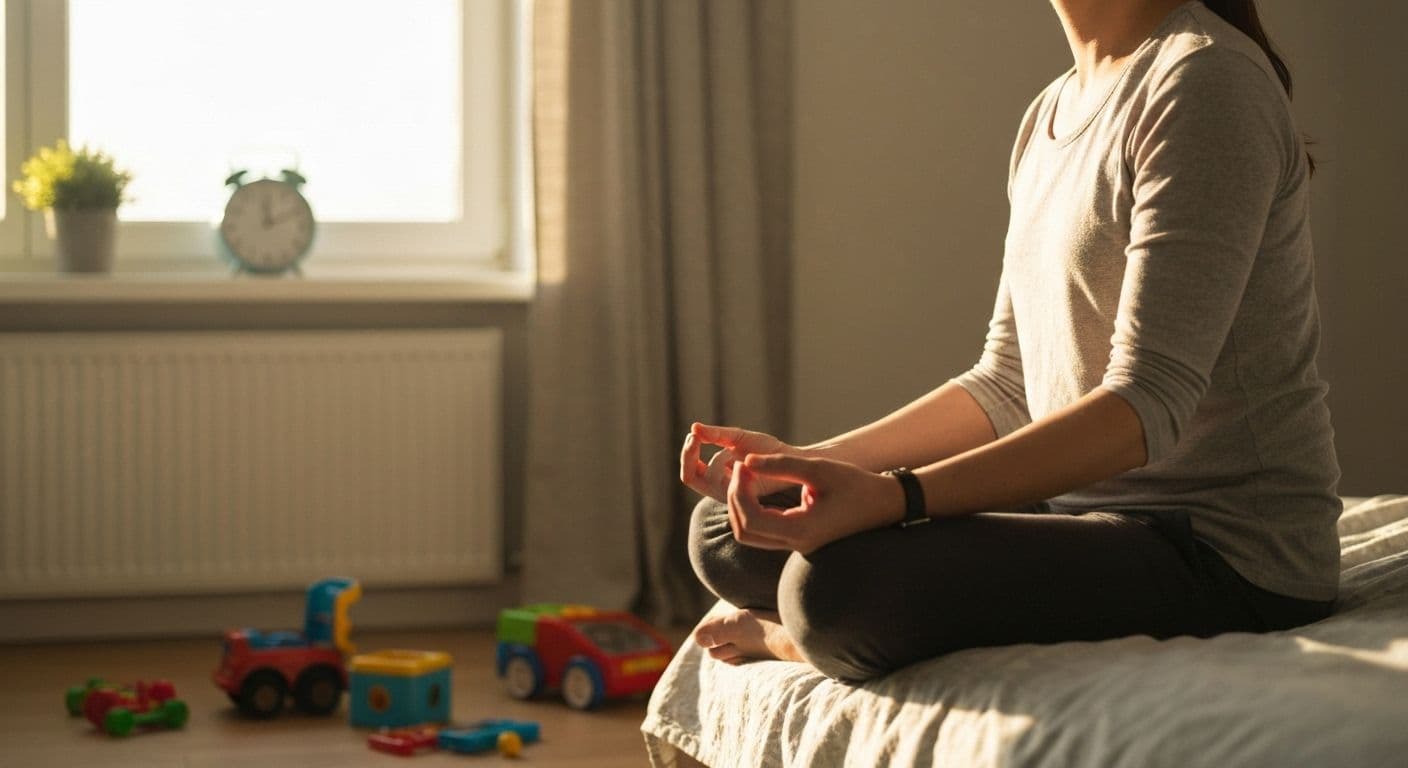
5 Minute Mindfulness Meditation for Busy Parents: Morning Chaos Guide
Morning chaos with busy parents looks something like this: one kid can't find their shoes, another refuses breakfast, and you're already running 10 minutes behind schedule. The idea of sitting cross-legged in perfect silence for 5 minute mindfulness meditation feels laughable, right? Here's the game-changer: effective mindfulness for parents doesn't require a quiet room or uninterrupted time. Your morning meditation practice fits right into the beautiful mess you're already navigating.
The best 5 minute mindfulness meditation happens in real life, not in idealized conditions. Research shows that brief, consistent mindfulness moments throughout your morning reduce stress hormones and improve emotional regulation—even when interrupted by "Mom, where's my backpack?" These micro-practices work because your brain responds to intentional awareness regardless of external circumstances. Ready to discover how busy parents actually make this work?
What makes morning meditation sustainable is understanding that interruptions aren't obstacles—they're part of the practice. When you shift your mindset from "I need perfect conditions" to "I'm working with what I have," everything changes. This 5 minute mindfulness meditation guide shows you exactly where these moments hide in your existing routine.
5 Minute Mindfulness Meditation While Managing Breakfast and Morning Prep
Your kitchen becomes a meditation space when you bring intentional awareness to what you're already doing. While waiting for coffee to brew or oatmeal to cook, place one hand on your belly and take three slow breaths. Notice the rise and fall. That's it—you've just started your mindfulness practice without adding a single task to your morning.
Sensory awareness during meal prep transforms mundane tasks into 5 minute mindfulness meditation opportunities. Feel the cool smoothness of an apple as you slice it. Notice the warmth spreading through the pan. Smell the toast browning. These aren't distractions from meditation—they are the meditation. Your brain processes sensory focus similarly to traditional breath-focused practices, activating the same calming neural pathways.
Here's where the magic happens: when your child interrupts with a request or complaint, acknowledge them fully, then return to your breath for just one moment before responding. This 3-breath reset between tasks keeps you anchored in presence rather than spiraling into stress. Pack the lunch box with full attention to each item. Wipe the counter with awareness of the circular motion. These repetitive actions become your meditation anchor points.
Breath-Focused Meditation During Morning Tasks
The most effective 5 minute mindfulness meditation techniques for busy mornings involve pairing breath awareness with physical actions you're already performing. Sync your inhale with opening the refrigerator, exhale with closing it. This habit stacking makes the practice automatic and sustainable.
Fitting 5 Minute Mindfulness Meditation Into Car Rides and School Runs
Your car offers unexpected opportunities for quick meditation techniques. Before starting the engine, take five conscious breaths while noticing the sensation of the steering wheel under your hands and your back against the seat. This grounds you before the rush begins and activates your parasympathetic nervous system.
Transform every red light into a meditation bell—a natural reminder to check in with your body. Are your shoulders tense? Is your jaw clenched? These brief body scans during stops create multiple 5 minute mindfulness meditation moments throughout your drive. The beauty? Traffic lights already interrupt your flow, so you're simply redirecting that pause toward stress reduction rather than frustration.
Those minutes waiting in the school drop-off line? Perfect for a body scan meditation. Start at your toes and work upward, noticing any tension without judgment. You'll likely only get through your legs before it's your turn to move forward—and that's completely fine. Partial practices count.
Turn your kids into meditation partners with simple breathing games. "Let's see who can take the slowest breath" engages them while you practice too. This approach to 5 minute mindfulness meditation for parents doubles as teaching your children valuable emotional regulation skills they'll use for life.
Making 5 Minute Mindfulness Meditation a Sustainable Morning Habit
Sustainability comes from choosing one specific moment rather than trying to be mindful constantly. Pick your anchor: coffee brewing, first red light, or school drop-off line. This implementation intention—"When X happens, I will breathe mindfully for 5 breaths"—creates automatic behavior that requires minimal willpower.
Stack your meditation practice onto existing habits using the formula: "After I [current habit], I will [5 minute mindfulness meditation practice]." After I pour coffee, I will take three conscious breaths. After I buckle my seatbelt, I will scan my body for tension. These connections make the practice stick because they leverage routines you've already established through building consistency over time.
Let's address perfectionism: interrupted meditation sessions are successful sessions. When your practice gets cut short by a child's urgent need, you've still trained your brain in awareness. Research confirms that even 30 seconds of intentional breathing produces measurable benefits. Every moment counts.
Track your progress simply by mentally noting "I practiced" each time you complete even one conscious breath. No apps, no journals—just internal acknowledgment. Over weeks, these brief 5 minute mindfulness meditation sessions compound into significant improvements in emotional regulation, patience, and overall well-being. The transformation happens in tiny, imperfect moments accumulated over time.



