


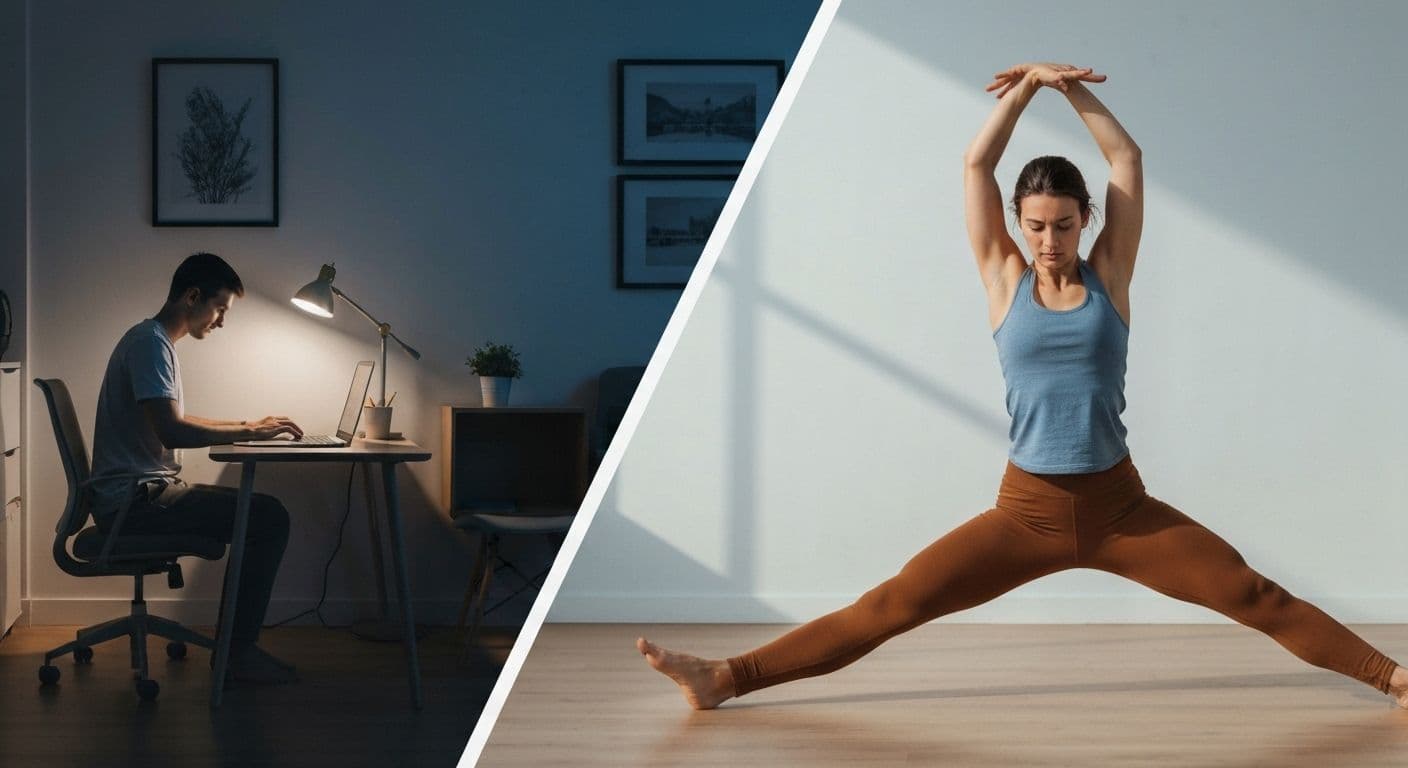
Body Mind Centering for Remote Workers: Combat 8+ Hours of Sitting
Your neck is stiff, your lower back aches, and you can't remember the last time you stood up from your desk. Sound familiar? For remote workers logging 8+ hours of screen time daily, this physical reality comes with mental fog, tension headaches, and a persistent sense of disconnection from your own body. Here's the good news: body mind centering offers practical, science-backed movement patterns that address both the physical strain and mental exhaustion of prolonged sitting—without requiring you to leave your workspace.
Body mind centering isn't about elaborate yoga sequences or gym sessions. It's about reconnecting with how your body moves and how that movement directly influences your mental state. Remote workers face unique challenges: compressed spines from slouching, tight hip flexors from constant sitting, and rounded shoulders from keyboard work. These physical patterns don't just cause discomfort—they actively drain your energy and focus. The beauty of body mind centering is that it gives you desk-friendly tools to interrupt these patterns throughout your workday, releasing tension as it builds rather than waiting until you're in pain.
Think of body mind centering as your built-in reset button, accessible anytime your body sends those familiar distress signals. Whether it's that nagging shoulder tension or the brain fog that hits mid-afternoon, these techniques help you maintain both physical comfort and mental sharpness. Ready to discover how simple movement awareness transforms your remote work experience?
How Body Mind Centering Addresses the Physical Challenges of Prolonged Sitting
Body mind centering works on a fundamental principle: your movement patterns directly shape your mental and emotional states. When you sit for hours, your body adapts in ways that create cascading problems. Your spine compresses, reducing space between vertebrae. Hip flexors tighten and shorten, pulling your pelvis forward. Shoulders round inward, restricting breathing capacity. Circulation slows, leaving you feeling sluggish and unfocused.
The best body mind centering approach for desk workers focuses on spinal awareness. Try this right now: Notice how you're sitting. Without changing anything, simply observe where pressure exists in your seat, where your spine curves, how your shoulders position themselves. This awareness is the foundation. From here, you can introduce subtle pelvic tilts—gently rocking your pelvis forward and back while seated, awakening the natural curves of your spine.
Spinal Awareness Exercises
Spinal articulation is a core body mind centering technique that releases compression. While sitting, imagine your spine as a chain of beads. Slowly round your back, tucking your chin and drawing your navel toward your spine. Then reverse: lift your chest, gently arch your lower back, and look slightly upward. Move slowly, feeling each vertebra participate. This takes 30 seconds and immediately reduces stiffness.
Hip Flexor Release Techniques
Your hip flexors bear the brunt of extended sitting. A simple body mind centering strategy: while seated, lift one knee slightly off the chair, hold for three breaths, then release. Alternate sides. This subtle engagement followed by release helps prevent the chronic tightness that affects posture and creates lower back pain. For those seeking strategies for mental wellbeing, addressing physical tension is essential.
Shoulder Decompression Movements
Rounded shoulders restrict breathing and contribute to tension headaches. Here's an effective body mind centering movement: Clasp your hands behind your head, elbows wide. Gently press your head back into your hands while drawing your elbows backward. Hold for five breaths. This opens your chest, decompresses your shoulders, and improves posture—all while remaining seated.
Body Mind Centering Techniques for Mental Clarity and Focus During Screen Time
Extended screen time doesn't just strain your eyes—it fragments your attention and depletes mental energy. Body mind centering techniques work by redirecting awareness from the screen to your physical sensations, essentially resetting your nervous system. This proprioceptive awareness—your sense of where your body exists in space—serves as an anchor when mental fog sets in.
Desk-Friendly Grounding Exercises
Grounding is a powerful body mind centering practice. Press your feet firmly into the floor. Notice the contact points: heels, balls of feet, toes. Imagine roots growing downward from your feet. This simple awareness shift interrupts the cycle of mental overwhelm and brings you back to the present moment. It's particularly effective before challenging tasks or after draining video calls.
Micro-Breaks for Maximum Impact
Your hands and fingers hold tremendous tension from constant typing. Try this body mind centering technique: Spread your fingers wide, then slowly curl them into gentle fists. Repeat five times. Circle your wrists. These micro-movements take less than a minute but significantly reduce hand fatigue and restore focus more effectively than scrolling through your phone.
Eye movement patterns also matter. Every 20 minutes, look away from your screen. Trace a figure-eight pattern in the air with your eyes. This releases eye strain while giving your brain a processing break. Combined with natural rhythm strategies, these practices enhance productivity.
Breath and Movement Coordination
Body mind centering emphasizes coordinating breath with movement. Place one hand on your belly. Breathe deeply, feeling your hand rise and fall. This activates your diaphragm, increases oxygen flow, and signals your nervous system to calm down. It's emotional regulation through physical awareness—a self-care routine that takes seconds.
Integrating Body Mind Centering Into Your Remote Work Routine
The most effective body mind centering guide emphasizes consistency over intensity. Start with three daily check-ins: morning (before you begin work), midday (during lunch), and mid-afternoon (when energy typically dips). Each check-in takes 2-3 minutes. Set reminders every 90 minutes—this aligns with your brain's natural attention cycles.
Small, consistent body mind centering practices compound dramatically over time. You're not aiming for perfection; you're building awareness. Notice when tension appears. Which movements feel most relieving? Your body provides feedback if you listen. Some days you'll need more hip flexor work; other days, shoulder releases matter most.
Taking control of your physical and mental wellbeing while working remotely isn't optional—it's essential. Body mind centering gives you practical tools to maintain comfort, focus, and energy throughout your workday. These aren't abstract concepts or time-intensive practices. They're simple, effective techniques you can use right now, exactly where you're sitting. Your body already knows how to move in ways that support your mind. Body mind centering just helps you remember.



