


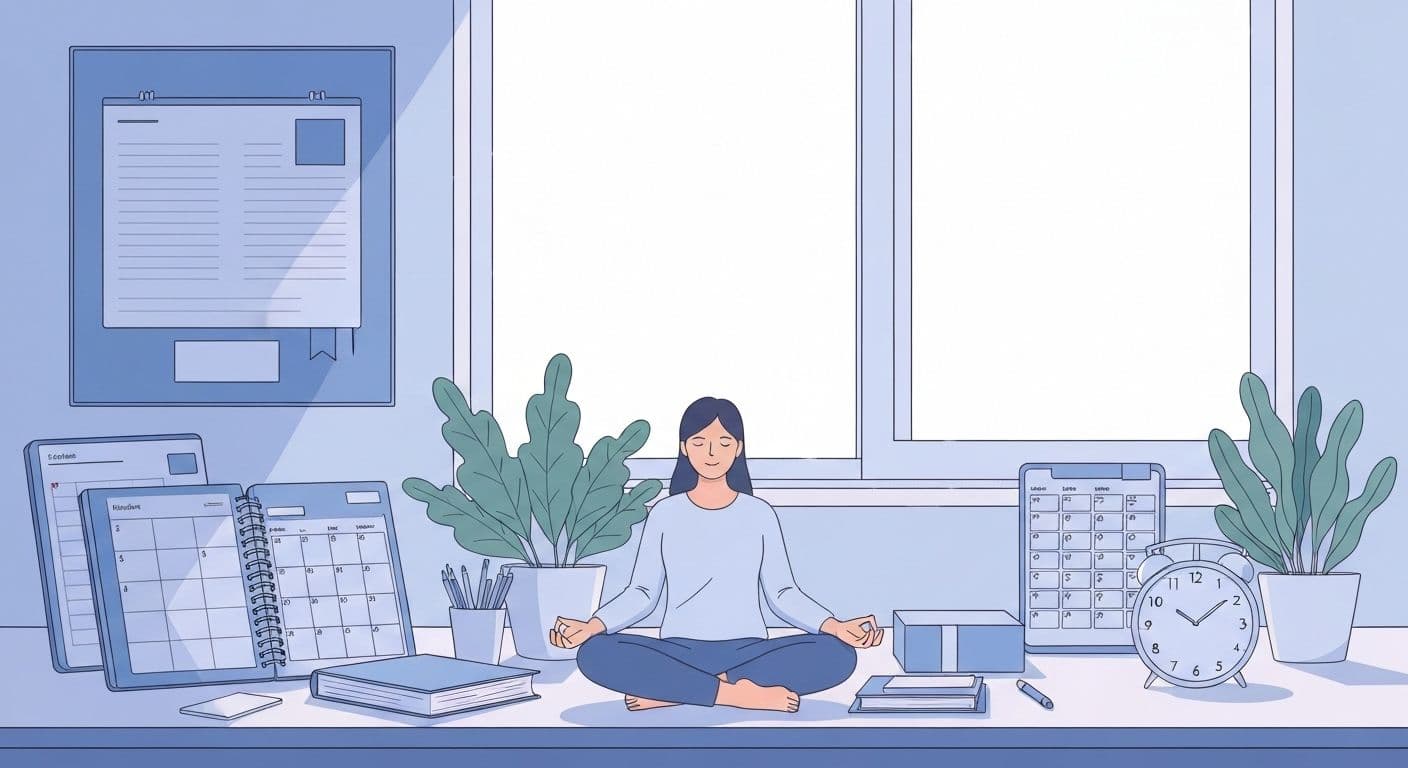
Build a Peaceful Life Peaceful Mind Despite Your Busy Schedule
You've stared at your calendar, color-coded and packed to the edges, and thought: "Peace? Maybe when I retire." Here's the truth—waiting for life to slow down before you cultivate a peaceful life peaceful mind is like waiting for traffic to clear before learning to drive. It's never happening. But here's what most people miss: inner calm isn't about having fewer commitments. It's about how you navigate the ones you already have.
The misconception that peace requires empty schedules keeps millions of people trapped in a cycle of exhaustion, believing they must choose between productivity and tranquility. Research shows that life balance isn't about doing less—it's about aligning what you do with how you protect your mental space. A peaceful life peaceful mind exists within your busy schedule, not beyond it. The strategies ahead don't ask you to drop responsibilities. They show you how to redesign your relationship with them.
Identify What Actually Drains Your Peaceful Life Peaceful Mind
Not all commitments are created equal. Some activities genuinely drain you, while others you simply resist because they feel uncomfortable or unfamiliar. The difference matters enormously when building a peaceful life peaceful mind. That 7am workout might feel hard, but does it leave you energized or depleted? The answer reveals whether it supports or sabotages your inner calm.
Try an energy audit: For three days, jot down how you feel after each major commitment—recharged, neutral, or drained. This simple practice helps you spot the peace-stealing activities hiding in plain sight. Often, the tasks that create the most mental friction aren't the busiest ones; they're the ones misaligned with your values. When your schedule contradicts what matters most to you, every commitment becomes heavier than it needs to be.
Energy Audit Technique
Ask yourself these assessment questions: Does this commitment energize or exhaust me? Does it align with my priorities, or am I doing it from obligation? Would I regret declining this in six months? These questions cut through the noise and reveal which peace-draining commitments deserve reconsideration. Understanding how your brain makes decisions helps you evaluate commitments more objectively.
Values Alignment Check
The hidden cost of saying yes to everything isn't just time—it's the constant low-grade anxiety that accompanies a schedule built on other people's priorities. When you say yes without checking alignment, you sacrifice mental space. Each misaligned commitment chips away at your capacity for a peaceful life peaceful mind, creating friction that accumulates throughout your day.
Create Micro-Moments for a Peaceful Life Peaceful Mind Throughout Your Day
Here's where science gets exciting: Your nervous system doesn't need hour-long meditation retreats to reset. Research on stress physiology shows that brief, intentional practices scattered throughout your day create cumulative calm that rivals longer sessions. These micro-moments of tranquility become your secret weapon for maintaining inner calm in chaos.
Nervous System Reset Techniques
Ready to try some 30-second to 2-minute techniques? Between meetings, take three slow breaths where your exhale lasts longer than your inhale—this activates your parasympathetic nervous system instantly. While your computer loads, do a quick body scan from head to toe, releasing tension you didn't know you were holding. These aren't luxuries; they're strategic resets that protect your peaceful life peaceful mind throughout demanding days.
Transition Rituals
Transform dead time into peace opportunities with transition rituals. Your commute becomes a boundary between work and home when you play a specific playlist or practice stress reduction techniques. Waiting rooms shift from frustration zones to mental space when you use them for grounding exercises. The key is consistency—your brain learns to associate these moments with calm, making the reset automatic.
Habit Stacking for Peace
During back-to-back appointments, protect your mental space by building buffer practices into existing routines. After closing your laptop, take ten seconds to stretch before standing. While washing your hands, focus completely on the sensation of water. These micro-habits anchor your peaceful life peaceful mind practices to actions you already do, making them effortless to maintain. The science of habit stacking shows that linking new behaviors to established ones creates lasting change without requiring willpower.
Redesign Your Routine to Protect Your Peaceful Life Peaceful Mind
Protective boundaries aren't walls that keep people out—they're structures that keep your life balance intact. Start by building buffer zones into your packed calendar: fifteen minutes before big meetings, ten minutes between commitments. These spaces prevent the mental pile-up that destroys inner calm. Strategic buffer zones also give you room to handle the unexpected without triggering emotions.
Communicating boundaries preserves relationships when you're clear and consistent. Instead of apologizing for protecting your mental space, try: "I'm available Tuesday at 2pm or Thursday at 10am." This maintains commitments while establishing limits. Saying no strategically means evaluating new requests against your energy audit findings. When something doesn't align, offer alternatives rather than explanations.
Your next step toward a peaceful life peaceful mind starts now: Choose one peace-draining commitment to reassess this week, implement two micro-moment practices between existing tasks, and add one buffer zone to tomorrow's schedule. These small shifts compound into profound changes. Inner calm isn't waiting at the end of your to-do list—it's available right now, within the schedule you already have.



