


Circle Time Activities for Self Awareness in Early Childhood Education
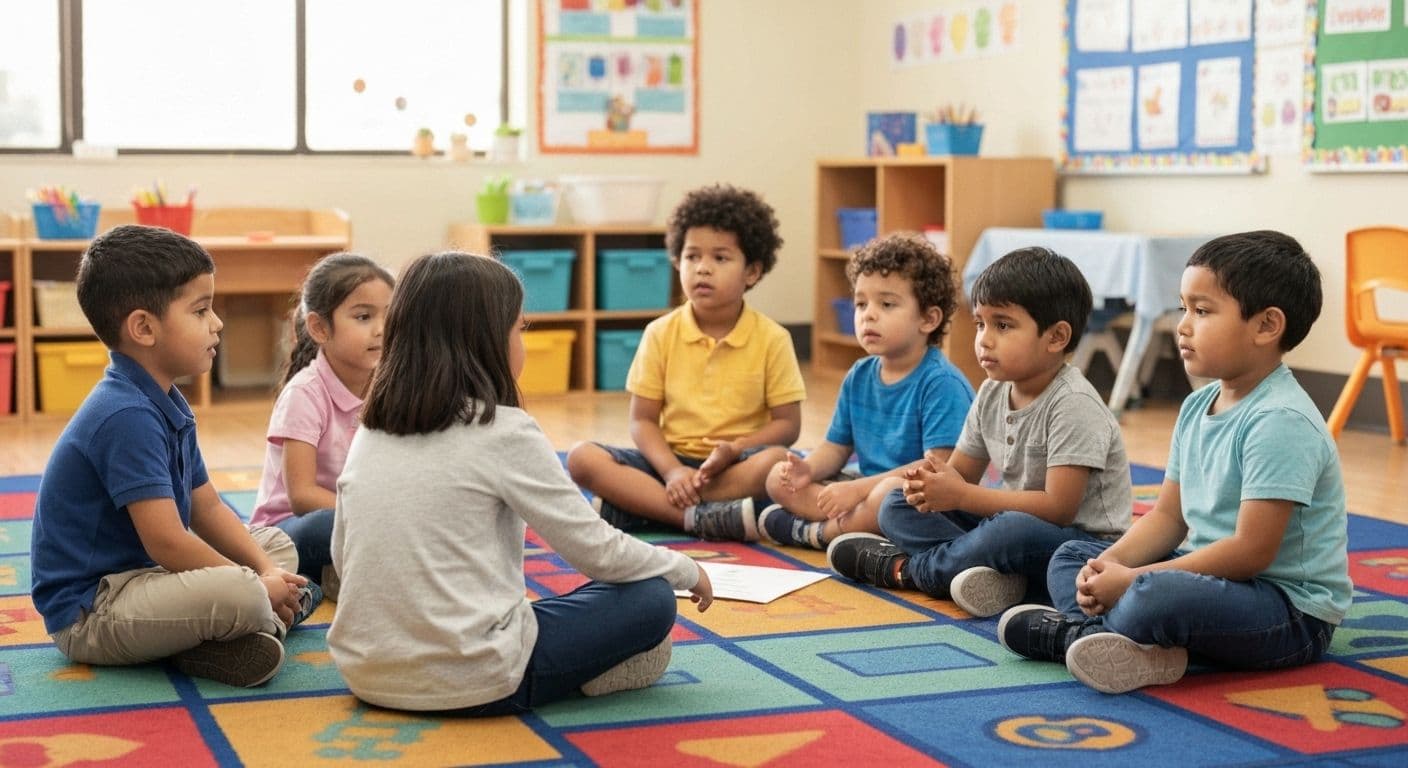
Circle time isn't just about sitting in a circle and singing songs—it's a golden opportunity for fostering self awareness in early childhood education. Those 15-20 minutes when your little learners gather together? That's prime time for helping them tune into their emotions, preferences, and inner experiences. Think of it as a daily emotional gym session, where young minds flex their self-recognition muscles in a safe, supportive environment.
Here's the thing: ages 3-5 represent a critical window for emotional development. During these years, children's brains are wiring themselves for lifelong patterns of emotional intelligence. When you intentionally build self awareness in early childhood education into your circle time routine, you're not just filling time—you're laying neural pathways that help children understand who they are and what they feel. The structured predictability of circle time creates exactly the kind of safe container young children need to explore their inner worlds without fear or judgment.
What makes circle time so powerful is its natural rhythm. Children already expect this gathering space, which means you're working with their established comfort zone rather than against it. This familiarity lets you introduce emotional strength building activities without overwhelming developing minds. The group dynamic also provides something magical: children learn from watching their peers name emotions and express preferences, creating a ripple effect of self-discovery.
Emotion-Naming Activities That Build Self Awareness in Early Childhood Education
Ready to transform your circle time into an emotional intelligence powerhouse? Start with a feelings check-in routine. Use emotion cards with simple facial expressions—happy, sad, angry, excited, scared—and let each child select the face that matches their current state. This visual approach makes abstract emotions concrete for developing brains.
Here's a game-changer: the name-and-claim technique. Invite children to say, "I feel [emotion] because [simple reason]." Keep it light and judgment-free. When little Maya says, "I feel grumpy because I wanted more breakfast," you're witnessing self awareness in early childhood education in action. She's connecting her internal state with an external cause—that's sophisticated emotional work for a four-year-old!
Visual Emotion Tools
Color systems work brilliantly for this age group. Assign colors to emotions: blue for calm, red for angry, yellow for happy, green for peaceful. Children can hold up colored cards or point to a feelings rainbow. Some teachers create emotion zones in their circle area, letting children physically move to different colored spots based on how they feel.
Verbal Expression Techniques
Mirror exercises are pure gold. Pass around a small handheld mirror and ask children to make different feeling faces. "Show me your surprised face! Where do your eyebrows go?" This helps children recognize that emotions show up in their bodies—a foundational concept for understanding emotional states. Pair this with simple breathing: "Let's take three deep breaths and notice how our bellies feel."
Group storytelling also creates natural opportunities for emotion identification. Start a story—"Once there was a bunny who lost his favorite toy"—and ask children how the bunny might feel. This externalized approach lets children practice emotion recognition without the vulnerability of sharing their own feelings first.
Conversation Starters for Developing Self Awareness in Early Childhood Education
The questions you ask during circle time matter enormously. Skip yes/no questions and embrace open-ended prompts that invite self-reflection. "What makes you feel happy?" is a beautiful starting point. You'll get answers ranging from "My dog!" to "When Mommy reads books" to "Spaghetti!" Each response is a child learning to identify what brings them joy—pure self awareness in early childhood education magic.
Preference exploration builds self-knowledge naturally. Ask about favorite colors, foods, or activities, but here's the key: emphasize that everyone's answer is equally wonderful. "Isn't it interesting that Jamal loves blue and Sophia loves purple? We all have different favorites!" This comparison-free approach celebrates individual differences rather than creating competition.
Try body awareness prompts: "Where do you feel excitement in your body? Does it make your tummy feel fluttery? Your hands feel tingly?" These questions help children develop interoception—the ability to sense internal bodily states. This skill is foundational for emotional regulation and connects beautifully with understanding emotional patterns.
Create turn-taking discussions where each child shares something unique about themselves. "Tell us one thing that makes you special" or "Share something you're proud of." These conversations validate each child's perspective and reinforce that their inner experiences matter and deserve attention.
Making Self Awareness in Early Childhood Education a Daily Circle Time Practice
Consistency transforms these activities from fun moments into genuine skill-building. Choose 2-3 self awareness in early childhood education techniques and rotate them throughout the week. Monday might be feelings check-in day, Wednesday could be preference sharing, and Friday might feature body awareness exercises. This predictable rhythm helps young brains integrate these practices deeply.
Track progress through simple observation rather than complex documentation. Notice when children start using emotion words spontaneously or when they begin recognizing feelings in classmates. These organic moments tell you your circle time strategies are working.
Stay flexible—adapt your activities based on group energy. If everyone seems wiggly, incorporate more movement-based emotion activities. If the group feels calm and focused, try deeper reflection questions. This responsiveness models self-awareness for children: noticing the group's state and adjusting accordingly.
Build a classroom culture where self-expression feels celebrated. When a child shares an emotion or preference, respond with genuine interest: "Thank you for telling us how you feel!" This validation reinforces that their inner world matters. Ready to start tomorrow? Pick one technique from this guide and weave it into your circle time. You're not just teaching self awareness in early childhood education—you're giving children tools they'll use for a lifetime.



