


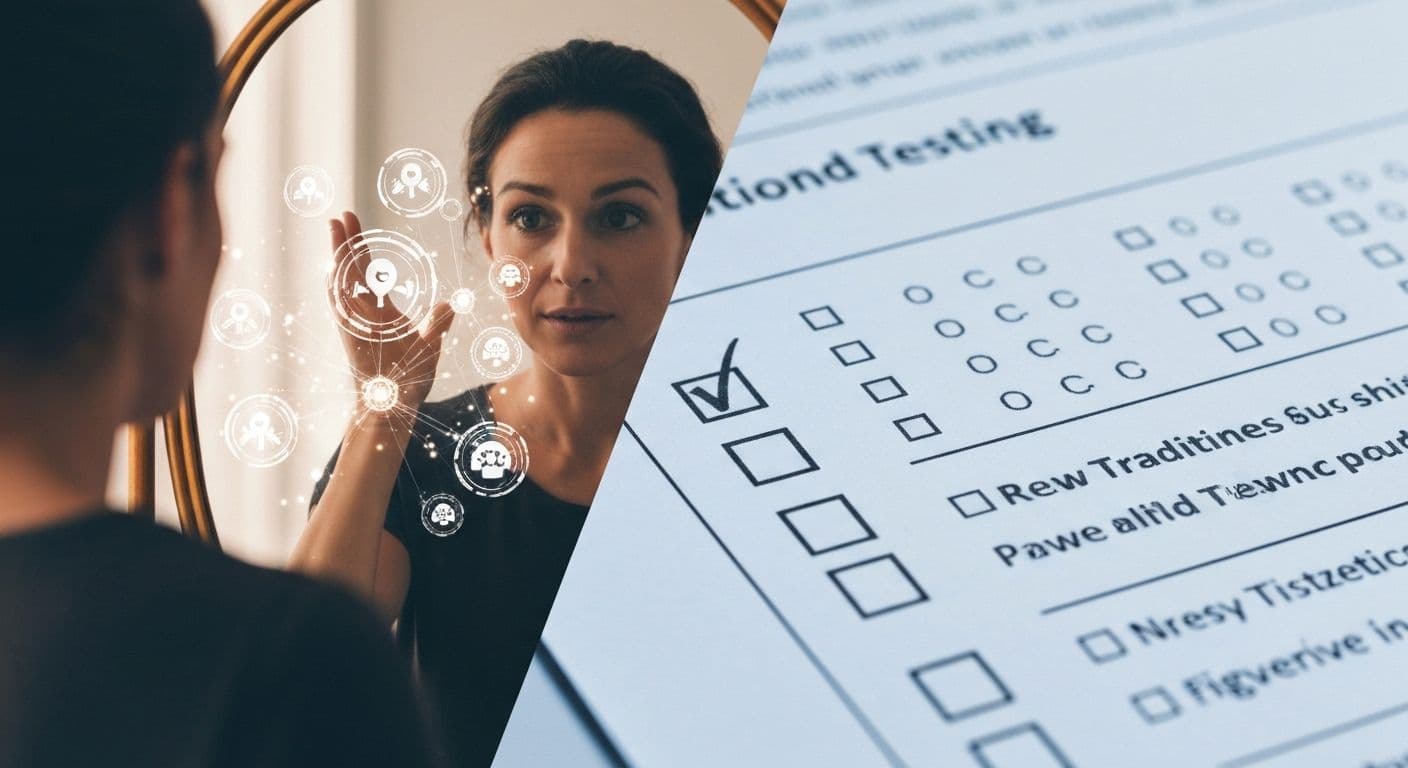
Daniel Goleman: How to Improve Self-Awareness Beyond Personality Tests
You've taken the Myers-Briggs test three times, discovered you're an INFJ (or was it ENFP?), and somehow still find yourself snapping at coworkers or spiraling into the same frustrating patterns. Here's the thing: knowing your personality type feels insightful, but it doesn't actually change how you respond when emotions run high. That's where daniel goleman how to improve self awareness becomes a game-changer. Instead of slapping a label on yourself and calling it growth, Goleman's emotional intelligence framework teaches you to develop self-awareness as a living skill. While personality tests tell you who you are, Goleman's approach shows you how to notice what you're feeling in real-time and actually do something about it. This shift from static categorization to dynamic skill-building is what transforms self-knowledge into genuine behavioral change.
Traditional personality assessments give you fascinating information about your preferences and tendencies, but they stop there. You read your type description, nod along, maybe share it on social media, and then what? The real challenge isn't understanding that you're introverted or a "thinking type"—it's managing your anger when someone interrupts you during deep work, or catching yourself before anxiety spirals out of control. That's where emotional intelligence self-awareness becomes invaluable, offering practical tools rather than just interesting insights.
How Daniel Goleman's Approach to Improve Self-Awareness Differs from Personality Tests
The fundamental difference between daniel goleman how to improve self awareness and traditional personality assessments is simple: Goleman treats self-awareness as a muscle you strengthen, not a fixed characteristic you discover. Personality tests categorize you into predetermined boxes based on how you answer hypothetical questions. Goleman's emotional intelligence framework, on the other hand, focuses on what's happening right now in your body and mind, giving you the power to recognize and reshape your responses.
Goleman's self-awareness model rests on two interconnected pillars that work together to create lasting change. The first is emotional awareness—the ability to recognize your emotions as they emerge, not hours later when you're replaying the conversation in your head. The second is accurate self-assessment, which means understanding your patterns, strengths, and the specific situations that tend to trigger emotions without judgment or defensiveness.
The Two Pillars of Goleman's Self-Awareness
Emotional awareness happens in real-time. It's noticing the tightness in your chest during a tense meeting, recognizing the heat rising in your face when someone dismisses your idea, or catching that familiar sinking feeling before it pulls you into a full anxiety spiral. This isn't about reading a personality profile that says you "tend to be emotional"—it's about developing self-awareness skills that help you spot emotional patterns as they unfold. When you're practicing morning anxiety management, this real-time awareness becomes your most powerful tool.
Accurate self-assessment takes that awareness deeper. Instead of accepting "I'm just an angry person" as your personality type, Goleman's approach helps you identify exactly what situations, thoughts, or environmental factors consistently trigger emotions. You start noticing that you don't get frustrated with all feedback—just feedback delivered in a certain tone, or at certain times of day when you're already depleted. This specificity makes all the difference.
Why Skills Beat Labels for Personal Growth
Here's what makes the emotional intelligence framework so much more useful than personality categorization: skills improve with practice, while labels stay fixed. When you believe "I'm an introvert, so social situations drain me," you've accepted a limitation. When you understand "I notice physical tension building in my shoulders after 90 minutes of socializing," you've identified something you can work with. You can take breaks, adjust your environment, or use specific techniques to manage that tension. That's the actionable nature of developing self-awareness skills versus simply knowing your type.
Practical Ways Daniel Goleman Teaches How to Improve Self-Awareness Daily
So how exactly does daniel goleman how to improve self awareness translate into daily practice? Unlike personality tests that give you a report to read, Goleman offers techniques you can use immediately. The most foundational is body scanning—a quick check-in with your physical sensations throughout the day. Before that difficult conversation, during your commute, or when you feel yourself getting irritated, pause for ten seconds. Where do you feel tension? What's your breathing like? This simple practice of stress reduction techniques catches emotions before they escalate.
Another powerful self-awareness technique is naming emotions in the moment. Instead of just feeling "bad" or "stressed," get specific: "I'm feeling defensive," "I'm anxious about this deadline," or "I'm frustrated because I feel unheard." Research shows that labeling emotions reduces their intensity and gives you more control over your responses. This isn't something a personality test teaches you—it's a skill that improves with practice.
Real-Time Emotional Recognition
Goleman emphasizes tracking emotional patterns through simple awareness exercises rather than complex journaling. Notice what consistently happens before you lose your temper or feel overwhelmed. Do certain people, times of day, or types of tasks reliably trigger emotions? When you recognize your emotional triggers through this ongoing awareness practice, you gain the ability to prepare for or modify those situations. You're not stuck with "that's just how I am"—you're actively improving self-awareness daily and changing your behavioral responses.
Using Daniel Goleman's Methods to Improve Self-Awareness for Lasting Change
The real magic of daniel goleman how to improve self awareness lies in its focus on behavioral change, not just self-knowledge. Understanding your emotional patterns matters infinitely more than knowing whether you're a "perceiver" or "judger" because it gives you leverage to actually shift how you respond. When you catch yourself recognizing familiar anger signals, you can choose a different response. When you notice anxiety building, you can implement habit formation strategies that interrupt the pattern.
This skills-based approach to self-awareness for personal growth aligns perfectly with a growth mindset. You're not discovering fixed traits—you're developing emotional intelligence skills that compound over time. Each time you successfully notice and name an emotion, you strengthen that awareness muscle. Each time you recognize a pattern and adjust your response, you're creating lasting behavioral change that no personality test could deliver.
Ready to move beyond personality labels and start building real self-awareness? The difference between knowing your type and developing daniel goleman how to improve self awareness techniques is the difference between interesting self-knowledge and actual transformation. Start with one simple practice today: pause three times and notice what you're feeling in your body. That's where genuine change begins.



