


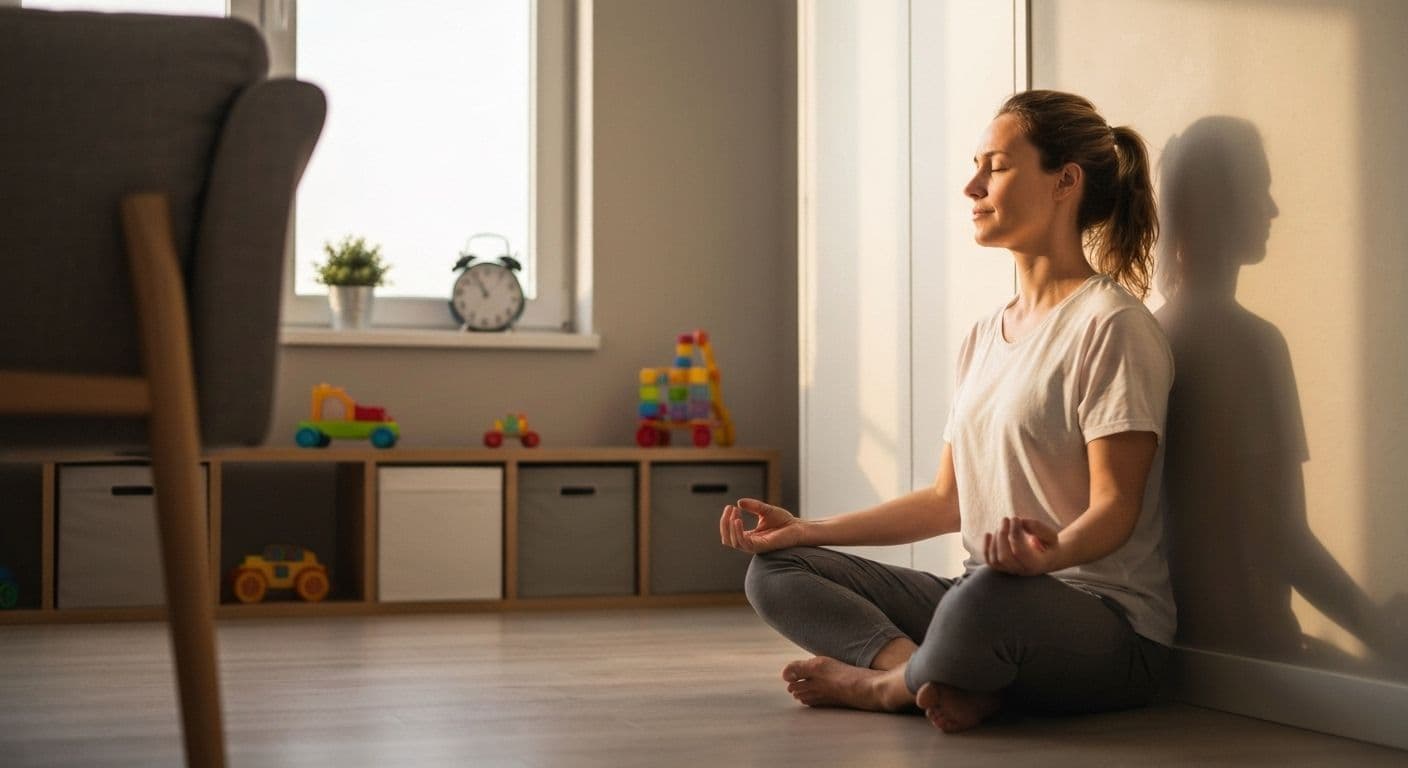
Guided Meditation Self Awareness for Busy Parents: 5-Minute Practice
The morning chaos erupts: spilled cereal, missing shoes, someone's crying, and you're already running late. Sound familiar? In these moments, you're on autopilot, reacting rather than responding. But what if just five minutes could help you recognize these patterns and shift how you show up for your family? Guided meditation self awareness isn't about achieving zen-like calm—it's about understanding yourself better, even when life feels impossibly hectic.
As a busy parent, you've probably dismissed meditation as something requiring candles, silence, and an hour of uninterrupted time. Here's the truth: five-minute guided meditation for self awareness works precisely because it's brief. These short practices help you observe your thoughts and emotions without judgment, building the awareness that transforms how you navigate daily parenting challenges. When you consistently check in with yourself, you start recognizing patterns—like how you tense up during homework battles or feel overwhelmed at bedtime.
The beauty of mindfulness techniques designed for parents is that they meet you where you are. No perfection required, interruptions included.
Why Guided Meditation Self Awareness Works for Time-Strapped Parents
Your brain doesn't need lengthy sessions to build self awareness—it needs consistency. Neuroscience research shows that even brief meditation practices strengthen the prefrontal cortex, the brain region responsible for self-observation and emotional regulation. When you practice guided meditation self awareness regularly, you're literally rewiring your brain to notice patterns rather than simply react to them.
Here's what makes guided meditation particularly powerful for parents: structure. When you're exhausted and mentally drained, the last thing you need is figuring out "how to meditate." Guided practices walk you through exactly what to focus on, whether it's your breath, body sensations, or specific emotions. This removes decision fatigue and makes the practice accessible even on your most chaotic days.
Five minutes might seem insignificant, but it's enough time for your nervous system to shift from fight-or-flight mode into observation mode. During these brief sessions, you're not trying to change anything—you're simply noticing. What thoughts arise when you sit down? Where do you feel tension in your body? This awareness becomes the foundation for recognizing emotional patterns throughout your day.
The key insight: consistency beats duration every time. A parent who meditates for five minutes daily builds more self awareness than someone who occasionally manages a 30-minute session. Regular practice trains your brain to recognize patterns, like noticing you always feel anxious before parent-teacher conferences or frustrated when your routine gets disrupted.
Practical Guided Meditation Self Awareness Techniques for Parenting Moments
Ready to make guided meditation self awareness work in real life? These techniques are specifically designed for the realities of parenting—meaning they're short, flexible, and effective even with interruptions.
Start with a simple body scan adapted for five minutes. Sit comfortably and mentally scan from your head down to your toes, noticing where you're holding tension. Parents often discover they clench their jaw during morning routines or tighten their shoulders when kids argue. This awareness helps you recognize stress patterns before they escalate.
Breath awareness is another powerful technique for emotional pattern recognition. Focus on your natural breathing rhythm for five minutes, noticing when your mind wanders to worries or to-do lists. These wandering thoughts reveal what's actually consuming your mental energy—often recurring frustrations you haven't acknowledged.
Here's the game-changer for parents: interruptions aren't meditation failures. When your child bursts in mid-practice, notice your reaction. Do you feel irritated? Guilty? This observation itself is the practice. Guided meditation self awareness means observing whatever arises, including the chaos of real life.
Morning Meditation Before Kids Wake
Set your alarm five minutes earlier. Use this quiet time for breath awareness practices that prepare you to respond rather than react throughout the day.
Car Meditation After School Drop-Off
Before starting your commute, sit in your parked car for five minutes. Notice any residual stress from the morning rush and consciously release it.
Bedtime Wind-Down Practice
After kids are asleep, spend five minutes reviewing your day without judgment. What patterns did you notice? When did you feel most stressed or most present?
Building Your Daily Guided Meditation Self Awareness Routine
The secret to sustainable practice? Stack your five-minute meditation onto an existing habit. Try meditating right after your morning coffee or before checking your phone at night. This habit-stacking approach makes guided meditation self awareness feel less like another task and more like a natural part of your routine.
Track the emotional insights you gain through regular practice. You'll start noticing patterns: perhaps you're more reactive on days with less sleep, or certain parenting situations consistently trigger emotions. This awareness doesn't require complex journaling—simply notice and remember.
Use your meditation time to mentally prepare for challenging situations. Before a difficult conversation or stressful event, spend five minutes observing any anticipatory anxiety. This awareness helps you approach challenges with intention rather than reactivity.
Ready to start? Choose one five-minute slot in your day today. That's it. One session to begin building the self awareness that transforms parenting from constant reaction to conscious response. Small consistent practices create lasting change—and guided meditation self awareness is your tool for recognizing patterns, understanding yourself better, and showing up as the parent you want to be.



