


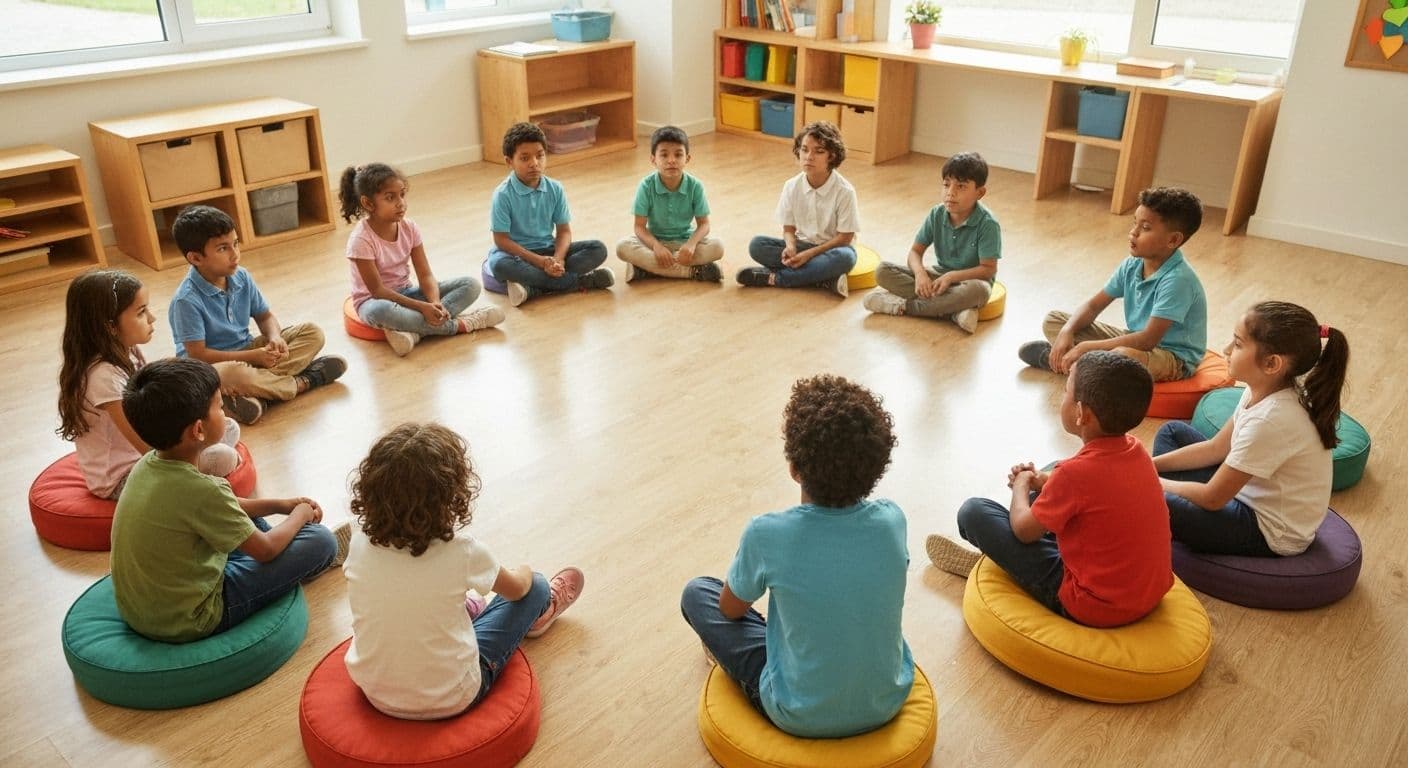
How Teachers Build Self-Awareness SEL Skills in 15-Minute Daily Circles
Teachers everywhere know the pressure: students need emotional intelligence skills, but the school day is already packed. You're juggling lesson plans, assessments, and a hundred other responsibilities. Adding another curriculum feels impossible. Here's the good news—building self awareness sel doesn't require overhauling your schedule. A simple 15-minute daily circle gives students the foundation they need for emotional intelligence and academic success, all within time you're probably already dedicating to community building.
Self awareness sel (social emotional learning) serves as the cornerstone of emotional intelligence. When students understand their emotions, recognize their strengths, and identify their learning styles, everything else clicks into place. They manage stress better, communicate more effectively, and approach challenges with resilience. The beauty of circle time? It creates a structured, predictable space where this growth happens naturally through conversation and reflection, not worksheets or formal lessons.
Ready to transform those 15 minutes into powerful self-awareness development? Let's explore the specific techniques, conversation starters, and age-appropriate activities that make this approach work without adding to your already full plate.
Structuring Your Self-Awareness SEL Circle Time for Maximum Impact
The most effective self awareness sel circles follow a simple three-part structure: check-in, exploration activity, and reflection. This predictable format builds psychological safety—students know what to expect, which helps them open up about their internal experiences.
Break down your 15 minutes like this: five minutes for check-in, seven minutes for the exploration activity, and three minutes for reflection. This timing keeps things moving while giving each component enough space to matter. During check-in, use conversation starters that help students identify and name emotions. Try questions like "What emotion are you carrying today?" or "Where do you feel it in your body?" These prompts connect emotional awareness with physical sensations, a powerful technique for managing emotions.
The exploration activity forms the heart of your circle. This is where students practice specific self-awareness skills through guided discussion or simple exercises. Keep activities interactive—students might share a personal strength, discuss how they learn best, or identify what helps them feel calm when stressed. The key is consistency. When circles happen daily at the same time, students develop trust in the routine and each other.
End with a quick reflection: "What did you notice about yourself today?" or "What's one thing you learned about how you work?" These closing questions cement the learning and help students carry insights beyond the circle.
Age-Appropriate Self-Awareness SEL Techniques That Work
Elementary students thrive with concrete, visual self awareness sel activities. Use emotion cards showing different facial expressions and ask students to pick the one that matches their current feeling. A feelings thermometer helps them gauge intensity—"Is your excitement at a 3 or an 8 today?" Strength-spotting games work beautifully: "Turn to your neighbor and share one thing they're good at." These simple techniques build emotional vocabulary and positive self-perception without requiring prep time.
Middle schoolers need more sophisticated approaches that respect their developing independence. Learning style discussions help them understand why certain subjects feel easier than others. Values identification activities—"What matters most to you: fairness, creativity, friendship, or achievement?"—connect self-awareness to decision-making. Peer feedback circles, when structured carefully, let students practice giving and receiving constructive observations about strengths and contributions.
High school students benefit from pattern recognition exercises. Ask them to identify: "When do you do your best thinking?" or "What situations tend to stress you out?" Strength-weakness mapping helps them see how the same quality can serve them differently in various contexts. Goal-setting reflections that connect to their values and awareness patterns prepare them for adult life. These discussions mirror the values-based approaches that support long-term growth.
Making Self-Awareness SEL Circles a Sustainable Daily Practice
Sustainability beats perfection every time. Create a simple weekly template you can reuse: Monday focuses on emotions, Tuesday on strengths, Wednesday on learning styles, Thursday on challenges, Friday on gratitude and reflection. This rotation requires minimal planning while covering essential self awareness sel domains.
Track progress through observation rather than formal assessment. Notice when students start using emotion words more precisely, when they advocate for their learning needs, or when they demonstrate confidence in their abilities. These informal markers tell you more than any rubric.
When facing common challenges—reluctant participants or time crunches—remember that consistency matters more than perfection. Some days, your circle might be eight minutes instead of fifteen. That's okay. The daily touchpoint creates the compound effect. Like optimizing your mental energy, small investments in self awareness sel yield significant returns over time.
Ready to start building these powerful skills? Pick one conversation starter from this guide and try your first circle this week. Your students' emotional intelligence journey begins with this simple, sustainable practice that fits perfectly into your existing routine.



