


How to Customize Your Healthy Mind Platter for Shift Workers' Success
Balancing mental wellness when your work schedule runs counter to the sun? You're not alone. The healthy mind platter offers a revolutionary framework for cognitive wellness that can be especially valuable for shift workers facing unique challenges. Developed by neuroscientist Dr. Daniel Siegel, the healthy mind platter outlines seven essential mental activities we need for optimal brain health. But when you're working nights or rotating shifts, applying these principles requires some creative adaptation and strategic planning techniques.
Shift work disrupts your natural circadian rhythm, potentially affecting everything from sleep quality to social connections. Traditional wellness advice often assumes a 9-to-5 schedule, leaving shift workers frustrated when trying to implement standard recommendations. The healthy mind platter provides a flexible framework that can be customized to any schedule – making it perfect for those working non-traditional hours who want to maintain cognitive health despite irregular routines.
The beauty of the healthy mind platter lies in its adaptability. Rather than rigid time blocks, it emphasizes balance among seven types of essential mental activities. Let's explore how to make this powerful tool work specifically for your shifting schedule.
The Healthy Mind Platter Elements Reimagined for Night Shifts
The healthy mind platter includes seven essential activities: sleep time, physical time, focus time, connecting time, play time, down time, and time-in. Each element needs thoughtful adaptation for shift workers:
For Sleep Time, quality becomes even more crucial than timing. Create a sleep sanctuary with blackout curtains, white noise machines, and a consistent pre-sleep ritual. Your brain responds to routines, not clock time, so developing consistent pre-sleep signals helps activate your natural relaxation response.
Physical Time might mean brief movement breaks during night shifts rather than traditional gym sessions. Even ten minutes of stretching or stair climbing can boost cognition. Schedule more substantial exercise for your "weekend" days, regardless of which calendar days they fall on.
For Focus Time, identify your peak alertness periods during your shift. These become your windows for complex tasks requiring deep concentration. The healthy mind platter emphasizes quality of focus over duration, so even 20-minute deep work sessions count significantly.
Connecting Time presents unique challenges for shift workers. Schedule virtual coffee dates or brief video calls with day-dwelling friends. Join online communities of fellow shift workers who understand your schedule. Even brief, meaningful interactions fulfill this essential element of the healthy mind platter.
Play Time and Down Time can be integrated into break periods. A quick puzzle game or five minutes of mindless scrolling might seem insignificant, but these activities provide crucial cognitive variety. The healthy mind platter recognizes these as essential "mental palette cleansers" that refresh your thinking.
Finally, Time-In (reflective time) can happen anywhere. Brief mindful moments during bathroom breaks or meal times count. The quality of attention matters more than duration or setting.
Building Your Personalized Healthy Mind Platter Schedule
Creating a shift-friendly healthy mind platter starts with micro-moments. Rather than trying to fit hour-long activities into your already challenging schedule, think in terms of 5-15 minute "brain snacks" that satisfy each element.
Transition rituals become especially important when implementing the healthy mind platter for shift work. Create distinct routines that signal the beginning and end of your work period. These might include changing clothes, brief meditation, or even just washing your hands while setting an intention. These transitions help your brain switch contexts more efficiently.
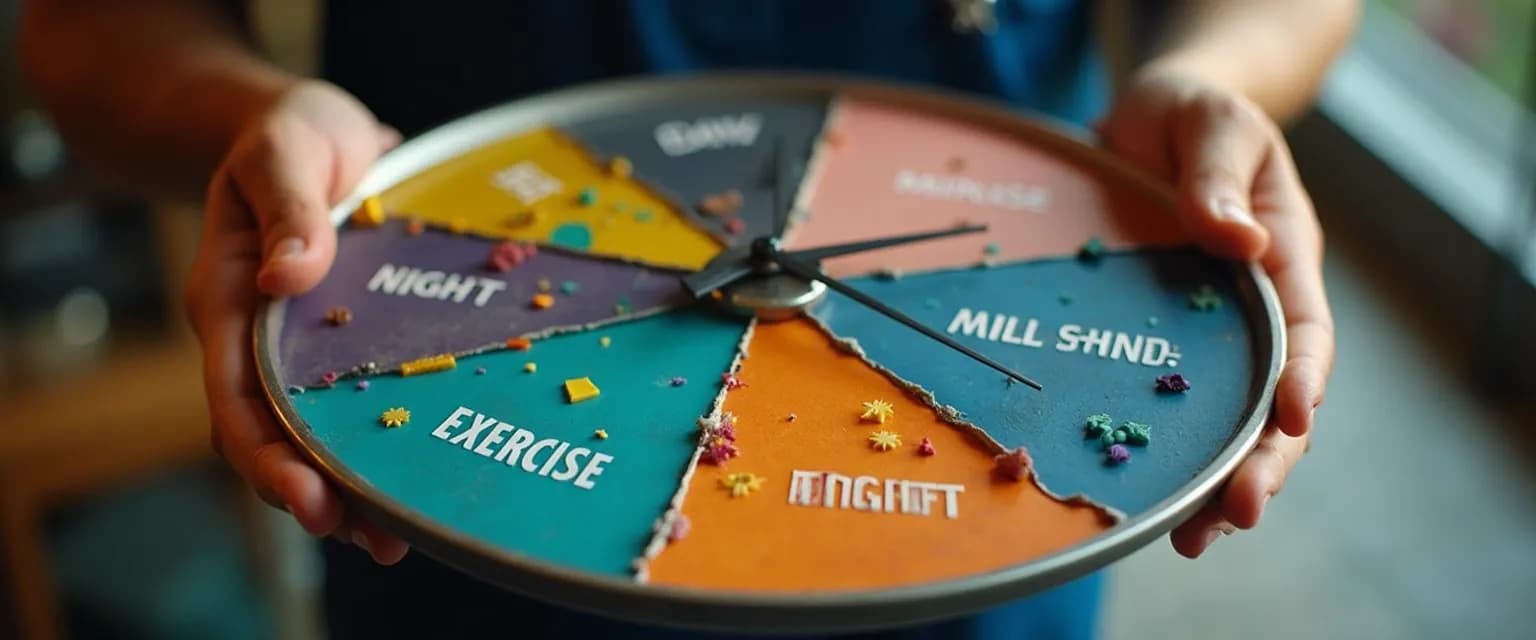
The healthy mind platter works best when visualized. Consider creating a color-coded calendar where each element has its own shade. This visual representation helps ensure you're maintaining balance across all seven essential activities, even with an irregular schedule.
Importantly, the healthy mind platter isn't about perfection but proportion. Some days might emphasize certain elements more than others. The goal is balance over time, not perfect daily equilibrium. This flexibility makes it ideal for shift workers developing new routines.
Maximizing Your Healthy Mind Platter Benefits Long-Term
Track your healthy mind platter implementation using a simple rating system. After each shift, score yourself from 1-5 on how well you incorporated each element. This quick assessment helps identify patterns and areas for improvement without becoming burdensome.
Seasonal adjustments matter too. The healthy mind platter might need different proportions during winter versus summer, especially for shift workers already experiencing disrupted light exposure. Be prepared to adapt your approach as both seasons and shift patterns change.
Remember that the healthy mind platter is ultimately about creating sustainable cognitive wellness. Small, consistent actions matter more than occasional perfect days. By thoughtfully adapting the healthy mind platter principles to your unique schedule, you're building resilience that supports your mental wellbeing despite the challenges of shift work. The healthy mind platter provides not just a framework but a personalized path to thriving with your non-traditional schedule.



