


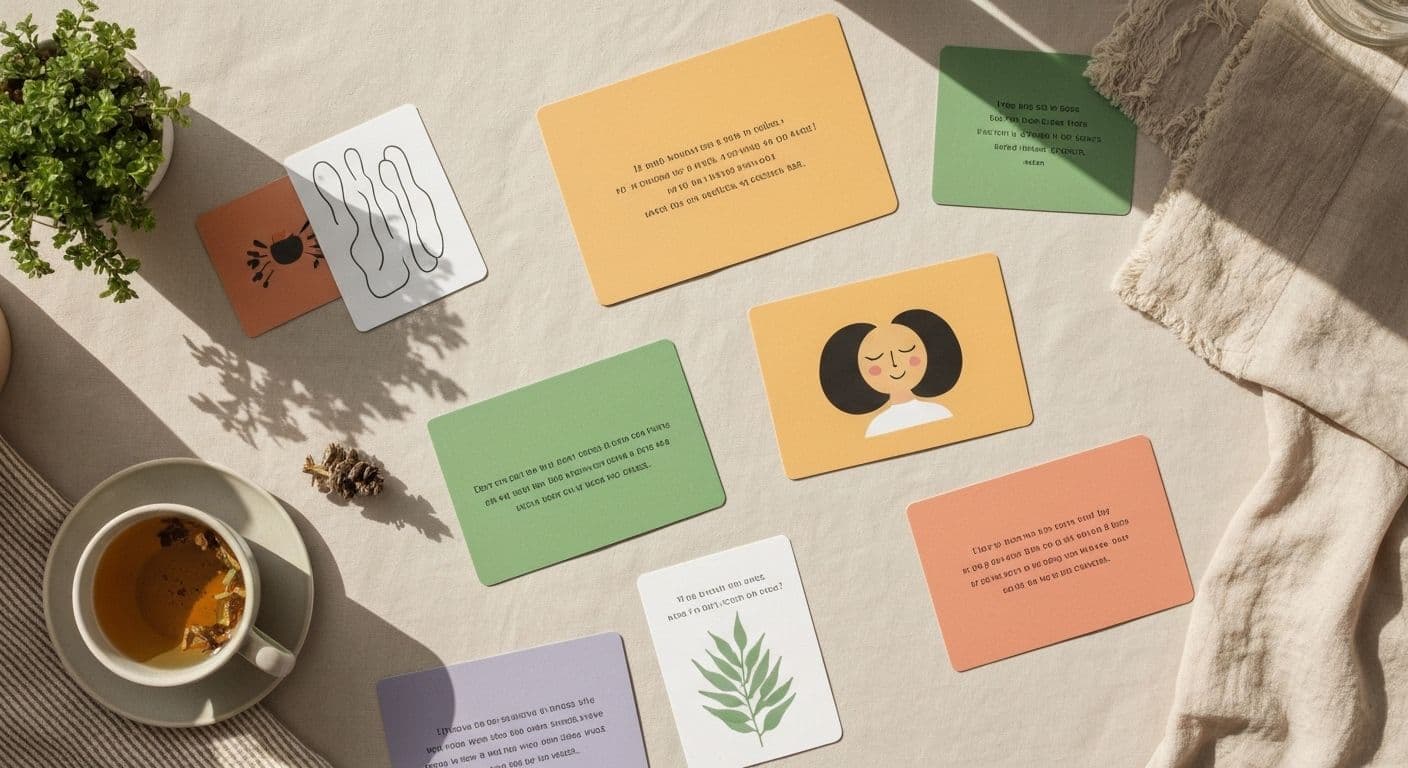
How to Use Mindfulness Cards When You're Too Stressed to Meditate
Ever notice how the advice to "just meditate" feels impossible when you're drowning in stress? Your mind races, sitting still feels torturous, and the idea of clearing your thoughts seems laughable. Here's the thing: when stress peaks, your brain isn't wired for traditional meditation. That's where mindfulness cards come in—a practical alternative that works with your overwhelmed nervous system, not against it.
Mindfulness cards offer structure when your mind feels chaotic. Unlike meditation, which requires mental stillness, these cards provide external guidance that anchors your attention. Each card presents a specific prompt, breathing technique, or reflection that takes seconds to read and apply. Think of them as training wheels for your stressed-out brain—giving you just enough direction to find calm without demanding the mental bandwidth you don't have.
The beauty of mindfulness cards lies in their accessibility. You don't need a quiet room, a meditation cushion, or even five free minutes. You need a card and thirty seconds. This makes them perfect for those moments when stress hits hardest: before a difficult meeting, during a overwhelming workday, or when your emotions feel unmanageable. Ready to discover how to make stress management work for your real life?
Quick Mindfulness Cards Techniques for High-Stress Moments
The one-card pull method is your emergency brake for stress. When anxiety spikes, pull a single mindfulness card and read it slowly. That's it. The card might instruct you to take three deep breaths, notice five things you can see, or place your hand on your heart. This simple action interrupts your stress response and gives your nervous system something concrete to focus on.
Keep your mindfulness cards accessible—in your desk drawer, car console, or bag. Visibility matters when stress strikes because you won't remember to use tools you can't see. During work breaks, you don't need a meditation room. Pull a card at your desk, in the bathroom, or while waiting for your coffee to brew. These micro-moments add up to significant emotional regulation throughout your day.
For intense stress, try an emergency calm-down sequence. Pull three to five mindfulness cards and follow each prompt in rapid succession. This creates a structured pathway from overwhelm to calm. One card might guide your breathing, another redirects your thoughts, and a third grounds you in physical sensation. The sequence works because it provides your brain with clear steps when decision-making feels impossible.
Here's why brief interactions with mindfulness cards outperform lengthy meditation when stress runs high: your stressed brain craves quick wins, not extended commitments. A thirty-second card pull feels achievable. A twenty-minute meditation feels overwhelming. By meeting yourself where you are, you actually practice mindfulness instead of adding "failed meditation attempt" to your stress pile.
Using Mindfulness Cards During Commutes and Transitions
Your commute offers perfect opportunities for mindfulness cards practice. As a passenger or on public transport, pull a card and follow its guidance. Before driving, spend thirty seconds with a grounding card to center yourself. These transition moments—when you shift from one environment to another—are goldmines for emotional regulation because they're natural pause points in your day.
Pre-conversation preparation transforms difficult interactions. Before a challenging meeting or important call, pull a mindfulness card focused on confidence or calm. This simple ritual signals your nervous system that you're preparing, not panicking. The science of social comfort shows that brief centering practices significantly improve how we show up in stressful conversations.
Transition moments between work and home, between tasks, or between emotional states are when mindfulness cards shine brightest. These aren't interruptions to your day—they're the glue that holds your emotional stability together. One card pull while walking to your car. Another before opening your front door. These micro-practices compound into remarkable improvements in how you handle daily stress.
The power lies in consistency, not duration. Five thirty-second card pulls throughout your day create more emotional regulation than one stressed-out attempt at meditation. Your brain learns that calm is accessible in small doses, which makes it easier to find when you need it most.
Making Mindfulness Cards Your Go-To Stress Management Tool
Building a sustainable mindfulness cards practice means matching the tool to your actual life. Notice which moments trigger emotions most intensely—those are your prime card-pulling opportunities. Morning anxiety? Keep cards by your coffee maker. Work stress? Desk drawer. Evening overwhelm? Nightstand. Location matters for habit formation.
Create your personal emergency sequence by identifying three to five cards that consistently calm you. When stress peaks, you won't have mental energy to browse options. Having a pre-selected sequence removes decision fatigue and provides an instant pathway out of overwhelm. This becomes your emotional first-aid kit.
The neuroscience backs this up: brief, structured interventions activate your prefrontal cortex, which regulates emotional responses. Mindfulness cards work because they're concrete enough to grab your attention but simple enough not to overwhelm your already-taxed system. They provide just enough structure to shift your nervous system from reactive to responsive.
Start today with one mindfulness cards pull. Just one. Notice how it feels to have external guidance when your internal world feels chaotic. That's the beginning of a practice that actually fits your stressed, busy, overwhelmed life—because it was designed for exactly that.



