


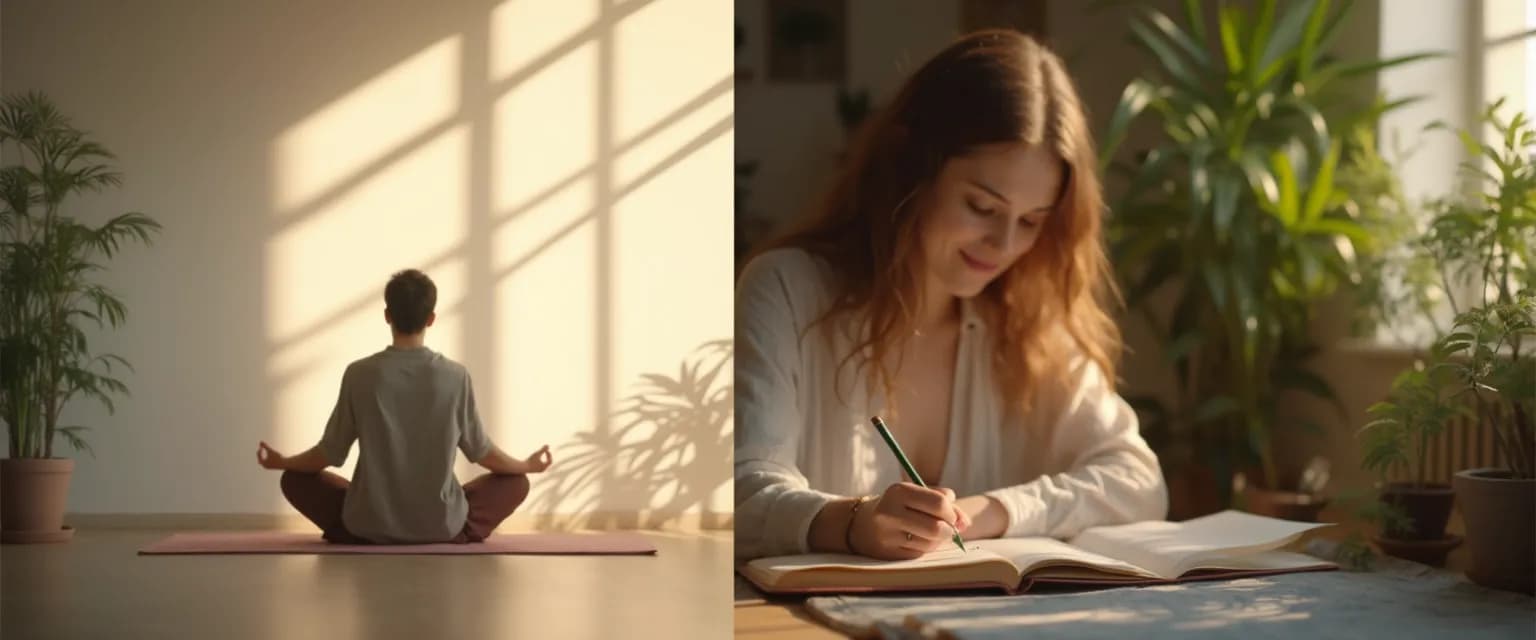
Introspection Self Awareness: Silent Reflection vs Active Journaling
Ever noticed how your mind seems clearer after taking a quiet moment to yourself? Or perhaps you've experienced that "aha" moment while jotting down your thoughts? These are different paths to introspection self awareness - that fascinating journey of understanding your own thoughts, feelings, and behaviors. But here's the thing: not all introspection methods work equally well for everyone. Your personality plays a crucial role in determining which approach helps you gain the most insight.
Introspection self awareness isn't just a trendy concept - it's backed by science. Research shows that regular self-reflection strengthens neural pathways associated with emotional intelligence development, improving your decision-making and relationships. But the path to self-discovery branches in two primary directions: silent reflection (processing internally) and active journaling (processing externally). Understanding which method aligns with your natural thinking style can make all the difference in your personal growth journey.
Think of these approaches as different languages of self-understanding. Some of us are fluent in quiet contemplation, while others express themselves best through words on a page. Let's explore which introspection self awareness technique might speak to your unique personality.
Silent Reflection: An Introspection Self Awareness Approach for Internal Processors
If you find yourself naturally processing thoughts in your head before speaking, silent reflection might be your ideal introspection self awareness technique. This approach works particularly well for intuitive thinkers who need quiet space to connect with their inner voice. Neuroscience shows that meditation-style reflection activates the default mode network in our brains - the same region responsible for self-referential thinking and personal insight.
A simple 3-minute silent reflection practice involves finding a comfortable position, closing your eyes, and focusing on your breath while observing your thoughts without judgment. This creates the mental space needed for meaningful introspection self awareness to emerge naturally.
You might be suited to silent reflection if you: recharge by spending time alone, think before speaking, feel overwhelmed by too much external input, or find that your clearest insights come during moments of quiet. This mindfulness technique builds a foundation for emotional regulation that serves you in all areas of life.
Active Journaling: Boosting Introspection Self Awareness Through Expression
If you process information by talking it through or need to "see" your thoughts externalized, active journaling offers powerful introspection self awareness benefits. This approach resonates with verbal processors who clarify their thinking through expression and those who learn best through writing and reading.
Active journaling doesn't require lengthy diary entries. Try quick thought-capturing techniques like jotting down three observations about your emotional state, creating a two-column "thought vs. reality" chart, or completing simple prompts like "Today I noticed..." These methods externalize your internal experience, creating distance that allows for more objective introspection self awareness.
You might thrive with active journaling if you: process thoughts by discussing them, enjoy creative expression, find clarity through writing, or notice that speaking/writing helps you understand what you're actually feeling. This approach transforms abstract emotions into concrete insights you can act upon, similar to how effective time management organizes your external world.
Finding Your Personal Introspection Self Awareness Path
Ready to discover your ideal introspection method? Consider these questions: Do you prefer thinking or talking through problems? Do you recharge alone or with others? Does writing clarify or complicate your thoughts? Your answers reveal your natural introspection style.
For comprehensive self-understanding, try alternating between both approaches. Silent reflection might work best for emotional processing, while journaling helps with decision-making. The key is implementing your chosen technique consistently - even 5 minutes daily builds the neural pathways that strengthen introspection self awareness.
With regular practice, you'll notice improved emotional regulation, clearer decision-making, and more authentic relationships. These benefits compound over time as your brain becomes more adept at self-observation without judgment - the hallmark of true introspection self awareness.
Remember that self-awareness isn't about harsh self-criticism but curious exploration. Whether through silence or expression, the goal remains the same: understanding yourself better so you can live more intentionally. The best introspection self awareness practice is simply the one you'll actually maintain. Choose your path, commit to regular practice, and watch as your relationship with yourself - and others - transforms through the power of intentional introspection self awareness.



