


Master Mindfulness During Your Daily Commute: Transform Dead Time
Picture this: You're stuck in traffic again, or squeezed between strangers on a crowded train, feeling that familiar tension building in your chest. Your commute—that chunk of time you write off as "wasted"—happens twice every single day. But what if those minutes could become your secret weapon for emotional growth? When you master mindfulness during your daily commute, you transform routine travel into a powerful practice ground for building emotional intelligence and resilience.
The average person spends nearly an hour commuting each day. That's five hours weekly of untapped potential sitting right in front of you. Research shows that consistent mindfulness practice strengthens your brain's emotional regulation centers, and your commute offers the perfect low-stakes environment to build this skill. Unlike trying to squeeze in meditation at home, your commute is already happening—you're just choosing to use it differently.
The beauty of commute mindfulness lies in its consistency. Same route, same time, same opportunity to practice present-moment awareness. This repetition creates neural pathways that make stress reduction feel more automatic over time. Ready to turn your daily travel into a mindfulness practice that actually sticks?
Master Mindfulness Techniques for Different Commute Types
Your commute method matters when it comes to mindfulness techniques. Let's break down practical approaches that work for each transportation mode, so you can master mindfulness regardless of how you travel.
Driving Mindfulness
Red lights become your mindfulness cue. Each time you stop, take three conscious breaths—feeling your hands on the wheel, noticing the pressure of your back against the seat. This anchors you in the present moment without compromising safety. In traffic, shift your attention to sensations: the temperature of air on your skin, sounds around you, the feeling of your feet on the pedals. These micro-practices train your brain to find calm in frustration.
Public Transport Awareness
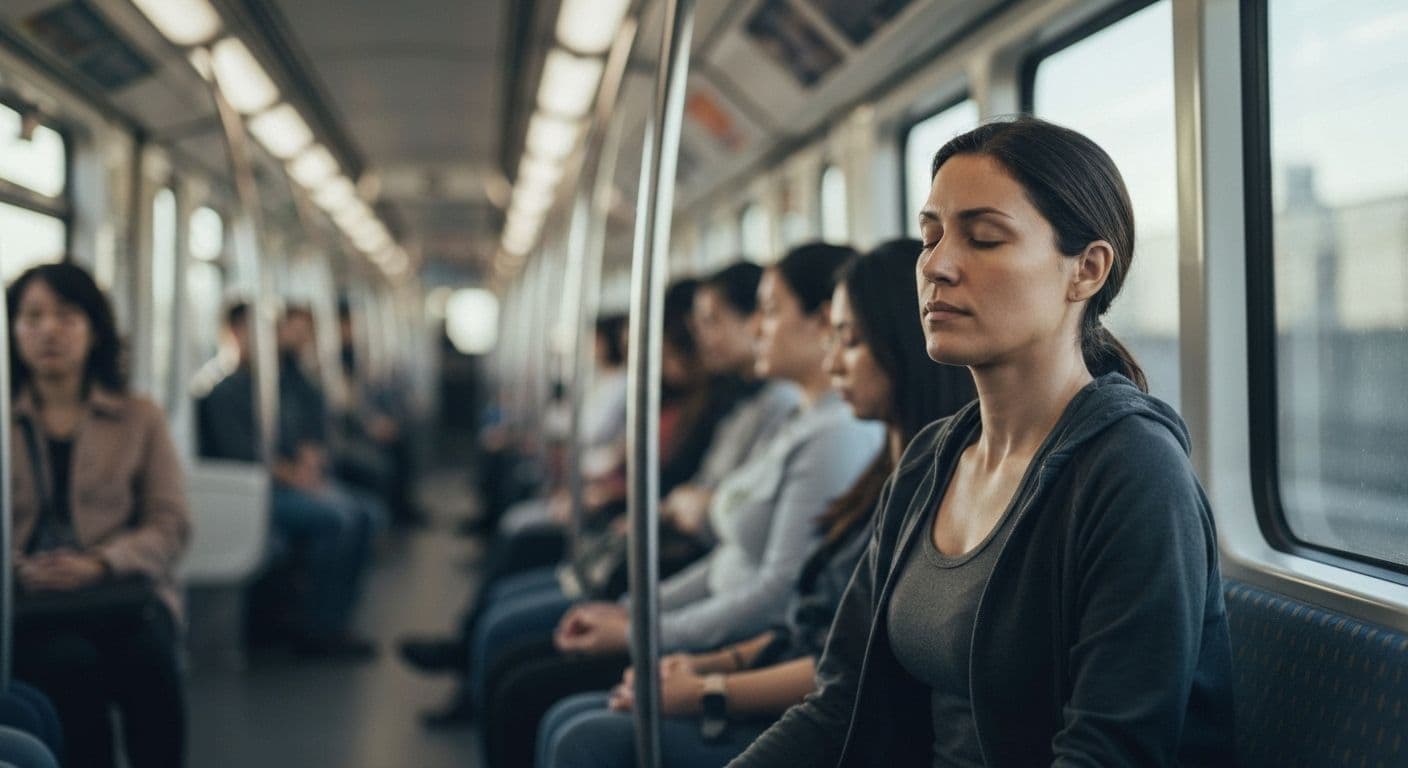
Crowded trains and buses offer rich sensory experiences for mindfulness practice. Instead of scrolling your phone, try this: Notice five things you can see, four you can hear, three you can feel, two you can smell, and one you can taste. This sensory awareness practice pulls you out of mental chatter and into direct experience. When someone bumps into you or invades your space, that's not an annoyance—it's a chance to practice emotional regulation in real-time.
Walking Commute Practice
Walking meditation doesn't require a peaceful garden. On busy sidewalks, focus on the rhythm of your steps. Feel your heel strike the ground, your weight shift forward, your toes push off. Count your breaths for four steps in, four steps out. When your mind wanders to your to-do list (and it will), simply notice and return to the sensation of walking. This builds the mental muscle of redirecting attention—a core skill for mastering mindfulness.
Master Mindfulness in Stressful Commute Situations
Delays, crowds, and unexpected disruptions—these aren't obstacles to your mindfulness practice. They're the practice itself. When you master mindfulness during challenging moments, you're building resilience that extends far beyond your commute.
Handling Delays Mindfully
That announcement about a 15-minute delay? Your body tenses immediately. Notice that reaction without judgment. Where do you feel it? Chest? Shoulders? Jaw? Simply observing your stress response without trying to fix it creates space between stimulus and reaction. This is where emotional intelligence grows. Use the delay time for a quick body scan: mentally sweep from your head to your toes, releasing tension you discover along the way.
Crowded Space Strategies
Packed spaces trigger discomfort, but they also offer intense mindfulness opportunities. When someone's elbow digs into your side, can you stay present with that sensation without creating a story about it? Practice viewing the crowding as neutral data rather than a personal affront. This shift in perspective trains your brain to respond rather than react.
Building Consistency
The magic happens through repetition. Start with just one technique for one week. Maybe it's three breaths at every red light, or the 5-4-3-2-1 sensory practice once per commute. Small, consistent actions build mindfulness habits that become automatic. Track your progress by noticing how you feel arriving at your destination—more grounded, less reactive, more prepared for your day.
Your Path to Master Mindfulness Through Daily Practice
Here's your permission to start small. Two minutes of focused breathing during your commute beats zero minutes of perfect meditation at home. The goal isn't to achieve some zen state while commuting—it's to strengthen your awareness muscle through consistent, bite-sized practice.
Notice the shifts. After a week of commute mindfulness, you might find yourself less triggered by a rude driver or crowded platform. After a month, you might realize you're bringing this present-moment awareness into meetings or difficult conversations. That's the transfer effect—skills developed during your commute naturally flow into other areas of your life.
Ready to deepen your mindfulness practice beyond your commute? The Ahead app offers science-backed tools designed for busy people who want to master mindfulness without the overwhelm. Your commute has already shown you that growth happens in small, consistent moments. Let's build on that momentum together.



