


Mindful Movement: How Walking Meditation Eases Anxiety Better Than Sitting
Ever noticed how sitting still during meditation can sometimes amplify your anxiety rather than calm it? That restless feeling of "I can't do this" isn't uncommon. For many people exploring mindfulness and anxiety management, traditional seated meditation feels like an exercise in frustration—especially when anxiety already has your mind racing and body fidgeting. The good news? There's a powerful alternative that works with your body's natural need for movement, not against it.
Walking meditation offers a unique approach to mindfulness and anxiety relief that many find more accessible and effective than sitting practices. Research shows that combining gentle movement with mindfulness activates different neural pathways, creating a powerful brain-body connection that can break the cycle of anxious thoughts. The rhythmic nature of walking naturally regulates breathing and heart rate—two physiological processes that become dysregulated during anxiety.
When you're feeling overwhelmed, your body often craves movement as a way to process excess energy. Walking meditation honors this biological need while simultaneously training your attention—making it an ideal practice for those times when sitting meditation feels impossible.
5 Walking Meditation Techniques to Transform Mindfulness and Anxiety
The beauty of walking meditation lies in its versatility. Here are five distinct approaches to practice mindfulness and anxiety management through mindful movement:
1. Breath-Synchronized Walking
This technique creates immediate anxiety relief by matching your breath to your steps. Take three steps while inhaling and three steps while exhaling. This pattern activates your parasympathetic nervous system—your body's natural calm-down mechanism. For heightened anxiety, try extending the exhale by taking four steps, which signals to your brain that you're safe.
2. Sensory Awareness Walking
This practice grounds anxious thoughts by systematically moving through your senses. Start by noticing three things you can see, then three things you can hear, followed by three physical sensations. This anxiety management technique interrupts rumination by anchoring your awareness in the present moment.
3. Gratitude Walking Meditation
Transform anxious thinking by shifting your perspective with each step. As your left foot touches the ground, silently note something you're grateful for. With your right foot, acknowledge something you're looking forward to. This alternating pattern rewires neural pathways that typically default to threat-detection during anxiety states.
4. Urban Mindfulness Walking
Perfect for city dwellers, this technique turns busy environments into meditation supports rather than distractions. Choose one category of observation (colors, shapes, or sounds) and gently catalog what you notice as you walk. This focused attention practice builds concentration muscles that strengthen overall mindfulness and anxiety resilience.
5. Nature-Based Walking Meditation
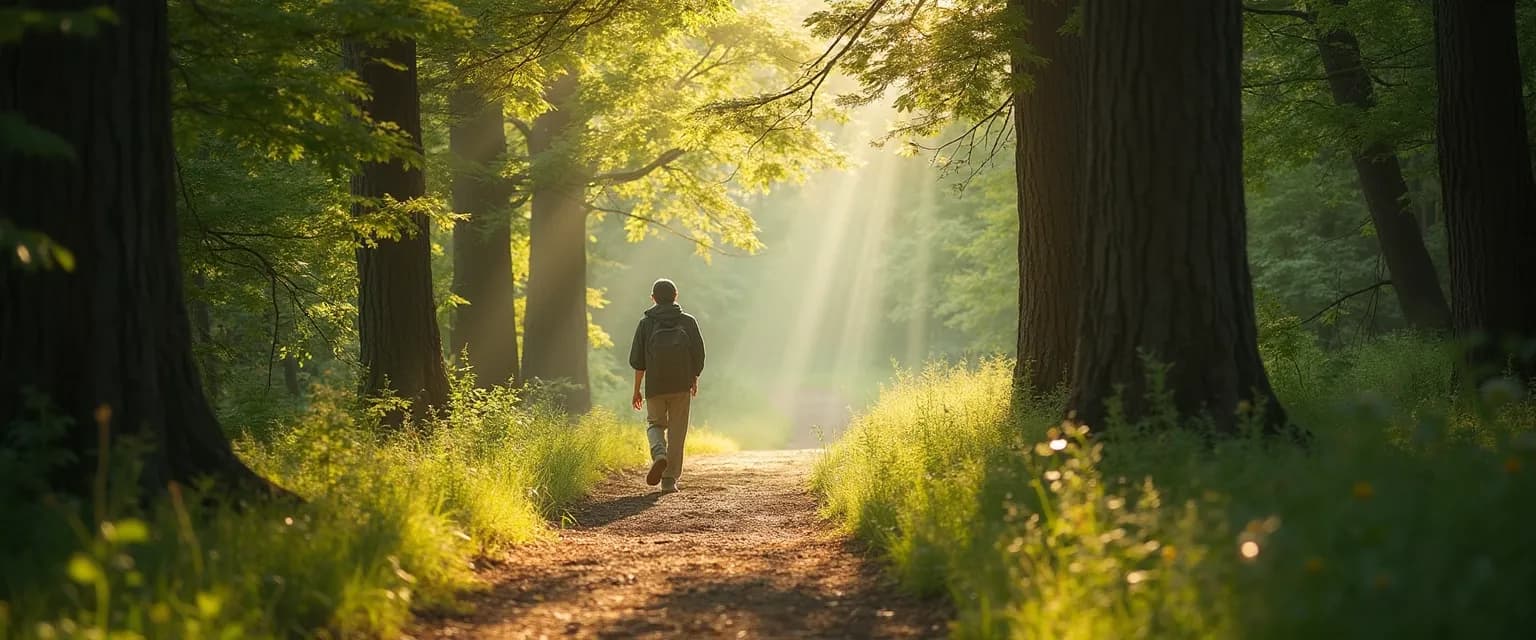
Research shows that combining mindfulness with nature exposure provides enhanced anxiety reduction. In green spaces, practice "receiving" the environment—allowing sights, sounds, and sensations to come to you without effort. This receptive awareness counterbalances the hypervigilance that characterizes anxiety.
Integrating Mindfulness and Anxiety Management Into Daily Walks
The most effective mindfulness and anxiety practices are the ones you actually do. Here's how to transform ordinary walks into powerful anxiety-management tools:
Start with just five minutes of mindful walking within your regular routine—perhaps during your commute or while walking the dog. The key is consistency, not duration. Set a gentle reminder on your phone to initiate mindful walking during transitions in your day.
Different environments call for different techniques. In busy settings, breath-synchronized walking provides an internal anchor. In quieter spaces, sensory awareness practices work beautifully. The science of small victories shows that recognizing tiny moments of success builds lasting change.
How do you know your practice is working? Look for these signs: reduced physical tension, more space between thoughts, fewer "what if" scenarios playing in your mind, and an increased ability to return to the present moment when your mind wanders. These indicators reveal that your mindfulness and anxiety practice is taking root.
Remember that walking meditation isn't about perfection—it's about practice. Each step offers a new beginning, a fresh opportunity to notice when your mind has wandered and gently guide it back. This cycle of attention, distraction, and return is the core training that makes mindfulness and anxiety management so effective in the long term.



