


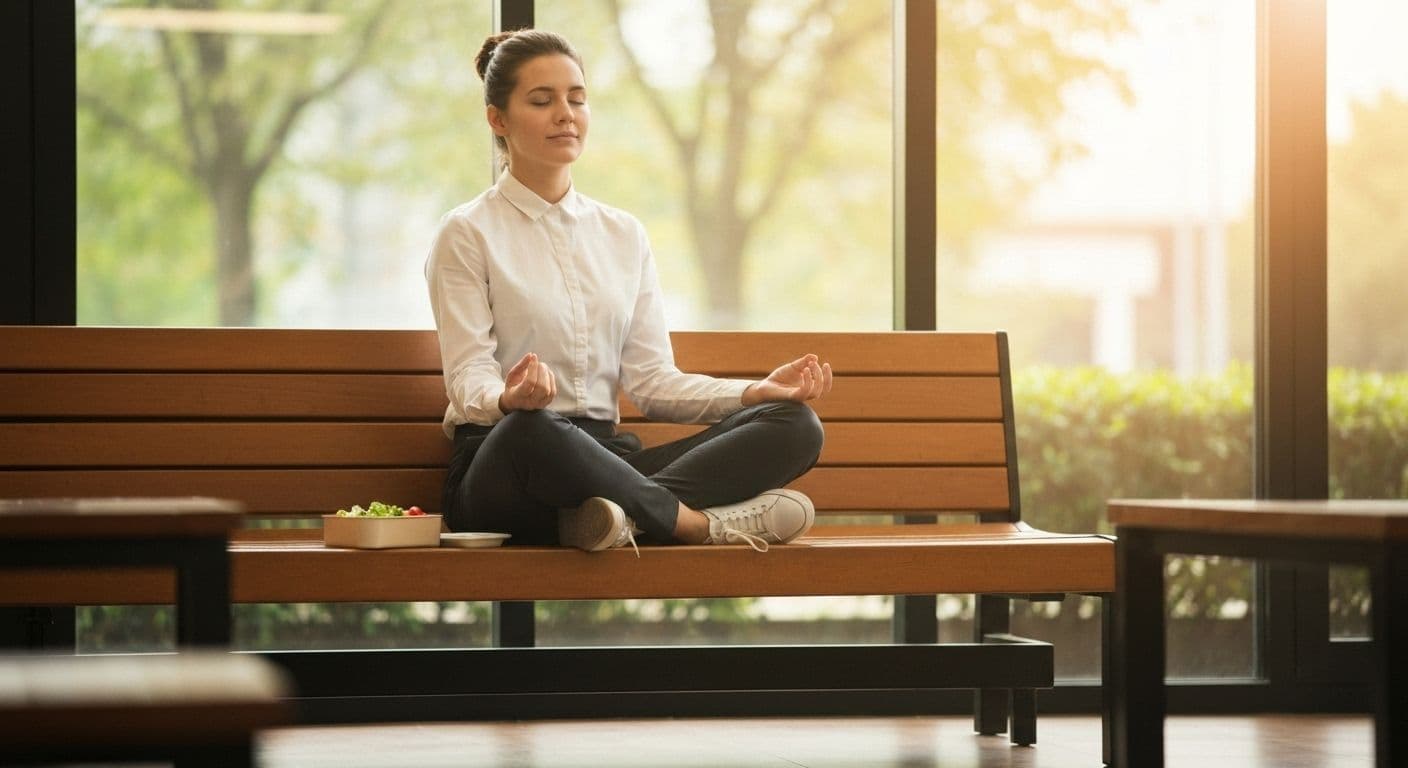
Mindfulness Meditation for Anxiety: Quick Lunch Break Techniques
Your heart races during the morning meeting. Your shoulders tense up before a deadline. Your mind spirals through worst-case scenarios while you're supposed to be eating lunch. Sound familiar? Workplace anxiety doesn't take breaks just because you do. But here's the good news: mindfulness meditation for anxiety doesn't require a yoga studio, an hour of free time, or even leaving your desk. Your lunch break holds untapped potential for transforming how your brain processes stress.
Think of your 15-30 minute lunch period as a daily reset button for your nervous system. The beauty of mindfulness meditation for anxiety lies in its accessibility—you can practice powerful techniques right where you are, using nothing more than your breath and attention. Neuroscience shows that even brief meditation sessions create measurable changes in brain regions associated with emotional regulation. Ready to discover how a few intentional minutes can shift your entire afternoon from overwhelming to manageable?
The techniques you're about to learn are backed by research and designed specifically for the realities of office life. No special equipment, no judgment from colleagues, and no complicated rituals. Just practical, desk-friendly strategies that work with your schedule, not against it. Whether you're dealing with racing thoughts, physical tension, or that general sense of dread, these anxiety management approaches meet you exactly where you are.
Simple Mindfulness Meditation for Anxiety Techniques You Can Do at Your Desk
Let's start with box breathing, a technique that activates your parasympathetic nervous system within minutes. Inhale for a count of four, hold for four, exhale for four, hold for four. Repeat this pattern five to ten times. Your body interprets this rhythmic breathing as a signal that you're safe, which naturally reduces anxiety. No one even needs to know you're doing it—it looks like you're just sitting thoughtfully.
Next, try a quick body scan meditation without leaving your chair. Close your eyes or soften your gaze downward. Bring attention to your feet, noticing any sensations without trying to change them. Gradually move your awareness up through your calves, thighs, hips, torso, arms, and finally your head. When you discover areas of tension, imagine breathing into those spots. This practice takes just five minutes but creates profound shifts in how you carry stress.
Here's a surprisingly effective approach: mindful eating. Take the first three bites of your lunch incredibly slowly. Notice the texture, temperature, and flavors. Chew thoroughly. This simple act grounds you in the present moment and interrupts anxious thought patterns. Your brain can't simultaneously worry about the future and fully experience the present.
Sound awareness offers another accessible entry point into mindfulness meditation for anxiety. Instead of trying to block out office noise, use it as your meditation anchor. Notice the hum of computers, distant conversations, or air conditioning. Label each sound without judgment: "typing," "voices," "ventilation." This practice trains your attention and reduces reactivity to environmental stressors.
When anxiety feels particularly intense, the 5-4-3-2-1 grounding technique provides immediate relief. Identify five things you can see, four you can touch, three you can hear, two you can smell, and one you can taste. This sensory exercise pulls your mind out of anxious spirals and back into your physical environment. These stress reduction methods work because they engage your brain's natural orientation response.
Creating Your Personalized Mindfulness Meditation for Anxiety Routine
Structure matters when building a sustainable practice. Consider dividing your lunch break into segments: five minutes for settling in and choosing your technique, 15-20 minutes for the actual practice, and five minutes for transitioning back to work mode. This framework prevents meditation from feeling rushed or incomplete.
Your anxiety patterns should guide which techniques you emphasize. If racing thoughts dominate, focus on breath work and sound awareness. If physical tension is your primary challenge, prioritize body scans and progressive muscle relaxation. The best mindfulness meditation for anxiety routine responds to your specific needs rather than following a one-size-fits-all approach.
Use your phone's timer with a gentle alarm—nothing jarring that triggers more stress. Set reminders for your lunch break meditation without creating pressure. Think of these prompts as friendly nudges rather than obligations. The power of small adjustments means even showing up consistently matters more than perfect execution.
Track what works through simple mental notes after each session. Did box breathing calm your afternoon jitters? Did the body scan help you sleep better that night? These observations help you refine your practice without the burden of detailed journaling. On high-stress days, you might need more grounding techniques. On typical workdays, you can explore longer meditation periods.
Making Mindfulness Meditation for Anxiety a Sustainable Daily Practice
Start small—really small. Even five minutes of mindfulness meditation for anxiety beats zero minutes. Build gradually as the practice feels more natural. Trying to jump into 30-minute sessions when you're new often leads to setbacks. Your brain needs time to develop new neural pathways associated with emotional regulation.
Common obstacles will appear. Colleagues might interrupt, or you'll feel self-conscious. Remember that most people won't even notice you're meditating—you just look like someone taking a quiet moment. If interruptions happen, simply return to your practice when possible. There's no such thing as a ruined meditation session, only opportunities to practice returning your attention.
The cumulative benefits of consistent mindfulness meditation for anxiety typically emerge within two to three weeks. You'll notice yourself responding rather than reacting to stressors. Your recovery time from anxious episodes shortens. Physical symptoms like tension headaches may decrease. Link your lunch break meditation to an existing habit—perhaps right after you finish eating or before checking afternoon emails. This connection makes the practice automatic rather than something you have to remember.
Ready to transform your lunch break into a powerful tool for anxiety relief? Your first session starts today. With Ahead's guided support, you'll discover how accessible and effective mindfulness meditation for anxiety truly is—no special space or hours of free time required.



