


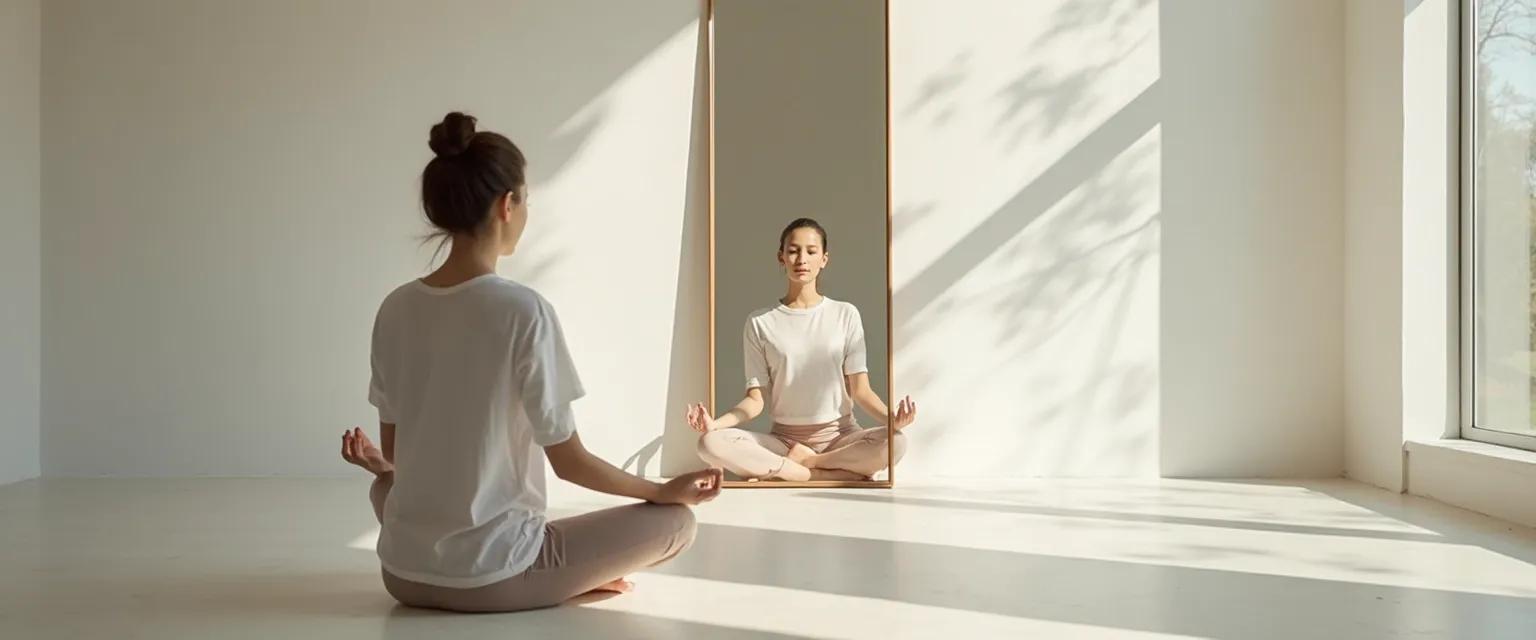
Mirror Meditation: Enhance Self-Awareness and Personal Development Today
Ever caught yourself making a face in the mirror and wondered, "Is that really how I look when I'm frustrated?" That moment of recognition is the gateway to a powerful practice called mirror meditation—a unique approach to self-awareness and personal development that leverages our own reflection as a tool for emotional growth. Unlike traditional mindfulness techniques that focus primarily on breath or body sensations, mirror meditation puts you face-to-face with your emotional expressions, creating a direct pathway to understanding your internal landscape.
The science behind this practice is fascinating. Research shows that our facial expressions aren't just reactions to emotions—they actually help create and intensify those feelings through a feedback loop. This means that by becoming aware of and adjusting your facial expressions, you can literally reshape your emotional experience. For those seeking effective confidence building strategies, mirror meditation offers a direct route to understanding how your emotions physically manifest.
When we practice self-awareness and personal development through facial observation, we access information about our emotional patterns that might otherwise remain hidden. This unique approach helps bridge the gap between what we feel and what we express—often revealing surprising insights about our authentic selves.
How Mirror Meditation Transforms Self-Awareness And Personal Development
Mirror meditation works by revealing the subtle micro-expressions that flash across your face throughout the day. These brief facial movements—lasting just fractions of a second—often contain more honest emotional information than what we consciously choose to express. By studying your own face, you develop what psychologists call "emotional granularity"—the ability to distinguish between similar but distinct emotional states.
Neurologically speaking, this practice creates powerful connections. When you observe your expressions while experiencing emotions, you're strengthening neural pathways between your visual cortex, facial recognition centers, and emotional processing regions. This integration accelerates emotional intelligence development far more efficiently than abstract contemplation alone.
People who regularly practice mirror meditation often report breakthrough moments of self-discovery. One common realization is noticing how certain emotions create facial tension patterns they weren't previously aware of—like slightly furrowed brows during concentration or a subtle jaw clench during stress. These discoveries provide invaluable data for your anxiety management toolkit.
Another transformation occurs when practitioners recognize the disconnect between their internal experience and external expression. Many discover they habitually mask certain emotions with socially acceptable expressions—smiling when anxious or nodding when confused. This awareness creates opportunities for more authentic self-expression and deeper connections with others, essential components of meaningful self-awareness and personal development.
5-Step Mirror Meditation For Enhanced Self-Awareness And Personal Development
Ready to try mirror meditation? Here's a simple practice to get started:
- Create a comfortable space - Position yourself before a mirror in good lighting where you won't be disturbed for 5-10 minutes.
- Begin with neutral observation - Look at your face with curiosity rather than judgment. Notice your resting expression without trying to change it.
- Introduce emotional awareness - Gently recall a recent emotional experience and watch how your face responds. Pay attention to subtle changes around your eyes, mouth, and forehead.
- Connect expression to sensation - As you observe each facial shift, notice any corresponding physical sensations in your body. This builds the mind-body connection central to emotional intelligence.
- Practice expression flexibility - Experiment with slightly adjusting your expression and notice how this impacts your emotional state. This builds your emotional regulation capacity.
If you feel uncomfortable at first, that's completely normal! Many people find direct self-observation challenging initially. Start with shorter sessions and gradually extend your practice as you become more comfortable with this powerful self-awareness and personal development technique.
Integrating Mirror Work Into Your Self-Awareness And Personal Development Journey
The beauty of mirror meditation lies in its accessibility. You can incorporate brief sessions into your existing routine—perhaps during your morning preparation or evening wind-down. Even 30 seconds of intentional facial awareness while brushing your teeth adds valuable data to your emotional understanding.
This practice complements other personal growth efforts by providing immediate feedback on your emotional state. Whether you're working on stress management, confidence building, or improving relationships, the facial awareness developed through mirror meditation enhances your progress across all domains of self-awareness and personal development.
Remember, like any worthwhile practice, the benefits deepen over time. As you continue exploring mirror meditation, you'll develop an increasingly nuanced understanding of your emotional landscape—creating a foundation for authentic growth and lasting transformation.



