


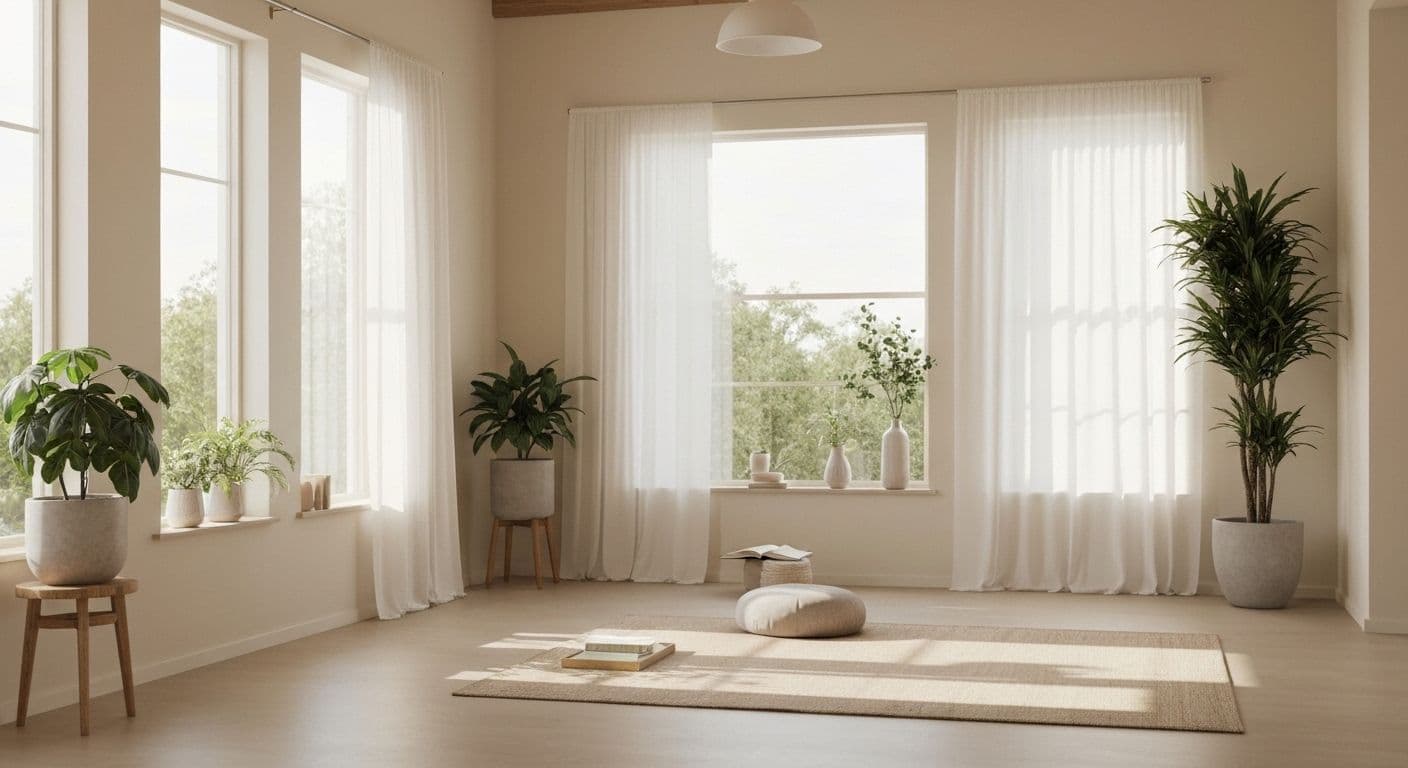
Peaceful Life Peaceful Mind: Why Your Environment Matters More
Ever notice how you can feel surprisingly agitated in your own home, even when you're actively trying to cultivate inner peace? You've tried breathing exercises, you've downloaded meditation apps, yet something still feels... off. Here's what most people miss: your physical environment is constantly shaping your emotional state, whether you realize it or not. The clutter on your desk, the lighting in your bedroom, even the temperature of your space—all of these factors are quietly influencing your ability to maintain calm. Achieving a peaceful life peaceful mind isn't just about what's happening inside your head; it starts with what's happening around you. The good news? Small, intentional changes to your surroundings create meaningful shifts in your emotional well-being without requiring a complete life overhaul.
Your brain is constantly processing environmental information, and these inputs directly affect your mood, stress levels, and capacity for mental tranquility. When you understand this connection, you gain a powerful tool for emotional regulation strategies that work with your neurobiology rather than against it. The path to inner peace becomes less mysterious and more manageable when you recognize your environment as an active participant in your emotional wellness journey.
How Your Physical Space Shapes Your Peaceful Life Peaceful Mind
Your brain's emotional regulation system responds to environmental cues every single moment. When you walk into a cluttered room, your visual cortex processes hundreds of stimuli simultaneously, which activates your stress response and elevates cortisol levels. This isn't about being "too sensitive"—it's neuroscience. Research shows that disorganized environments create persistent low-level stress that accumulates throughout the day, making it significantly harder to maintain emotional balance.
Lighting plays an equally crucial role in your peaceful life peaceful mind journey. Harsh fluorescent lights or inadequate natural light disrupts your circadian rhythm, which directly affects mood regulation, sleep quality, and your ability to manage stress. Your brain interprets lighting cues as signals about safety and time of day, influencing everything from cortisol production to serotonin levels.
The Neuroscience of Environmental Influence
Your sensory inputs—what you see, hear, smell, and feel—continuously shape your emotional state through the limbic system. Noise pollution, for instance, keeps your amygdala in a heightened state of alertness, making it difficult to access the calm, reflective states necessary for inner peace. Science-backed studies confirm that organized, thoughtfully designed spaces reduce anxiety markers by up to 40%, demonstrating that achieving a peaceful life peaceful mind is deeply connected to your immediate surroundings.
Practical Environmental Tweaks for a Peaceful Life Peaceful Mind
Ready to transform your space into an ally for emotional wellness? Let's start with lighting adjustments that support your brain's natural rhythms. Maximize natural light exposure during morning hours to regulate cortisol and boost mood stability. In the evening, dim artificial lights and eliminate blue light exposure to support melatonin production and mental tranquility. These simple shifts align your environment with your biology.
Decluttering for Mental Clarity
Here's a refreshing approach to decluttering that doesn't require perfection: focus on clearing one visible surface at a time. Your desk, your nightstand, or your kitchen counter—choose one area where your eyes frequently land. This targeted approach reduces mental overwhelm while still delivering the cognitive benefits of an organized space. Remember, pursuing a peaceful life peaceful mind isn't about achieving magazine-worthy minimalism; it's about removing environmental stressors that drain your emotional resources.
Implement the "one-minute reset" strategy: before leaving any room, spend sixty seconds returning items to their designated spots. This prevents accumulation without feeling like a demanding chore, making it easier to maintain consistent daily habits that support inner peace.
Sound Environment Optimization
Noise management is essential for stress reduction and emotional regulation. Identify your space's sound disruptors—traffic noise, appliance hums, or neighbor activity—and address them strategically. White noise machines mask inconsistent sounds that trigger stress responses, while strategic silence during specific hours creates mental space for reflection and calm.
Consider temperature and air quality too. Research shows that slightly cooler environments (around 68°F) support better emotional regulation, while good air circulation reduces cognitive fatigue. Open windows when possible, or use plants to naturally improve air quality—these small changes compound into significant improvements in your peaceful life peaceful mind.
Quick sensory resets work wonders: keep a calming scent like lavender nearby, maintain soft textures within reach, or designate a visual anchor (a piece of art or a plant) that signals your brain to shift into a calmer state. These mindfulness techniques leverage your environment to support emotional wellness.
Building Your Peaceful Life Peaceful Mind Through Intentional Spaces
Your physical environment is more than a backdrop—it's an active tool for emotional intelligence and mental tranquility. By understanding how your surroundings influence your stress response, mood regulation, and capacity for inner peace, you've gained practical knowledge that translates into immediate action. The beauty of environmental awareness is that it doesn't require perfection or massive overhauls.
Start with one small change today. Adjust your lighting, clear one surface, or introduce a calming scent. Each intentional shift moves you closer to a peaceful life peaceful mind that feels sustainable rather than exhausting. Your space should support your emotional wellness journey, not complicate it. As you continue exploring science-backed strategies for managing stress and building emotional resilience, remember that creating inner peace often begins with the world immediately around you.



