


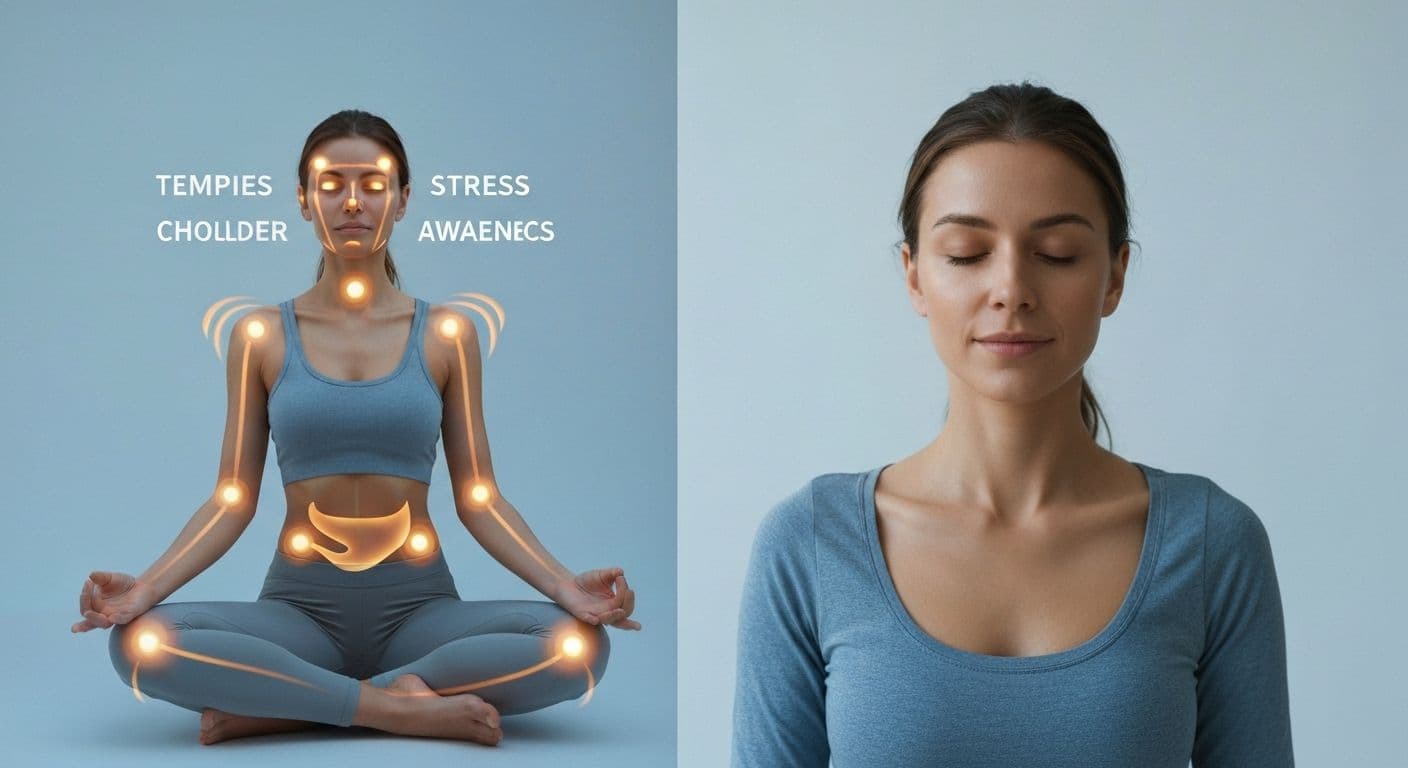
Physical Self Awareness: Read Your Body's Stress Signals Early
You're rushing through your morning when you notice your shoulders practically touching your ears. Your jaw aches. When did that tension creep in? Here's the thing: your body started sending stress signals hours ago, but you missed every single one. Sound familiar? Most of us cruise through our days completely disconnected from the physical sensations that could save us from stress overload. But what if you could catch those early warning signs before stress hijacks your entire day? That's where physical self awareness comes in—a practical skill that transforms how you recognize and respond to stress. And the best part? It takes less than 60 seconds to check in with your body and prevent stress from escalating into full-blown overwhelm.
Think of physical self awareness as your internal early warning system, constantly broadcasting updates about your stress levels. The catch is, most of us have the volume turned way down. We've become so skilled at pushing through discomfort that we ignore our body's stress signals until we're completely fried. But here's the empowering truth: you can learn to tune back in, and when you do, you gain precious time to intervene before stress takes over.
Building Physical Self Awareness: Your Body's Early Warning System
Your body is remarkably intelligent. Long before your mind consciously registers "I'm stressed," your nervous system is already responding. Muscles tighten. Breathing becomes shallow. Your stomach churns. These early stress signals are your body's way of saying, "Hey, something's up here." The problem? We've trained ourselves to ignore these messages.
Physical self awareness helps you detect these subtle tension patterns before they escalate into headaches, exhaustion, or emotional meltdowns. Common early warning signs include jaw clenching (often happening without conscious awareness), shoulders creeping toward your ears, breathing that stays high in your chest rather than deep in your belly, and that familiar knot in your stomach. You might also notice your hands forming fists, your leg bouncing restlessly, or a tightness across your forehead.
Here's the science behind why this matters: your body's stress response activates faster than your conscious awareness. Your nervous system detects potential threats and responds within milliseconds, while conscious recognition takes several seconds longer. This creates a valuable gap—a buffer zone where developing emotional awareness through physical cues gives you time to intervene.
When you strengthen physical self awareness, you catch stress at stage one instead of stage ten. Instead of reaching the point where you're snapping at colleagues or feeling completely overwhelmed, you notice the initial shoulder tension during a morning meeting and take action right then. This early detection transforms stress management from crisis control to proactive prevention.
The 60-Second Body Scan: Quick Physical Self Awareness Practice
Ready to build your physical self awareness muscle? This streamlined body scan technique fits into even the busiest schedule. You don't need a quiet room, a meditation cushion, or 20 minutes of uninterrupted time. You just need 60 seconds and a willingness to check in with yourself.
Here's how it works: set a mental timer for 10-second intervals as you move through six body zones. Start at your head and work downward, noticing what's happening without trying to change anything yet.
Head and Neck Tension Check
Spend 10 seconds noticing your jaw, forehead, and neck. Is your jaw clenched? Are you furrowing your brow? Does your neck feel tight or locked? Simply observe what's there.
Chest and Breathing Assessment
For the next 10 seconds, tune into your breathing. Is it shallow or deep? Fast or slow? Are you breathing into your chest or your belly? Notice whether your shoulders rise with each inhale—a telltale sign of stress-related breathing patterns.
Core and Lower Body Scan
Use the remaining 40 seconds to check your shoulders, arms, stomach, and legs. Are your shoulders hunched? Fists clenched? Stomach tight? Legs bouncing or rigid?
The beauty of this physical self awareness check is its portability. Practice it while waiting for your coffee to brew, before important meetings, or during commercial breaks. The more consistently you practice, the more automatic your stress detection becomes. Your brain literally rewires itself to notice physical stress signals more quickly, giving you better focus and emotional control throughout your day.
Strengthening Your Physical Self Awareness for Long-Term Stress Management
Physical self awareness transforms you from someone who reacts to stress into someone who manages it proactively. Instead of wondering why you feel terrible at 5 PM, you catch the warning signs at 10 AM and course-correct before stress compounds.
Ready to make this stick? Practice your 60-second body scan three times daily—morning, midday, and evening. These regular check-ins train your brain to notice stress signals automatically. Create your personal stress signal inventory by tracking which physical sensations show up first for you. Maybe your shoulders always tighten first, or perhaps your breathing changes before anything else. Knowing your unique pattern helps you intervene even faster.
Remember, physical self awareness improves with consistent practice, just like building any new skill. You're not aiming for perfection—you're building a sustainable habit that gives you back control. Each time you notice an early stress signal and respond, you're choosing to manage stress on your terms rather than letting it manage you.
Your body is already communicating with you constantly. Now you have the tools to actually listen. Those 60-second check-ins? They're your gateway to catching stress early, responding effectively, and living with less overwhelm. The question isn't whether your body sends stress signals—it's whether you're tuned in to receive them.



