


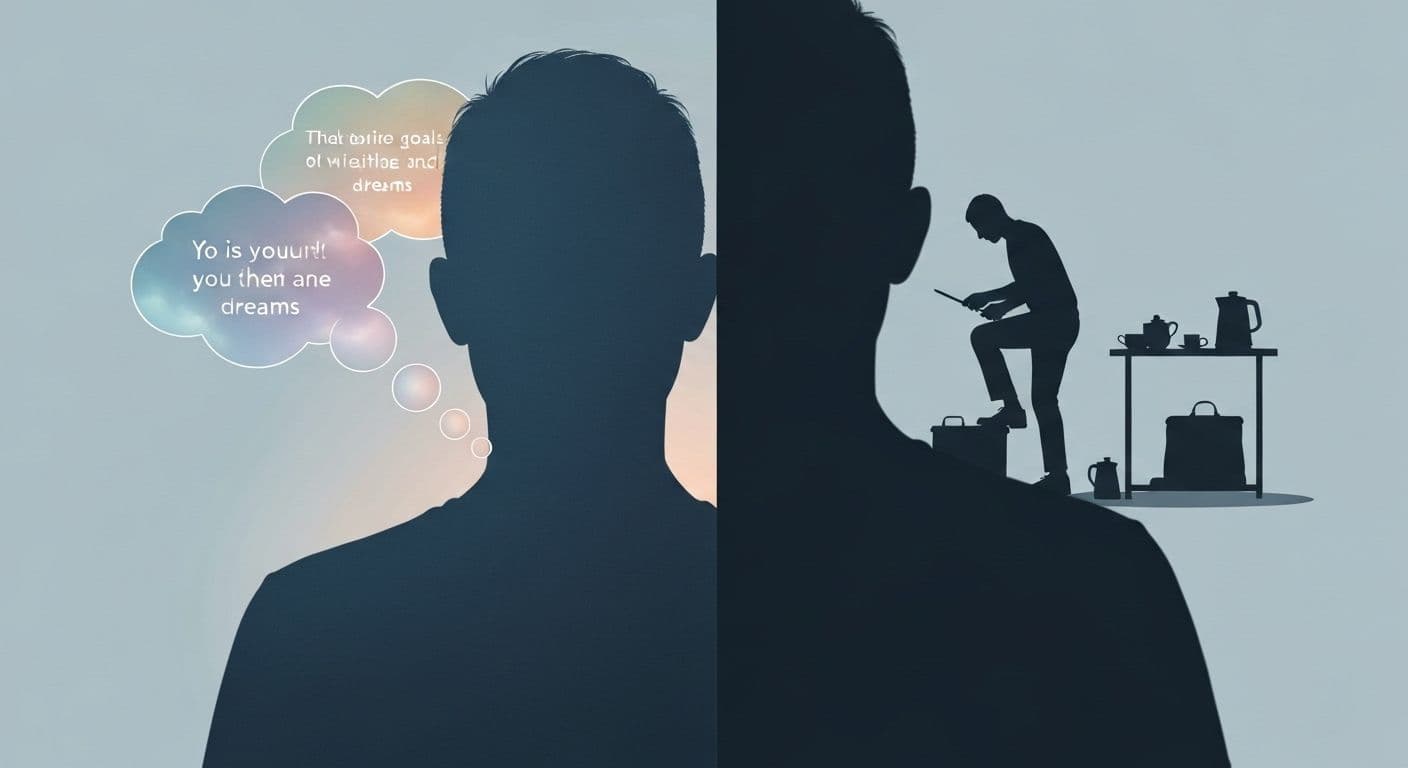
Private and Public Self Awareness: Why Thoughts Don't Match Actions
Ever caught yourself saying "yes" when every fiber of your being screamed "no"? Or smiled through a conversation while your mind raced with completely different thoughts? Welcome to the fascinating world of private and public self awareness—the gap between what you think and what you actually do. This disconnect isn't a character flaw; it's your brain's protective mechanism at work. But here's the thing: when your internal beliefs and external behavior constantly clash, it creates mental exhaustion, anxiety, and a nagging feeling that you're not being genuine. The good news? You can bridge this gap with five practical techniques that align your inner truth with your outer actions, creating a more authentic and less stressful way of moving through the world.
Understanding why your thoughts don't match your actions starts with recognizing that you're essentially running two different operating systems simultaneously. Your private self knows what you truly want, while your public self adapts to social expectations. This split isn't random—it's strategic. But when the gap grows too wide, it becomes a source of stress rather than protection. Ready to close that gap? Let's explore how private and public self awareness work together, and more importantly, how you can get them speaking the same language.
Understanding Private and Public Self Awareness
Private self awareness is your internal world—the running commentary in your head, your genuine values, and the feelings you experience when nobody's watching. It's the voice that says "I'm exhausted and need a break" or "This doesn't feel right to me." This internal awareness operates constantly, processing your authentic reactions to everything around you.
Public self awareness, on the other hand, is how you present yourself to the world. It's the version of you that shows up in meetings, social gatherings, and even casual conversations. This external self monitors how others perceive you and adjusts behavior accordingly. Your brain creates this disconnect as a protective mechanism—it helped our ancestors survive by fitting into social groups and avoiding rejection.
Here's where it gets tricky: social conditioning and fear of judgment widen this gap over time. You learn early that certain thoughts should stay private, that expressing genuine feelings might lead to conflict, and that fitting in often requires hiding parts of yourself. Common examples? Agreeing to plans you dread, staying quiet when you disagree, or acting confident during presentations while your inner voice panics. These misalignments happen dozens of times daily, creating a subtle but persistent strain on your mental energy. Learning to manage this internal conflict is closely linked to reducing anxiety around authenticity.
5 Techniques to Align Your Private and Public Self Awareness
Let's get practical. These five private and public self awareness techniques help you close the gap between thinking and doing, creating more authentic consistency in your daily life.
The 3-Second Check-In
Before responding to any request or question, pause for three seconds. In that brief moment, ask yourself: "Does this action match what I actually think or feel?" This micro-pause creates space between stimulus and response, giving your authentic self a chance to weigh in. It's not about always saying no—it's about making conscious choices rather than automatic ones.
The Alignment Audit
Identify three specific areas where your behavior consistently contradicts your values. Maybe you value health but skip meals during busy days, or you value honesty but regularly give vague answers to avoid conflict. Write these down. Awareness is the first step toward change, and seeing these patterns in black and white makes them harder to ignore. This practice supports broader self-worth development.
Micro-Authenticity Practice
Start small. Choose low-stakes situations to practice expressing genuine thoughts. Order exactly what you want at restaurants instead of going along with the group. Share a real opinion about a TV show instead of agreeing with everyone. These small acts build your authenticity muscle without overwhelming your system. Think of it as training wheels for bigger, more important expressions of self.
The 'Why' Question
When you notice yourself acting differently than you feel, ask: "Why am I doing this?" Sometimes the answer is practical—maintaining professional boundaries at work makes sense. Other times, you'll discover you're operating on outdated fears or assumptions. Understanding your motivations helps you distinguish between helpful adaptation and unnecessary self-suppression.
Progressive Honesty
Build authentic expression gradually in safe relationships. Start with one trusted person and practice sharing more of your genuine thoughts and feelings. As this becomes comfortable, expand to other relationships. This technique acknowledges that not every situation requires full transparency, but having spaces where you can be completely authentic is essential for mental wellbeing. This approach complements building social comfort in various contexts.
Building Lasting Private and Public Self Awareness Integration
Closing the gap between your private and public self awareness leads to reduced anxiety, increased confidence, and a genuine sense of living authentically. You'll spend less mental energy maintaining different versions of yourself and more energy on what actually matters to you. Remember, alignment is a practice, not perfection. Some situations will always require a degree of social adaptation, and that's completely normal.
The goal isn't to share every thought that crosses your mind—it's to reduce the exhausting disconnect between who you are internally and how you show up externally. Start with just one technique this week. Notice what changes. Pay attention to how it feels when your actions more closely match your thoughts. These small shifts create momentum toward a more integrated, authentic way of being.
Ready to dive deeper into private and public self awareness and discover more tools for emotional intelligence? The Ahead app offers science-driven techniques specifically designed to help you build this kind of authentic consistency in bite-sized, actionable ways.



