


Public Self-Awareness in Virtual Meetings: Why It Matters More
Ever notice how you feel simultaneously invisible and uncomfortably on display during video calls? You're not alone. This strange paradox reveals something fascinating about public self-awareness—our ability to understand how others perceive us—and why it matters more in virtual meetings than face-to-face conversations. While in-person interactions offer immediate feedback through body language, eye contact, and spatial dynamics, virtual meetings strip away many of these natural cues, leaving us guessing about our impact on others.
Public self-awareness becomes critical in digital environments because the usual social feedback mechanisms we rely on simply don't translate through screens. When you're presenting ideas or collaborating remotely, understanding how you're coming across affects everything from team dynamics to professional credibility. The challenge? Virtual platforms create a unique set of obstacles that make calibrating your presence significantly harder than during in-person workplace interactions.
What makes virtual meetings particularly tricky is the limited visual feedback loop. You can't gauge subtle shifts in attention or read the room's energy the way you naturally would in a conference room. This disconnect between your actions and others' reactions creates a gap that your brain struggles to fill, often leading to either excessive self-consciousness or complete obliviousness about your on-screen presence.
Why Public Self-Awareness Gets Distorted in Virtual Meetings
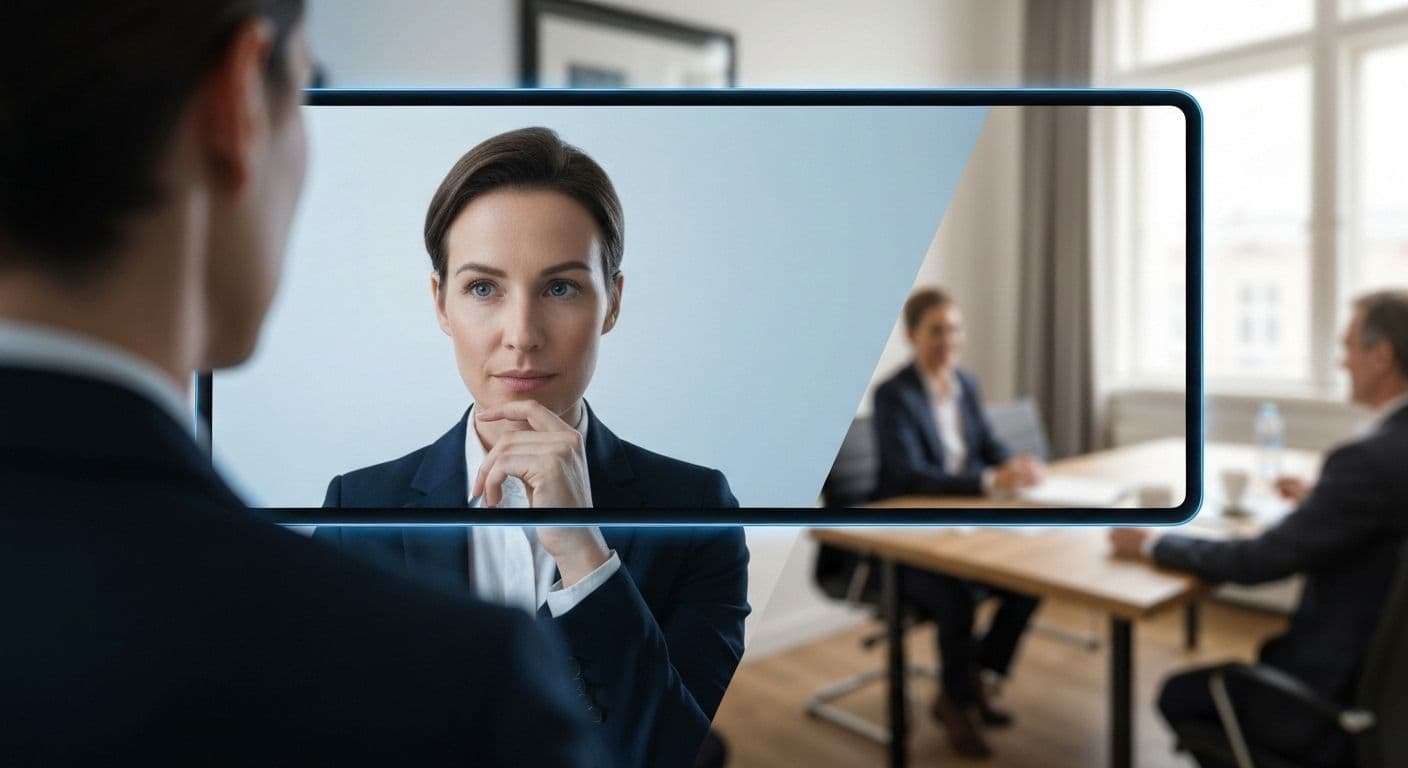
The moment you see your own face staring back at you on screen, something shifts. This "mirror effect" fundamentally disrupts natural public self-awareness by forcing your attention inward rather than outward. Instead of focusing on how others are responding to your ideas, you're critiquing your appearance, noticing that weird angle of your camera, or wondering if everyone else sees that lighting issue.
Delayed feedback loops compound this problem. In face-to-face conversations, you receive instant micro-reactions—a nod, a lean forward, a furrowed brow—that help you adjust your communication in real-time. Virtual meetings introduce lag, both technical and social. Someone might be nodding enthusiastically, but if their video freezes or they're off-camera, you miss it entirely. This absence of immediate validation leaves you operating in a feedback vacuum.
Your limited field of vision creates another significant challenge for public self-awareness in virtual settings. During in-person meetings, your peripheral vision captures the entire room's dynamics. You notice when someone checks their phone, exchanges glances with a colleague, or shifts their posture. On video calls, you see only a grid of faces—often in gallery view—making it nearly impossible to catch these subtle cues that inform how you're being received.
Technical difficulties add yet another layer of uncertainty. Audio cutting out, video freezing, or connection issues make you question whether people heard your point or simply missed it due to technology. This ambiguity makes it harder to develop accurate public self-awareness because you can't distinguish between genuine disinterest and technical problems.
The cognitive load of managing technology while maintaining social awareness taxes your mental resources. You're simultaneously monitoring chat messages, unmuting yourself, sharing screens, and trying to read virtual body language—all while attempting to contribute meaningfully. This divided attention makes the kind of natural social awareness that builds confidence much harder to maintain.
Practical Public Self-Awareness Strategies for Virtual Success
Ready to strengthen your public self-awareness in digital spaces? Start by hiding your self-view. This simple adjustment redirects your attention from internal self-monitoring to external awareness. When you can't see yourself, you naturally focus more on reading others' reactions and engagement levels—exactly where your attention should be.
Try the "spotlight technique" to read virtual room dynamics more effectively. Rather than trying to monitor everyone simultaneously, focus your attention on two or three participants who tend to be expressive. Watch for their reactions—smiles, nods, confused expressions—as indicators of how your message lands. These individuals become your feedback anchors, helping you calibrate your presence without overwhelming yourself.
Calibrating your on-screen energy requires practice. Record a few mock presentations or meetings and watch them back. You'll quickly notice patterns: Do you appear engaged or distracted? Is your energy level appropriate for the context? This self-observation builds more accurate public self-awareness by showing you the gap between how you think you're coming across and how you actually appear. Similar to starting small with behavior changes, begin with short recordings rather than hour-long sessions.
Develop micro-check-ins during longer meetings. Every ten minutes or so, take a brief mental pause to assess engagement without overthinking. Ask yourself: Are people asking questions? Do they seem focused or distracted? Are you monopolizing airtime or contributing appropriately? These quick assessments help you adjust course while maintaining natural public self-awareness.
Create a pre-meeting ritual that grounds your public self-awareness intentions. Before joining the call, spend thirty seconds identifying one specific aspect of your presence you want to be mindful of—perhaps speaking pace, energy level, or ensuring others have space to contribute. This focused intention prevents the scattered awareness that comes from trying to monitor everything at once.
Building Confident Public Self-Awareness for Digital Communication
Mastering public self-awareness in virtual environments isn't just about surviving video calls—it's about thriving in them. The strategies you develop for digital spaces actually enhance your in-person interactions too, creating a more refined sense of how you impact others across all contexts. Like building confidence in any domain, developing public self-awareness is a learnable skill that improves with consistent practice.
The beauty of these techniques is their flexibility. Experiment with different approaches to discover what works for your communication style and meeting contexts. Maybe hiding self-view transforms your focus, or perhaps the spotlight technique helps you read the virtual room more accurately. There's no single right answer—just what enhances your authentic public self-awareness.
Ready to put these insights into action? Choose one strategy to implement in your next virtual meeting. Start small, observe what shifts, and build from there. Your public self-awareness will strengthen naturally as you practice these techniques, making virtual communication feel less draining and more effective over time.



