


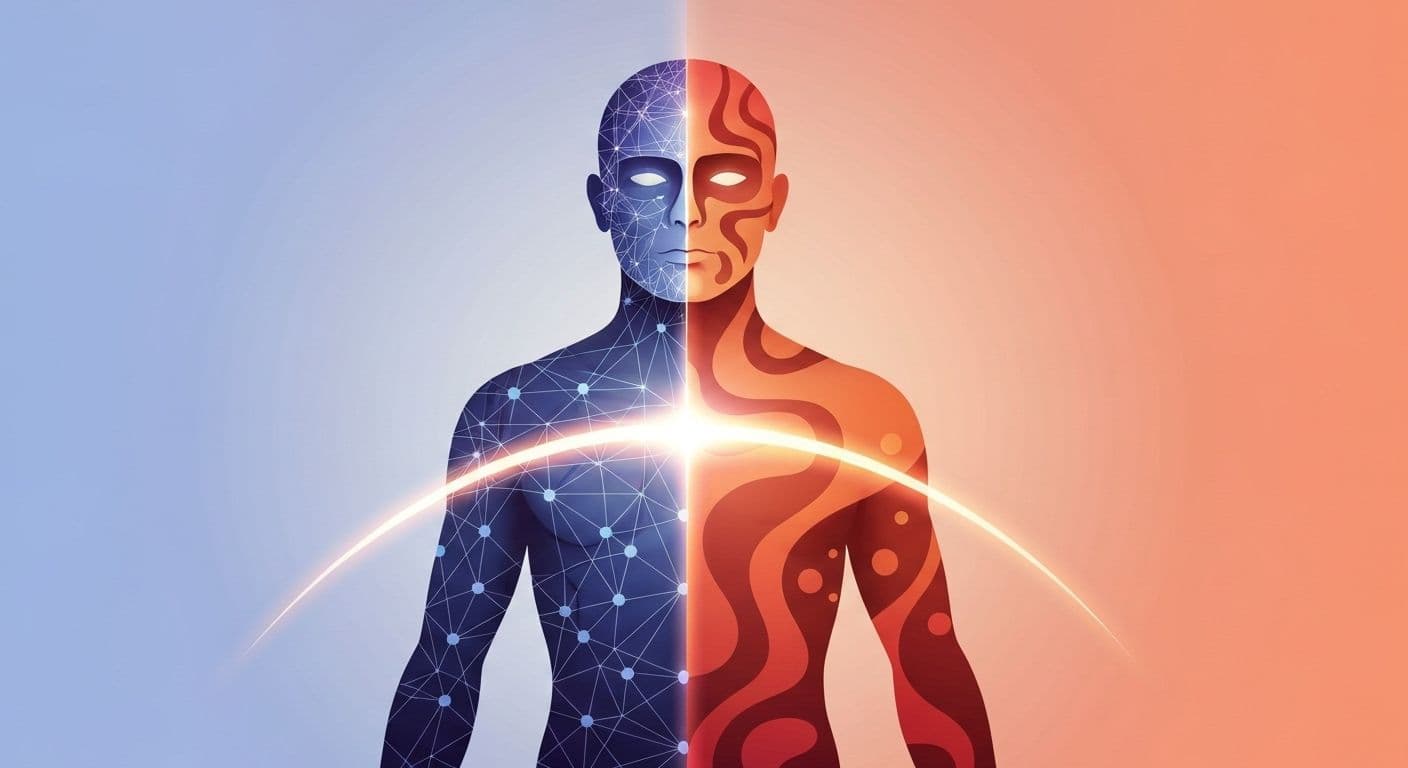
Reconditioning the Body to a New Mind: Bridge the Mind-Body Gap
You've done the mental work. You've shifted your perspective, challenged your old beliefs, and committed to thinking differently. But here's the frustrating part: your body hasn't gotten the memo. Your shoulders still tense up in familiar situations. Your chest still tightens when certain emotions arise. Your breathing still becomes shallow when stress hits. This is the mind-body disconnect in action—and it's why reconditioning the body to a new mind is the missing piece in your personal growth journey.
The truth is, mental shifts don't automatically translate to physical changes. Your body holds onto old patterns through physical sensations and responses that have been reinforced over years, sometimes decades. While your mind races ahead with new insights and intentions, your body resists mental change because it's still running on outdated programming. Understanding why this gap exists is the first step toward bridging it.
Why Reconditioning the Body to a New Mind Requires More Than Positive Thinking
Your nervous system stores patterns physically, not just mentally. Every time you've experienced stress, anger, or anxiety, your body responded in specific ways—and those responses became hardwired through repetition. This is cellular memory in action. Your muscles learned to contract in certain patterns. Your breath learned to become shallow. Your posture learned to collapse or brace. These physical habits become automatic, operating below conscious awareness.
Here's what makes this challenging: affirmations and positive thinking happen in your conscious mind, but these physical patterns live in your nervous system. You might repeat "I am calm and confident" while your body is still holding tension from past experiences. The gap between intellectual understanding and embodied change is real, and it explains why you can know something mentally but still react physically in old ways.
Muscle memory maintains old emotional states even after you've mentally moved on. Your body's stress responses aren't controlled by thoughts alone—they're triggered by physical cues that bypass your thinking brain entirely. This is why someone might understand they're safe in a situation but still feel their heart racing. The body lags behind mindset because it needs its own reconditioning process, separate from mental work.
Practical Techniques for Reconditioning the Body to a New Mind
Ready to bridge this gap? These movement strategies help release old patterns and create new neural pathways. Start with intentional shaking—literally shake out your arms, legs, and whole body for 60 seconds. This disrupts stored tension and signals to your nervous system that it's safe to let go. Follow this with what experts call "opposite movement"—if you typically slouch when stressed, practice standing tall with your chest open. If you clench your jaw, practice gentle jaw circles.
Posture Adjustments That Shift Mental Patterns
Your physical stance directly influences your emotional states. Research shows that changing your posture changes your brain chemistry. Try this: when you notice old thought patterns emerging, adjust your body first. Stand with feet hip-width apart, shoulders back, and chin level. Hold this position for two minutes. This "power posture" isn't about faking confidence—it's about giving your body new physical information that contradicts old patterns.
Somatic Practices to Align Body and Mind
Breath work serves as a direct line to your nervous system. When reconditioning the body to a new mind, try box breathing: inhale for four counts, hold for four, exhale for four, hold for four. This pattern signals safety to your body in ways that thoughts cannot. Combine this with somatic check-ins—brief moments throughout your day where you scan your body and notice where old patterns show up physically. Is your chest tight? Are your shoulders raised? Simply noticing creates the opportunity for change.
Progressive muscle relaxation adapted for emotional reconditioning works powerfully. Tense each muscle group for five seconds, then release completely. As you release, imagine letting go of the old pattern that muscle has been holding. This technique helps your body learn what true relaxation feels like, creating a new baseline.
Making Reconditioning the Body to a New Mind Your Daily Practice
Integrating body-based practices doesn't require hours of effort. Start with one three-minute somatic practice each morning—maybe the shaking exercise or mindful breathing techniques. The importance of consistency over intensity matters here. Your body learns through repetition, not through occasional intense sessions. Three minutes daily beats thirty minutes weekly every time.
How do you know your body is catching up to your mental shifts? You'll notice your default physical responses changing. Maybe your shoulders don't automatically rise when your phone rings. Perhaps your breath stays steady in situations that used to trigger shallow breathing. These small signs indicate your nervous system is learning new patterns.
Here's your actionable next step: Right now, take three deep breaths and on each exhale, deliberately drop your shoulders. Notice how this simple act of reconditioning the body to a new mind creates an immediate shift. This is your starting point. Remember, this process takes time, but it creates lasting change because it addresses the physical foundation of your patterns. Your body is ready to learn—you just need to teach it in its own language.



