


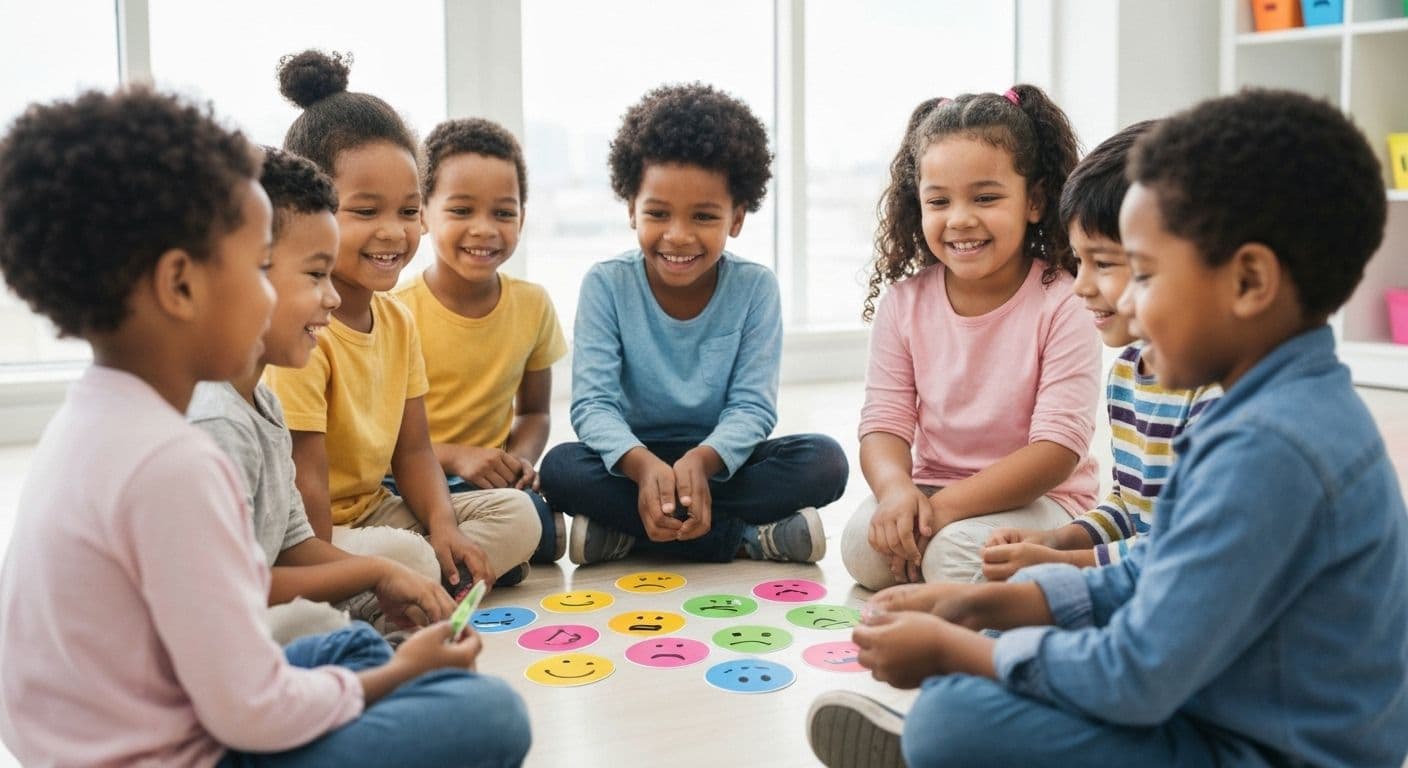
Self Awareness for Kindergarten: Emotional Recognition Games
Your kindergartner's face turns red as another child takes the toy they were playing with. Instead of using words, they push and scream, unable to express the swirl of emotions inside. Sound familiar? This everyday scenario highlights why emotional recognition games matter so much for building self awareness for kindergarten-aged children. These simple activities create a foundation that shapes how your child navigates friendships, handles conflicts, and succeeds in school for years to come.
The good news? You don't need fancy programs or extra time to develop self awareness for kindergarten skills. By weaving emotional recognition games into mealtimes, car rides, and bedtime routines, you're equipping your 5-year-old with tools that predict future success more reliably than academic skills alone. Let's explore how these playful moments build emotional intelligence that lasts a lifetime.
How Self Awareness for Kindergarten Shapes Social Success
At age five, your child's brain is building neural pathways for emotional processing at lightning speed. When kindergartners practice identifying and naming feelings through games, they're literally strengthening the brain circuits that manage emotions. This isn't just feel-good theory—neuroscience shows that emotional recognition skills develop most rapidly during these early years.
Self awareness for kindergarten directly impacts how children handle playground conflicts. When your child can say "I feel frustrated" instead of hitting, they're using their growing emotional vocabulary to solve problems. Research demonstrates that kindergartners with strong emotional recognition skills form friendships more easily, participate more confidently in group activities, and experience fewer behavioral issues in the classroom.
Brain Development and Emotional Processing
The prefrontal cortex—your child's emotional control center—is highly plastic during kindergarten years. Each time your 5-year-old practices naming feelings, they're reinforcing connections between emotional experiences and language. This integration reduces tantrum frequency because children gain alternatives to physical outbursts.
Social Benefits of Emotional Recognition
Studies tracking children from kindergarten through adolescence reveal something fascinating: emotional intelligence in early childhood predicts academic performance better than IQ scores alone. Children who develop self awareness for kindergarten skills show improved focus, better cooperation with teachers, and enhanced problem-solving abilities. These benefits compound over time, creating advantages that extend far beyond elementary school.
Simple Self Awareness for Kindergarten Activities Parents Can Use Daily
Ready to boost your child's emotional intelligence without adding stress to your routine? These five games slip seamlessly into moments you're already spending together.
Mealtime Activities
The Feelings Faces game transforms dinner into an emotional learning opportunity. Create simple emotion cards with happy, sad, angry, scared, and excited faces. During meals, ask your kindergartner to show which face matches how they felt at different points today. "Show me how you felt when you couldn't find your favorite crayon." This practice builds self awareness for kindergarten children by connecting internal experiences with external expressions.
Take it further by having everyone at the table participate. When parents model emotional awareness, children learn that naming feelings is normal and valuable. This approach mirrors the confidence-building strategies that help adults develop emotional skills.
Car Ride Games
Car trips offer perfect opportunities for emotional check-ins using a feelings thermometer. Assign colors to emotions: blue for calm, yellow for excited, orange for frustrated, red for angry. Ask "What color are you feeling right now?" This quick activity helps kindergartners develop self awareness for kindergarten situations while you're stuck in traffic anyway.
The beauty of this technique lies in its simplicity. Unlike complex task management systems, the feelings thermometer requires zero preparation and takes seconds to implement.
Bedtime Routines
Bedtime stories become emotional learning labs through character emotion spotting. As you read, pause to ask "How do you think the bunny feels right now?" or "What made the character feel worried?" This practice strengthens self awareness for kindergarten children by teaching them to recognize emotional cues in others—a skill that directly transfers to real-world social situations.
Add the Mirror Game before lights out. Make different facial expressions and have your child copy them while naming the emotion. "This is my surprised face!" This multisensory approach—combining visual, physical, and verbal elements—creates stronger neural connections than passive learning alone.
For transition times between activities, try Emotion Charades. Act out feelings without words and let your kindergartner guess the emotion. This game develops self awareness for kindergarten skills while burning energy during those tricky moments when you need cooperation most.
Building Self Awareness for Kindergarten Success Starting Today
Consistent emotional recognition practice creates lasting self awareness for kindergarten children that shapes their trajectory for years. The research is clear: these simple games build neural pathways that support emotional regulation, social connection, and academic achievement throughout childhood and beyond.
Start with just one activity this week. Choose the game that fits most naturally into your existing routine—maybe the feelings thermometer during tomorrow's car ride or emotion spotting during tonight's bedtime story. As you build this habit, remember that your own emotional awareness matters too. When you model naming your feelings ("I'm feeling frustrated by this traffic"), you're teaching through example.
Ready to boost your emotional intelligence while supporting your kindergartner's development? The Ahead app offers science-backed tools for parents working on their own self awareness for kindergarten teaching skills. Because the most powerful way to develop emotional intelligence in children starts with developing it in yourself.



