


Self Awareness for Preschoolers: Teaching Kids to Name Their Feelings
Picture this: your three-year-old is on the floor, tears streaming, fists clenched, completely unable to tell you what's wrong. Sound familiar? Teaching self awareness for preschoolers isn't just about stopping tantrums—it's about giving your child the vocabulary to understand and express what's happening inside them. When preschoolers learn to name their feelings, something remarkable happens: they gain control over emotions that once controlled them.
Building self awareness for preschoolers creates the foundation for lifelong emotional intelligence. Research shows that children who develop emotional vocabulary early handle frustration better, form stronger friendships, and even perform better academically. The sweet spot for this learning? Ages three to five, when your child's brain is primed to absorb new language and make sense of their inner world.
Here's what makes this work: neuroscience reveals that naming an emotion actually reduces its intensity. When your preschooler says "I'm frustrated," their brain shifts from reactive mode to reflective mode. This simple act of labeling feelings activates the prefrontal cortex, helping them regulate emotions more effectively. Pretty powerful stuff for such little humans, right?
Building Self Awareness for Preschoolers Through Daily Interactions
The most effective self awareness for preschoolers strategies happen naturally throughout your day. Start by narrating your own emotional experiences out loud. "Mommy feels frustrated because I can't find my keys" or "Daddy feels excited about our park visit today." This modeling teaches your child that everyone has feelings and it's normal to name them.
Ready to try some simple phrases that actually work? Use gentle observations: "I notice your face looks scrunched up" or "It seems like you're feeling something big right now." These non-judgmental statements invite your preschooler to explore their emotions without pressure. When they struggle to respond, offer choices: "Are you feeling mad or sad?"
For ages three to four, stick with the starter emotion set: happy, sad, mad, scared, and excited. These five feelings cover most of what preschoolers experience and are concrete enough for young minds to grasp. As your child approaches ages four to five, expand their emotional vocabulary to include frustrated, disappointed, proud, worried, and calm. This gradual approach prevents overwhelm while building emotional awareness systematically.
Here's a common challenge: your preschooler says "I don't know" when asked about feelings. Instead of pushing, try describing what you observe: "Your body looks tense, and you're breathing fast. Sometimes that means feeling worried." This approach teaches self awareness for preschoolers by connecting physical sensations to emotional states.
Play-Based Activities That Boost Self Awareness for Preschoolers
Learning happens best through play, making games the perfect vehicle for teaching emotional intelligence. The feelings faces game is brilliantly simple: make exaggerated expressions together and name each emotion. "Let's make our angry face! Now our surprised face!" This playful practice helps preschoolers recognize emotions in themselves and others.
Storytime offers golden opportunities for emotional learning. When reading together, pause and ask "How does this character feel right now?" Picture books naturally showcase emotions through facial expressions and situations. This strategy develops self awareness for preschoolers by creating safe distance—discussing a character's feelings feels less vulnerable than discussing their own.
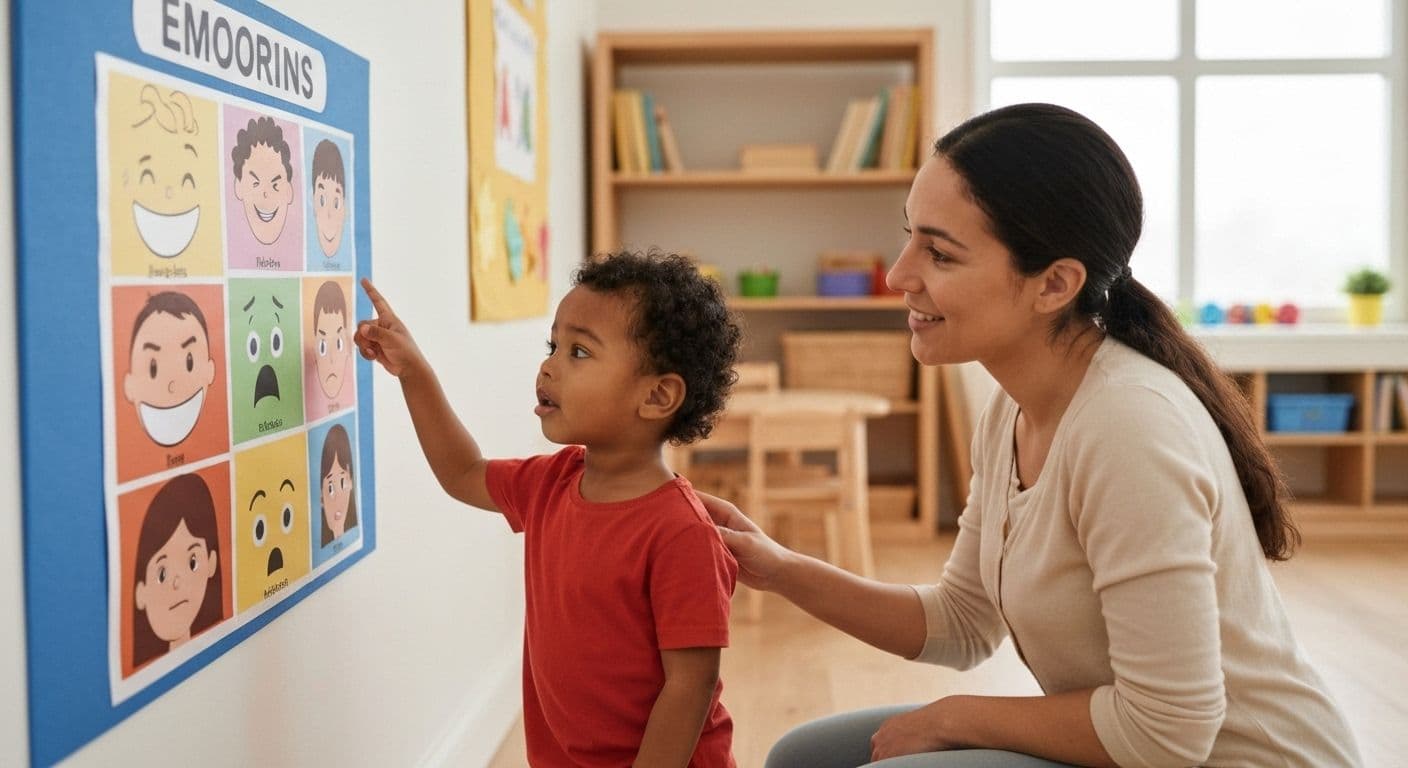
Emotion check-ins work wonders when kept light and visual. Use a simple feelings chart with faces or a color zone system where different colors represent different emotions. The key? Keep it conversational, not homework-like. "What color are you feeling right now?" beats "We need to do your feelings check-in."
Mirror play lets preschoolers become emotion scientists. Stand together at a mirror and explore: "What does your face look like when you're happy? What about when you're grumpy?" This concrete, visual approach makes abstract emotions tangible. For children who struggle with direct emotional expression, try the feelings puppet technique. Sometimes a stuffed bear can say "I feel nervous" when your child can't find the words themselves, providing a comfortable way to develop emotional intelligence.
Making Self Awareness for Preschoolers Stick: Your Action Plan
Consistency trumps intensity when building emotional vocabulary. Brief, daily emotion naming beats occasional lengthy lessons every time. Your preschooler needs repeated exposure in real situations to truly internalize this skill. Think of it like learning any language—regular practice in context makes all the difference.
What does progress actually look like? Celebrate the moment your child spontaneously says "I'm feeling frustrated" instead of throwing a toy. These unprompted uses of feeling words signal that self awareness for preschoolers is taking root. Some children start using emotional vocabulary within weeks, while others need months. Both timelines are completely normal.
Expect setbacks during stressful periods or transitions. Starting preschool, welcoming a sibling, or moving homes often causes temporary regression. Your child might return to wordless meltdowns even after making progress. This doesn't mean you've lost ground—it means their system is overwhelmed. Simply return to basics: model emotions, offer choices, and keep expectations gentle.
Ready for quick wins? Start using these three phrases today: "I notice you seem..." to observe without judgment, "It's okay to feel..." to validate emotions, and "Let's name that feeling together" to invite collaboration. These simple shifts in language accelerate emotional development naturally.
Building self awareness for preschoolers becomes easier when you're modeling emotional intelligence yourself. Want to strengthen your own emotional vocabulary and stress management skills? The Ahead app provides bite-sized, science-driven tools that help parents develop the emotional awareness they're teaching their children—because the best teachers practice what they preach.



