


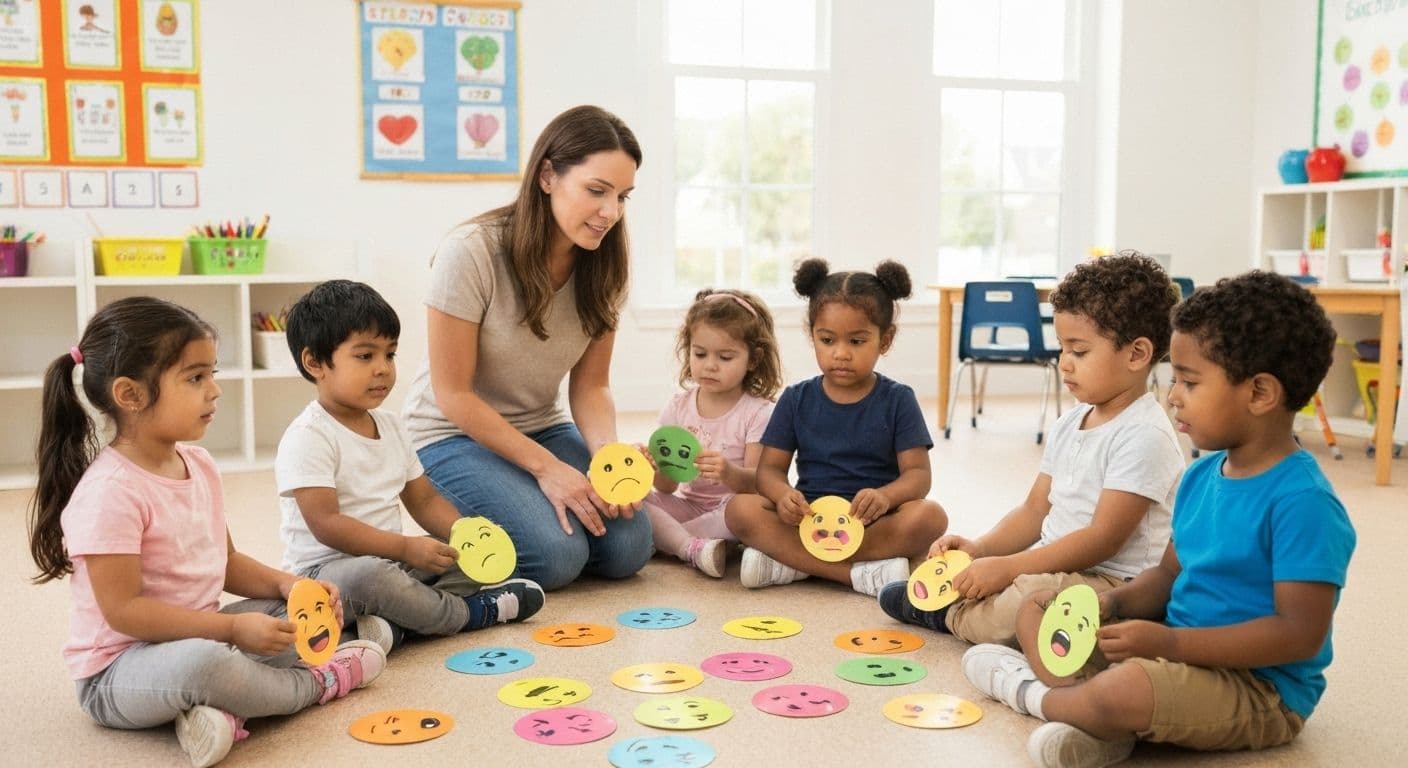
Self Awareness in Early Childhood Education Through Emotional Check-Ins
Picture this: It's circle time in a bustling preschool classroom. A four-year-old sits cross-legged, tears streaming down his face, unable to explain why he's upset. His teacher kneels beside him, gently asking questions, but the child doesn't have the words to describe the frustration bubbling inside. This scene plays out in classrooms everywhere, highlighting a crucial gap in early development. The foundation of self awareness in early childhood education begins with something surprisingly simple: teaching children to name their feelings.
When young children learn to identify and express emotions through daily check-ins, something remarkable happens. They start connecting their internal experiences with language, building the neural pathways that support emotional intelligence for life. Research shows that children who develop strong self awareness in early childhood education through consistent emotional vocabulary practice demonstrate better social skills, improved behavior regulation, and enhanced learning readiness. The best part? Educators who implement these routines see transformative changes in classroom dynamics within just a few weeks.
These micro-moments of emotional connection create ripple effects that extend far beyond the preschool years, establishing patterns of self-reflection and emotional awareness that children carry into adulthood.
Building Self Awareness in Early Childhood Education Through Daily Check-Ins
The preschool years represent a critical window for emotional development. Between ages three and five, children's brains are incredibly receptive to learning emotional vocabulary and connecting words to internal sensations. This neurological readiness makes it the perfect time to establish self awareness in early childhood education practices that stick.
A basic emotional check-in takes just five minutes but delivers lasting impact. Start each day by gathering children in a circle and asking simple questions: "How does your body feel right now?" or "What emotion are you bringing to school today?" Provide visual aids like emotion faces or color-coded feeling charts to help children who struggle with verbal expression. The key is consistency—daily practice helps young minds build the neural connections between physical sensations and emotion words.
Age-Appropriate Emotion Words for Preschoolers
Begin with basic emotions: happy, sad, mad, scared, and excited. As children master these foundational words, gradually introduce more nuanced vocabulary like frustrated, disappointed, proud, or worried. This progressive approach to self awareness in early childhood education respects developmental stages while continuously expanding emotional literacy.
Simple Check-In Formats That Work
Try these engaging formats to keep emotional check-ins fresh and interactive:
- Weather report emotions: "Are you feeling sunny, cloudy, stormy, or rainbow-y today?"
- Emotion show-and-tell: Children choose an emotion card that matches their feelings
- Body scanning: "Where in your body do you notice that feeling?"
- Energy levels: Using hand gestures to show if they feel calm, medium, or buzzing with energy
These activities transform abstract concepts into concrete, memorable experiences. When children practice identifying small emotional shifts daily, they develop the self-awareness that becomes second nature over time.
Creating Safe Spaces That Support Self Awareness in Early Childhood Education
Emotional safety forms the bedrock of effective self awareness in early childhood education. Children only share authentic feelings when they trust that all emotions are acceptable. This means responding to every feeling—from joy to anger to sadness—with the same validating presence.
When a child expresses anger, resist the urge to immediately fix or redirect. Instead, try: "I notice you're feeling really mad right now. That's okay. Let's name that feeling together." This simple validation teaches children that emotions aren't problems to solve but experiences to acknowledge. Your modeling matters immensely—when you name your own emotions throughout the day ("I'm feeling excited about our art project!" or "I'm noticing some frustration because our schedule changed"), you demonstrate that emotional awareness is natural and valuable.
For children who struggle to identify feelings, use gentle prompts and observations. "I see your hands are in fists and your face looks scrunched. Sometimes our bodies tell us we're feeling frustrated. Does that word fit what you're experiencing?" This approach combines physical awareness with emotional vocabulary, strengthening the connection between body and mind. Visual aids like emotion charts with corresponding body language illustrations provide invaluable support, especially for children who process information visually or those learning emotional concepts for the first time.
Creating a dedicated calm corner with soft pillows, emotion books, and sensory tools gives children a physical space to practice emotional awareness techniques independently.
Implementing Self Awareness in Early Childhood Education for Long-Term Success
The transformation that unfolds when educators commit to daily emotional check-ins extends far beyond immediate classroom management. Children who develop strong self awareness in early childhood education carry these skills into elementary school, adolescence, and adulthood. They become individuals who recognize their emotional patterns, communicate needs effectively, and navigate relationships with empathy.
Ready to start tomorrow? Begin with one simple five-minute check-in at morning circle time. Choose an age-appropriate format, commit to consistency, and watch as your classroom culture shifts. The investment is small—just minutes daily—but the returns are extraordinary. You're not just teaching feelings; you're wiring young brains for a lifetime of emotional intelligence and self-understanding.
As you continue developing these practices, remember that building self awareness in early childhood education is a journey, not a destination. Each check-in, each validated emotion, each moment of connection adds another brick to the foundation of emotional wellness. Your role as an educator positions you perfectly to shape these essential life skills, creating ripples that extend far into your students' futures.



